Meningitis: Health chiefs dealing with ‘explosive’ and ‘unprecedented’ outbreak
Some 15 cases of meningitis have so far been reported to the UK Health Security Agency, including two deaths.
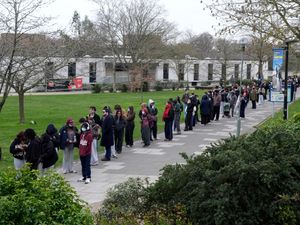
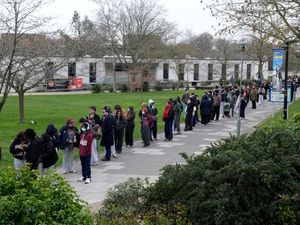
Thousands of students in Kent are being urged to get vaccines and take antibiotics as health chiefs deal with an “unprecedented” and “explosive” outbreak of meningitis.
Some 15 cases of meningitis have so far been reported to the UK Health Security Agency (UKHSA), up from 13 reported previously, including two deaths.
The number of cases is expected to rise because the incubation period for the infection – to when symptoms appear – is two to 14 days.
The outbreak is being viewed by experts as unprecedented owing to the high number of cases appearing in such a short space of time.
UKHSA chief executive Susan Hopkins said: “This looks like a super-spreader event, with ongoing spread within the halls of residence in the universities.
“There will have been some parties particularly around this, so there will have been lots of social mixing.
“I can’t yet say where the initial infection came from, how it’s got into this cohort, and why it’s created such an explosive amount of infections.
“I can say that in my 35 years working in medicine, in healthcare and hospitals, this is the most cases I’ve seen in a single weekend with this type of infection.
“It’s the explosive nature that is unprecedented here – the number of cases in such a short space of time.
“NHS were initially managing it as a major incident in the region but they have now increased that overlay to having a national-level oversight as well.”
Health officials stressed that people should not skip antibiotics if prescribed them, with a single tablet of Ciprofloxacin reducing the risk of meningitis in a household by around 80% to 90%.
England’s deputy chief medical officer Dr Thomas Waite said: “This is by far the quickest-growing outbreak I’ve ever seen in my career, and I think probably any of us have seen of meningitis for a very long time.
“Whilst it remains an outbreak that is having its consequences in Kent, it is obviously of national significance.”
Around 5,000 students in university halls in Kent are to be offered the meningitis B vaccine in coming days. The aim is to prevent further disease in several weeks’ time if somebody has been harbouring the infection.
Four schools in total across Kent have now confirmed cases and hundreds of people are being offered antibiotics as an immediate treatment.
All reported cases so far have a link to Kent, according to the UKHSA. At least one person who fell ill and had links to Kent attended a London hospital.
Experts said many of those affected attended Club Chemistry in Canterbury over March 5-7.
The UKHSA said all 15 cases had required hospital admission, with four cases confirmed to have menB.
Laboratory scientists are urgently trying to work out if the spread is caused by a possible mutant strain of menB.
The genome of the menB strain identified in the outbreak is undergoing whole genome sequencing to see if there are any differences to known strains.
It will also be tested against available menB vaccines, though experts stressed people should get a jab if eligible.
Earlier on Tuesday, Health Secretary Wes Streeting said most students would not already be vaccinated against menB, adding that the jabs will begin in the next few days.
He told MPs “This is an unprecedented outbreak. It is also a rapidly developing situation.”
He said the menB vaccine has been available on the NHS since 2015 as part of routine childhood immunisations, “but clearly most students would not be vaccinated”.
He added: “Given the severity of the situation, I can confirm to the House that we will begin a targeted vaccination programme for students living in halls of residence at the University of Kent in Canterbury, which will begin in the coming days.”
The programme may also expand further if other groups are deemed to be at risk.
Mr Streeting told the Commons his thoughts were “with the families and friends of those two young people who’ve sadly died”, adding: “I cannot begin to understand what they must be going through.”
He said he had asked the Joint Committee on Vaccination and Immunisation (JCVI) to “re-examine eligibility for meningitis vaccines” for a wider group of people after it ruled an menB catch-up campaign for older children was not cost-effective.

The Health Secretary also told MPs he was “confident” that the UKHSA acted as “quickly and comprehensively as possible” in its response to the outbreak of meningitis, after criticism that it was too slow to act and inform the public.
Mr Streeting also set out:
– The cases “link back” to the Club Chemistry nightclub over the dates of March 5-7.
– The UKHSA was notified about the first case on Friday, March 13, and began tracing contacts and offering antibiotics “as a matter of urgency”.
– On Saturday, the UKHSA was in touch with the University of Kent “to ensure they had the necessary support, advice, and guidance, and to establish where the patient was living.”
– Also on Saturday, French authorities alerted the UKHSA to a second confirmed case in France in a person who had attended the University of Kent. Both people lived in private accommodation, “and at that stage, there was no apparent link between the two”, Mr Streeting said.
– At 7pm on Saturday, hospitals locally reported that a number of “severely unwell young adults” were presenting with symptoms of meningitis. Contact tracing of those people “began immediately” and continued into Sunday morning.
– At 10am on Sunday, the UKHSA “stood up a full-scale response” and a public health alert was issued at 6pm.
Mr Streeting said even before the alert was issued, students and young people, who had been in close contact with suspected cases were being offered antibiotics.
“This is precisely what one would expect as a rapid response, and I’m confident UKHSA acted as quickly and as comprehensively as possible,” he said.
However, he said the overall UKHSA response would be looked at in detail “because inevitably there are always things that we can learn”.
There are four centres open in Canterbury offering antibiotics, with 11,000 doses available on site, Mr Streeting told MPs.
“The onset of illness is often sudden, and early diagnosis and treatment with antibiotics are vital,” he said.

Earlier, the deputy director of the immunisation and vaccine preventable diseases division at the UKHSA, Dr Gayatri Amirthalingam, said the outbreak of meningitis had been “unusual” but she did not believe there was a current risk to anyone outside the Kent region.
“We have no evidence of any wider spread,” she told BBC Radio 4’s Today programme.
“So it’s really important to reassure people across the country that there’s no evidence of wider spread at the current time but it’s important, in terms of vaccination, to make sure that your children are fully up to date with the vaccines that are available, and to be alert to the signs and symptoms of meningococcal disease.
“Although it can be rare, it can be severe and devastating, and so prompt recognition, early treatment is very important.”
Those who attended Club Chemistry from March 5-7 can collect antibiotics from: the Gate Clinic at Kent and Canterbury Hospital; Westgate Hall on Westgate Hall Road, Canterbury; the Carey Building, Thanet Hub, Margate Northwood Road; and the Senate building at the University of Kent.