What the latest NHS hospital figures for England show
A record 71,517 people waited more than 12 hours in A&Es in January from a decision to admit to actually being admitted.
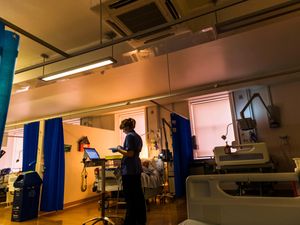
NHS England has published its latest monthly performance data for waiting times, A&E treatment and other targets, as well as its weekly snapshot of winter pressures on hospitals, including patients with norovirus or flu.
Here, the Press Association highlights the key numbers and trends in both reports:
– Overall waiting list
The waiting list for routine hospital treatment has fallen for the second month in a row and remains at its lowest level since early 2023.
An estimated 7.29 million treatments were waiting to be carried out at the end of December 2025, relating to 6.17 million patients.
This is down from 7.31 million treatments at the end of November, while the figure for patients has remained at 6.17 million.
The number of treatments waiting to be carried out is at its lowest level since February 2023, when it stood at 7.22 million.
The list hit a record high in September 2023, with 7.77 million treatments and 6.50 million patients.
The size of the list has been on an upward trend in recent years, passing three million treatments in 2014, four million in 2017, five million in 2021 and seven million in 2022.
In February 2020, the last full month before the start of the Covid-19 pandemic, the list stood at 4.57 million treatments.
– Long waits for treatment
A total of 140,508 people had been waiting more than a year to start routine hospital treatment at the end of December 2025, down from 156,483 at the end of November.
This is the lowest figure for waits of more than a year since September 2020.
Some 1.9% of people on the list for hospital treatment had been waiting more than 52 weeks in December, down from 2.1% the previous month.
The Government and NHS England have set a target of March 2026 for this figure to be reduced to less than 1%.
An estimated 1,514 patients had been waiting more than 18 months to start routine hospital treatment at the end of December, up slightly from 1,500 in November.
A year earlier, in December 2024, the number stood at 2,061.
There were 7,344 patients who had been waiting more than 65 weeks to start treatment, down from 9,521 the previous month.
This figure stood at 15,576 in December 2024.
– Accident & emergency waits
The number of people waiting more than 12 hours in A&E departments from a decision to admit to actually being admitted stood at 71,517 in January, up sharply from 50,775 in December, NHS figures show.
This is the highest number since monthly records began in August 2010.
The number waiting at least four hours from the decision to admit to admission stood at 161,141 last month, up from 137,763 in December and the second highest figure on record.
Some 72.5% of patients in England were seen within four hours in A&Es last month, down from 73.8% in December.
The Government and NHS England have set a target of March 2026 for 78% of patients attending A&E to be admitted, discharged or transferred within four hours.
– Cancer referrals
Some 77.4% of patients in England urgently referred for suspected cancer were diagnosed or had cancer ruled out within 28 days in December 2025, up from 76.5% in November.
This is above the current target of 75%.
The proportion of patients who had waited no longer than 62 days in December from an urgent suspected cancer referral, or consultant upgrade, to their first definitive treatment for cancer was 71.9%, up from 70.2% in November.
The Government and NHS England have set a target of March 2026 for this figure to reach 75%.
– Norovirus
An average of 929 hospital beds in England were filled each day last week by patients with norovirus symptoms.
This is up slightly by 3% from the previous week’s average of 904, but below the 950 recorded in the week ending January 25, which is the highest so far this winter.
– Flu
There were an average of 1,119 flu patients in hospital each day last week, including 43 in critical care.
This is down 25% from 1,491 the previous week, when 59 were in critical care.
The figure peaked at 3,140 patients in the week ending December 14.
Last winter, weekly flu numbers for England peaked at 5,408 patients.
– Ambulance response times
The average response time in January for ambulances dealing with the most urgent incidents, defined as calls from people with life-threatening illnesses or injuries, was eight minutes and eight seconds.
This is up from seven minutes and 59 seconds in December, and is above the target standard response time of seven minutes.
Ambulances took an average of 35 minutes and four seconds last month to respond to emergency calls such as heart attacks, strokes and sepsis.
This is up from 32 minutes and 43 seconds in December.
The Government and NHS England have set a target for this figure to average 30 minutes across 2025/26.
The average currently stands at 30 minutes and 33 seconds.
Response times for urgent calls, such as late stages of labour, non-severe burns and diabetes, averaged two hours, 10 minutes and 54 seconds in January, up from two hours, one minute and 17 seconds in December.
– Delayed discharges
An average of 13,660 hospital beds in England were filled each day last week with patients who were considered fit to be discharged.
This is down from 13,714 the previous week and is below the peak of 14,005 patients in the week ending January 25.