Artwork for mural dedicated to Scot who cared for Jewish girls unveiled
Jane Haining was arrested in April 1944 and deported to Auschwitz-Birkenau.
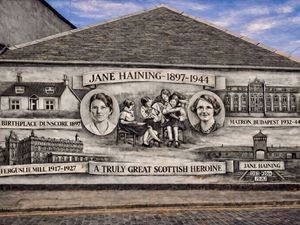
Artwork for a mural dedicated to a Scottish missionary who was murdered by the Nazis after caring for Jewish schoolgirls in Budapest has been unveiled.
Jane Haining was the matron of the Scottish Mission School in the Hungarian capital during the Second World War.
Miss Haining refused to return to Scotland during the war and decided to stay with the Jewish girls in her care.
She was arrested in April 1944 and eventually deported to the Auschwitz-Birkenau camp in Nazi-occupied Poland where she died in a gas chamber a few months later.
The artwork was unveiled at a special event to honour Miss Haining in Paisley and to mark Holocaust Memorial Day on Tuesday.
The town was chosen for the first wall mural in Scotland in her memory as she worked as a secretary at J&P Coats’ Ferguslie Mill for 10 years before moving to Budapest to take up her role at the Church of Scotland school.
Measuring about 9ft high and 65ft long, an image of Miss Haining surrounded by children reading a book is at the heart of the mural, with portraits of her as a young woman and older woman on either side.
It is to be painted on a wall at Brown’s Lane and Shuttle Street, thoroughfares that Miss Haining used on her way to and from work.
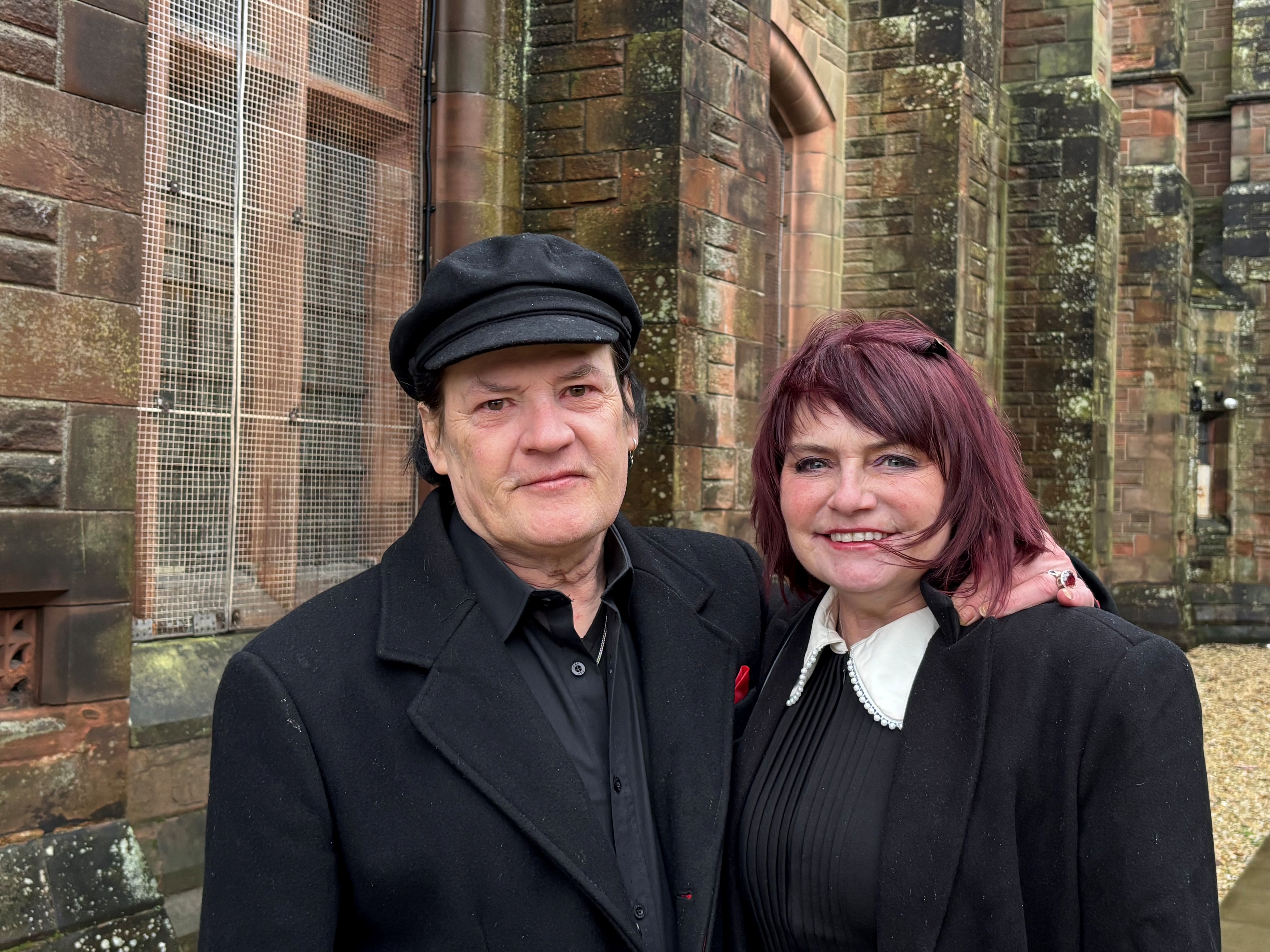
The artwork was commissioned by the Renfrewshire branch of Unison and the mural was designed by Paisley-based artists Alexander Guy and Caroline Gormley.
They hope to start work on it in the spring of this year and estimate that it will take around 25 days to complete.
Mr Guy said: “I did not know the story of Jane Haining before we were asked to do this and I found it fascinating to research the information about her life.
“Initially I thought to myself ‘Why this woman, because millions of people died during the Holocaust’ but the more I read about her, the more I realised how remarkable she was.
“Jane Haining was a true heroine and her story needs recognition, whether it’s in Budapest, Paisley or Dunscore and I’m very honoured and privileged to produce a mural that hopefully does her and all her relatives proud.”
Mr Guy said he examined the work of muralists in Mexico and Belfast, Northern Ireland, Soviet propaganda, banners used during the coal miners’ strikes in the 1980s and the style of Dutch Delft blue pottery for inspiration.
He said: “What we came up with is an amalgamation of all these influences combined with what I would call our own handwriting because I don’t like using the word style.”
Ms Gormley said: “We won’t be using spray paints, we will be using brushes and just treat it like fine art canvas, that’s how we’ll approach it.”
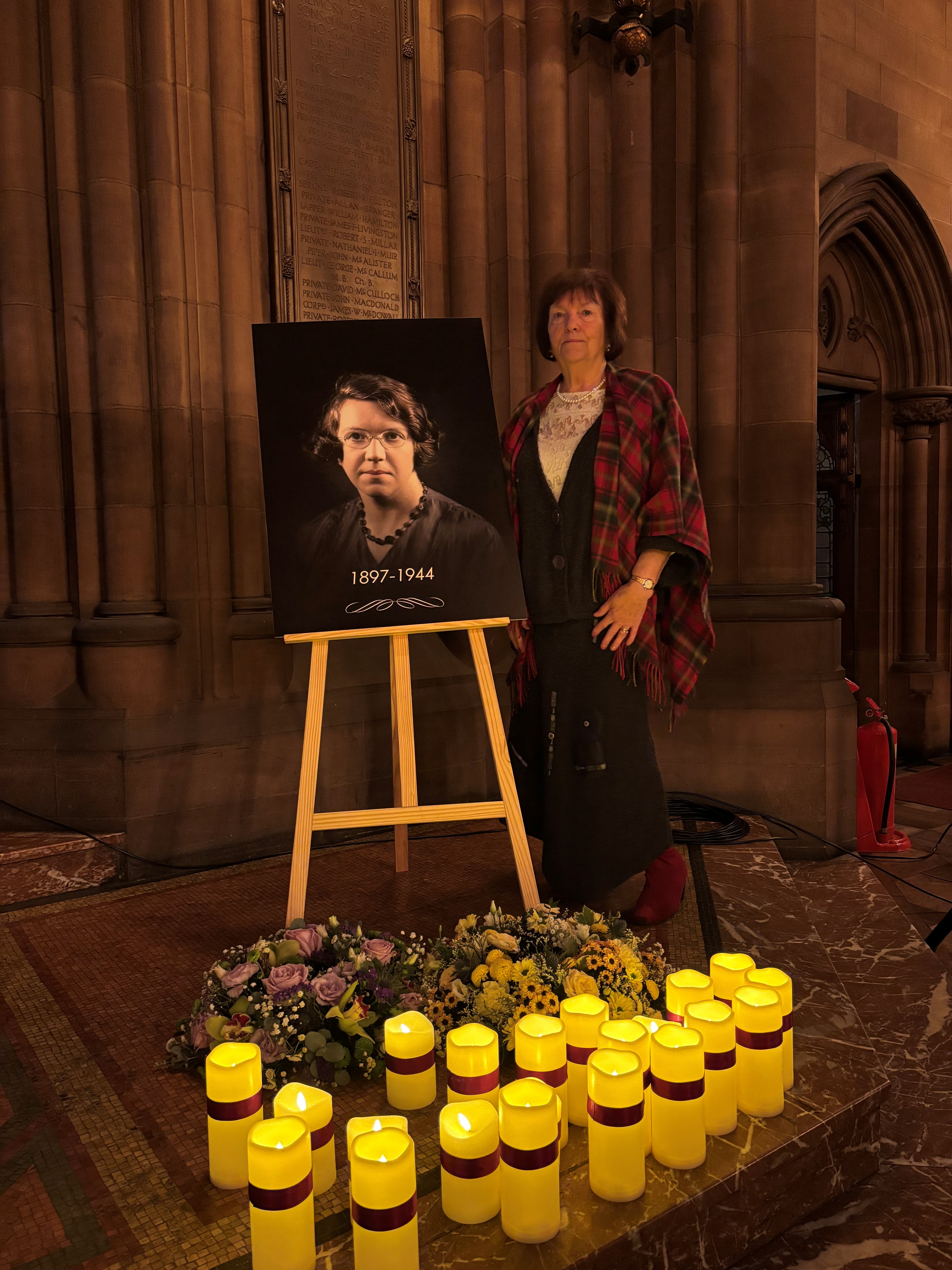
An unveiling of the artwork was attended by Miss Haining’s niece Deirdre MacDowell where attendees laid wreaths and lit candles in memory of her.
Ms MacDowell said: “It has been an emotional and rather overwhelming day, and we are delighted that the mural will be in a good location in Paisley.
“It tells Jane’s story beautifully with the image of her and the children at the centre of it.
“There is so much enthusiasm for Jane’s story and it is wonderful that the film will be shown in schools so younger generations can learn who she was and from her example.”