Auschwitz survivor and stepsister of Anne Frank, Eva Schloss, dies aged 96
Anne Frank would posthumously become famous for her diary, published after the war.
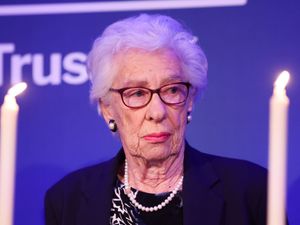
Holocaust survivor Eva Schloss, the stepsister of diarist Anne Frank, has died at the age of 96.
The King said he was “privileged and proud” to have known Mrs Schloss, who co-founded the Anne Frank Trust UK in 1990, to help young people challenge prejudice through learning from Anne Frank and the Holocaust.
Charles, who danced with Mrs Schloss while visiting a Jewish community centre in north London in 2022, said he and the Queen “admired her deeply”.
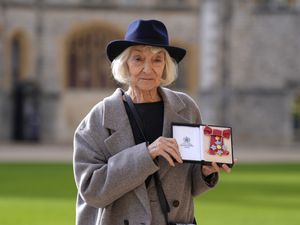
Mrs Schloss, who was the honorary president of the Anne Frank Trust UK, devoted much of her life to speaking in schools, prisons and other international platforms, educating people on the perils of prejudice and intolerance, for which she was awarded an MBE in 2012.
Her death was confirmed in a tribute to the Jewish News, in which her family described their “great sadness” at the loss of “our dear mother, grandmother, and great-grandmother”.
They remembered her as “a remarkable woman: an Auschwitz survivor, a devoted Holocaust educator, tireless in her work for remembrance, understanding and peace”.
In a statement, the King said: “My wife and I are greatly saddened to hear of the death of Eva Schloss.
“The horrors that she endured as a young woman are impossible to comprehend and yet she devoted the rest of her life to overcoming hatred and prejudice, promoting kindness, courage, understanding and resilience through her tireless work for the Anne Frank Trust UK and for Holocaust education across the world.
“We are both privileged and proud to have known her and we admired her deeply. May her memory be a blessing to us all.”
Mrs Schloss, an Austrian Jew, was a teenager when the Nazis invaded, and she fled with her family to Amsterdam, in the Netherlands, where she became friendly with a young girl called Anne Frank.
Anne Frank would posthumously become famous for her diary, published after the war.
As the situation in the Netherlands worsened, Eva and her family – mother Fritzi, father Erich and brother Heinz – moved from house to house for two years to evade capture.
They were eventually betrayed by a Nazi sympathiser, who took them in then gave them away.
On her 15th birthday they were arrested, brutally interrogated and, in May 1944, forced on to trains to the Nazi death camp at Auschwitz.

There, Eva and her mother were separated from her father and brother. She would never see her brother again and, although she saw her father briefly on several occasions, after liberation she learned that both had perished.
She later moved to London, met and married Zvi Schloss, and a year later her mother, who survived Auschwitz, married Anne Frank’s father, Otto.
In their tribute, her family said: “We hope her legacy will continue to inspire through the books, films and resources she leaves behind.
“We are incredibly proud of all that Eva stood for and accomplished, but right now, we are grieving.
“We kindly ask the media and the public to respect our privacy during this difficult time.
“We hope to hold a memorial event at a later date, and will share further details in due course. We thank everyone for the love and respect shown to Eva over the years.”
Mrs Schloss suffered digestion problems caused by her near-starvation at the camp, and frostbite in her toes, a legacy of the long walk to freedom in the winter of 1945, but the psychological scars went much deeper.

For many years she was withdrawn, suffered nightmares and was unable to connect with people. Counselling did not exist at the time although she later said she thought it would have helped.
In 1986, more than 40 years after the war, she was asked to speak at the opening of the Anne Frank Travelling Exhibit in London, and has since made it her life’s work to educate people about the Holocaust to ensure it never happens again.
In 2024, when the trust worked with more than 132,000 young people through the schools programme and trained almost 5,300 as peer educators, Mrs Schloss said: “We must never forget the terrible consequences of treating people as ‘other’.
“We need to respect everybody’s races and religions. We need to live together with our differences. The only way to achieve this is through education, and the younger we start the better.”
Anne Frank Trust chief executive Dan Green described her as “a beacon of hope and resilience”, adding: “Her unwavering commitment to challenging prejudice through Holocaust education has left an indelible mark on countless lives.
“Her legacy will continue to guide and empower young people to build a world free from hatred and discrimination.
“We at the Anne Frank Trust mourn her loss deeply and extend our heartfelt condolences to her family and friends during this difficult time.”
The charity’s chairwoman Nicola Cobbold said: “Above all she believed that to enable peace people should work together as human beings, recognising and challenging prejudice and promoting love and reasonableness.
“Her tireless work over the decades was remarkable and she will be sorely missed by so many. Her memory will truly be a blessing.”