Incoming Archbishop of Canterbury ‘received hundreds of letters of support’
Dame Sarah Mullally will be the 106th Archbishop of Canterbury.
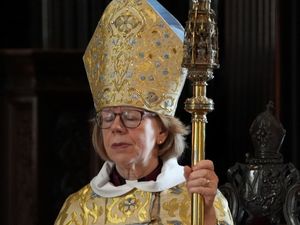
The incoming Archbishop of Canterbury said she has received hundreds of letters of support from women.
Dame Sarah Mullally will be the 106th Archbishop of Canterbury, having been chosen to succeed Justin Welby after he announced his resignation more than a year ago over failures in handling an abuse scandal.
Dame Sarah, who is due to take office on January 28, told BBC Radio 4’s Today programme: “One of the wonderful things over the last couple of months is I’ve had hundreds and hundreds of letters of support from women.
“I had a wonderful letter from somebody who said that when they went to church as a child, they’d say to their mother: ‘I want to be just like the man in the pulpit’, and of course, the mother said: ‘No, you can’t.’ She’s now ordained, but she said that my appointment, or the announcement of my appointment, was the first time that she felt affirmed.”

Dame Sarah added that “at times, you know, like many women, that I have felt difficult moments, and I think that is there right across society, I think it is changing, but I guess to deny that would be wrong”.
Dame Sarah was speaking to former prime minister Baroness Theresa May, guest editor of the Today Programme on Wednesday.
Asked how she sees the role of the church in a world that has become much more polarised and divided, Dame Sarah said: “Well, I think the opportunity for the church is to provide spaces for listening and for increased community cohesion.
“You know, there is a church in every community. Interestingly enough, you see what we’re beginning to see in the Christian church is this sort of quiet revival.
“I have been to a number of churches in the last couple of weeks where I have seen young people coming back to church. I think they’re looking for friendship, they’re looking for relationship. I do wonder whether there is this sort of hunger for relationships away from social media that we’re beginning to see.”
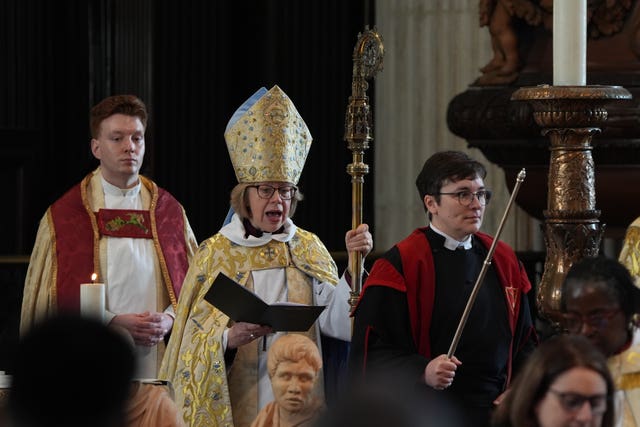
Dame Sarah said safeguarding in the Church of England will get her primary attention.
She said the Church of England had “significant safeguarding failures for which we are truly sorry”, and added the church has made progress over the last 10 years.
And she added: “We have made progress. We can never be complacent, and it certainly will be something that I will pay primary attention to as I become Archbishop of Canterbury.”
On assisted dying, Dame Sarah said her approach has been from the point of view that she was a nurse as well as a priest, and has “sat alongside many people who have died”.
She said: “I clearly do have a principled view against assisted dying.
“I think that we need to care for the most vulnerable in our society. We need to have a view where everybody’s made in the image of God.
“And I guess that those who support the Bill talk about choice, I’m not sure we have choice, not least that actually we don’t properly fund palliative care. I’m worried that people may make a decision for assisted dying because they’re not having the right palliative care or the right social care.
“I also have a worry that there is, you know, a whole group of people who haven’t had choice in life. They are people who, because of inequality, are more likely to get cancer and be late diagnosed and then to die of it.
“My worry is that for that group of people, they may well be given options and feel that because of other people’s value judgments, the option is assisted dying and not chemotherapy and to fight for it.
“And so I’m worried that, in a sense, those safeguards are not in the Bill, and my belief is I’m not sure any amendments will make it safe.”