Mobile stroke units ‘could cut emergency admissions in Scotland by 86%’ – study
A research team from Scotland, England and Germany analysed data comparing outcomes for patients when an MSU responded to a 999 call.

A study has shown that mobile stroke units could reduce emergency department transfers by 86% in Scotland, following a pilot in England.
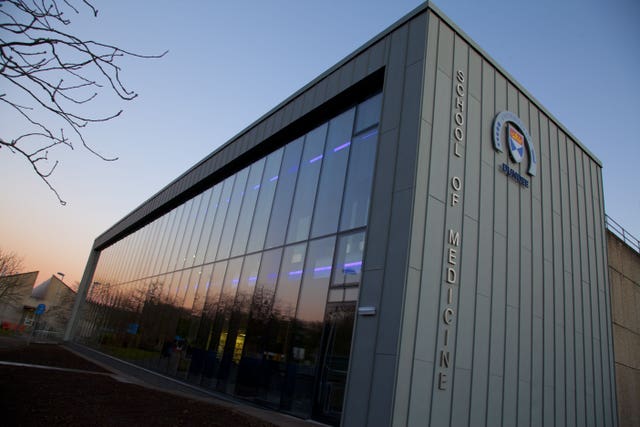
Research from the University of Dundee suggests that specialised ambulances could prevent hundreds of unnecessary emergency admissions across Scotland each year while ensuring patients receive the best possible care.
Professor Iris Grunwald, chairwoman of neuroradiology in the University of Dundee’s School of Medicine, previously introduced the first mobile stroke unit (MSU) to England, and is keen to see the project replicated north of the border.
A research team drawn from across Scotland, England and Germany analysed data comparing outcomes for patients when an MSU responded to a 999 callout as opposed to a conventional ambulance.
MSUs are typically equipped with a CT scanner, point-of-care laboratory, and communications capabilities that enable much faster identification of the stroke type and administration of critical treatments.
As well as potentially improving patient outcomes, this also prevents unnecessary emergency admissions.
One person in the UK is treated for a stroke every five minutes, but research showed that for patients treated by the MSU, pre-hospital diagnosis reduced admissions to the emergency department by 86%, either by management at home (46.4%) or by directly transferring patients to the required specialised wards (39.6%).
Stroke expert Prof Grunwald said the study demonstrated the feasibility of MSUs and indicated the potential benefits for pre-hospital treatment and triage decision-making.
She said: “NHS Emergency Departments are under immense pressure and so the advantages of MSUs being able to reduce admissions and hospital stays are obvious.
“Time equals brain in instances of stroke so clearly there are also significant benefits to pre-hospital diagnosis that enables better triage decision-making and treatment to begin before the patient even reaches hospital.
“Someone in the UK experiences a stroke every five minutes. This is a major issue, which takes a significant toll in terms of human and economic costs and in terms of healthcare capacity.
“The aggregate societal cost of stroke in the UK is estimated at £26 billion per year, including £8.6 billion for NHS and social care.”
The observational study published in the journal Stroke: Vascular and Interventional Neurology examined the outcomes for 500 patients in the east of England area.
Half received treatment from an MSU crew and half were conventionally treated.
Apart from patients with a dispatch code for stroke, the MSU was also dispatched to those with codes for seizures, falls with head trauma, headache, unconsciousness, infection and pandemic, chest pain, and breathing problems.
Prof Grunwald said: “Questions had been raised about the cost efficiency of MSUs and how they could be integrated into clinical practice but this study shows clear benefits to their widespread adoption across the country.
“This research shows that the MSU concept may benefit from equipping them with extended capabilities that make them suitable for dealing with additional emergencies, particularly in non-urban areas.
“If MSUs were supported and funded across Scotland then the impact on patient flow, hospital capacity and emergency care would be transformative, reducing unnecessary admissions, freeing thousands of bed days, and easing pressure on overwhelmed emergency departments.
“Even a single MSU could prevent around 600 unnecessary admissions every year, saving 3,000–3,600 bed days and around £1 million annually.
“For elderly and frail patients in particular, this means safer care, fewer hospital stays and being triaged to the right place at the right time.”