Concern about ‘superiority’ of royal yacht visiting Ireland in 1996
The visit was later cancelled due to security concerns.
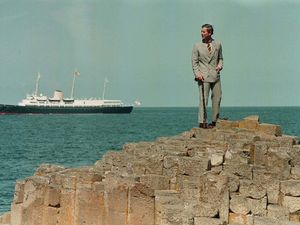
Concern was expressed about the image of “superiority” that would be conveyed by the royal yacht arriving into Irish harbours as part of a mooted visit in the summer of 1996.
A possible three-day trip to Ireland by the then Prince of Wales, now King Charles III, was discussed by British and Irish officials in March before it was abandoned due to security concerns.
Documents released under the National Archives of Ireland in Dublin show that, before the trip was cancelled, the agenda for the visit had become “rather more elaborate” than initially thought and prompted concern from the Irish side.
Then Irish premier John Bruton said Ireland was “the last place” the prince should bring the royal yacht, the HMY Britannia, and warned it would paint an image of “opulence”.
British ambassador Veronica Sutherland had said in a letter on March 7 that Charles would like to arrive in the Britannia pulling into Galway Bay on the morning of Friday June 28 1996.
“In the evening, he would like to offer hospitality on board Britannia, which would then sail late in the evening for a private weekend in Kerry and Cork, having disembarked the guests,” she said.
In response, also on March 7, Government secretary Frank Murray said the trip was “far more extensive” than had been suggested initially, which involved a visit to Haulbowline harbour in Co Cork.
He said they appeared to have “little option but to proceed with the programme” unless there were security or political considerations.
But Mr Bruton conveyed his concerns in a hand-written reply to Mr Murray, where he wondered if the arrival of the royal yacht in Galway would spark debate about the Treaty ports.
“I think the symbolism of the royal yacht arriving into Galway Bay is not good,” he said, with ‘good’ replacing the crossed-out word ‘great’.
“Will it revive arguments about ‘the ports’ in the ‘30s?
“The yacht suggests opulence and superiority. It’s not the image that should be conveyed.
“Why can’t the prince just fly in by plane to one of the regional airports? That would give them a boost commercially.
“The yacht is, I think, controversial in Britain lately because of its cost. Ireland is the last place he should be bringing it.”
On March 19, Mr Murray wrote a letter to the taoiseach where he said he had conveyed the concerns from the Irish government about the proposed visit to Ms Sutherland.
He said he also relayed security concerns which he did not have a “considered view of” at the last meeting.
A revised “scaled-down” visit was expected in “probably a week’s time”, he added.
The trip was later cancelled after the Irish side had “had expressed concern about the risks” Charles would face if the visit went ahead without an IRA ceasefire.
The document, released from the National Archives at Kew in 2020, also signalled that if Charles used the Britannia during the visit it would “be unwelcome to parts of the population”.
“The risks now seem to outweigh any benefits,” it concluded.
In a separate file from 2003, permission was sought for the British Navy vessel the HMS Ark Royal to dock in Dublin.
Taoiseach Bertie Ahern turned down the request after a senior civil servant warned that doing so would be perceived as a shift in policy “towards the British military displays in our jurisdiction” as the vessel was “a symbol of British naval prowess”.
“Visits by British naval vessels have traditionally been low-key affairs but the presence of the Ark Royal in Dublin would, quite literally, be a flagship event which would certainly be attended by widespread publicity, including in regard to its role in the Iraq war,” the official noted.
The civil servant said they believed the request should be refused, but said due to its significance it should be raised with the relevant minister.
On the cover page of the three-page document, a hand written note highlights the “Taoiseach’s comment on page 3”.
There is one hand-written line on page three: “my view is ‘no’.”
– This article is based on documents in the files labelled 2023/50/509 and 2025/127/106 at the National Archives of Ireland.