Crackdown on deepfake abuse part of strategy to tackle violence against women
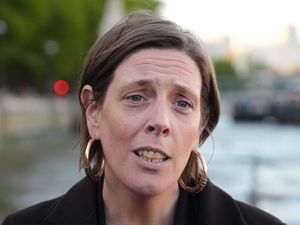
Safeguarding minister Jess Phillips announced the move as she set out the Government’s Vawg strategy.
The Government will crack down on deepfake abuse online as the safeguarding minister vowed “change is coming” under plans to halve violence against women and girls (Vawg) in a decade.
New laws will ban AI “nudification” tools that turn pictures of real people into fake nude pictures and video without their consent.
Safeguarding minister Jess Phillips announced the move as she set out the Government’s Vawg strategy on Thursday to deal with this “national emergency”.
She said: “This strategy does something that none before it ever has. Until now responsibility for tackling violence against women and girls has been left to only the crime-fighting departments, working so often in isolated ways.
“Providing support that is vital, but often too late to truly change the story. This strategy is different. It deploys the full power of the state across national government and local government.”
The plan, which looks at ways to prevent violence, crack down on abusers and support victims, is backed by £1 billion, the minister said.
She told the Commons: “This strategy is more than a document, it is a call from a Government that recognises this as a national emergency, a Government that is willing to back up its words with action.”
It comes as estimates suggest one in eight women were victims of domestic abuse, sexual assault or stalking in the year to March.
In a foreword to the strategy, Prime Minister Sir Keir Starmer, who has made it a personal priority in government to tackle Vawg, said the plan begins a “whole-society effort”.
“I do not intend to diminish the focus on the men that are the perpetrators of this violence,” Sir Keir said.
“We must address the misogyny and inequality that are the root causes of violence against women; and part of that is articulating a positive, aspirational vision for boys and men in Britain today.”

Measures already announced as part of the cross-government strategy include all children in secondary schools being taught about healthy relationships, and teachers trained to spot worrying behaviour in young men early on.
Specialist rape and sexual offences investigators will also be introduced to every police force, better support will be given to survivors in the NHS, and a £19 million funding boost will be handed to councils to provide safe housing for domestic abuse survivors.
On banning nudification tools, Ms Phillips said the Government will work with tech companies to make it impossible for children to take, view or share nude images through “nudity detection filters”.
In a statement Ms Phillips said: “We must stop these images being created and shared while tackling the root causes of negative influences on young men in their schools, homes and online.
“Nudification apps are not used for harmless pranks. They devastate young people’s lives, and we will ensure those who create or supply them face real consequences.”
But the Molly Rose Foundation – set up by bereaved father Ian Russell after his 14-year-old daughter Molly took her own life, having viewed harmful content on social media – raised doubts over the move.
Chief executive of the charity Andy Burrows said the Government’s ambition will be “wholly undermined” by it being voluntary and relying on good will of tech companies that have “consistently failed on the safety of women and girls”.
“Parents will rightly feel let down by the Prime Minister if he continues to put the needs of Big Tech before children and families by failing to match his rhetoric with necessary action,” he said.
Conservative leader Kemi Badenoch criticised the strategy as a “big mess”.
She also said that anti-misogyny classes for teenage boys are only being rolled out because “some people in Labour” watched the Netflix drama Adolescence.
Mrs Badenoch said: “They need to do the right thing, put police officers on the street, stop people who come from cultures that don’t respect women coming into our country, foreign criminals removed as soon as they commit crimes.”
Domestic abuse commissioner for England and Wales Dame Nicole Jacobs said the commitments “do not go far enough” to see the number of people experiencing abuse start to fall.
She added: “Today’s strategy rightly recognises the scale of this challenge and the need to address the misogynistic attitudes that underpin it, but the level of investment to achieve this falls seriously short.”
Children’s Commissioner Dame Rachel de Souza welcomed the range of measures, which included many of her recommendations, but raised concerns “too much of this strategy will only protect girls who are 16 or over”.
She added: “We need robust data measures to see if the strategy is working, but this cannot be at the expense of listening and responding to the risks facing every girl from a young age.”