Prince of Wales pledges support for Brazilian indigenous communities
William described the group of indigenous leaders safeguarding the Amazon rainforest as ‘guardians’.
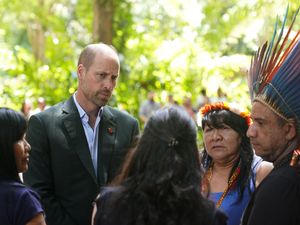
The Prince of Wales has pledged to “support” Brazil’s indigenous communities at the frontline of safeguarding the Amazon.
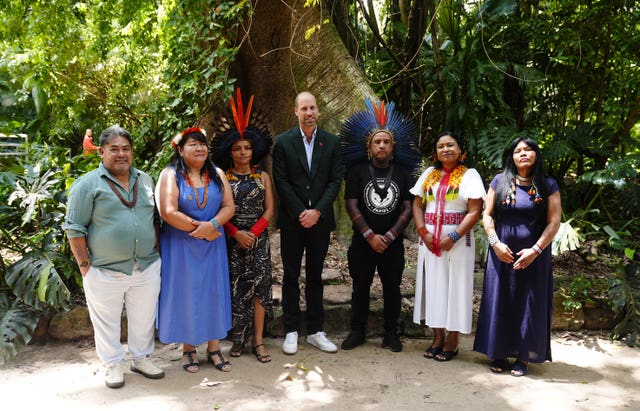
William met a group of indigenous leaders from across the South American nation as his Brazil tour ended and hailed them as “guardians”.
The future King travelled to the South American country to stage his Earthshot Prize in Rio de Janeiro on Wednesday and the following day gave a landmark speech at the Cop30 UN Climate Change summit in Belem, a city in the Amazon.
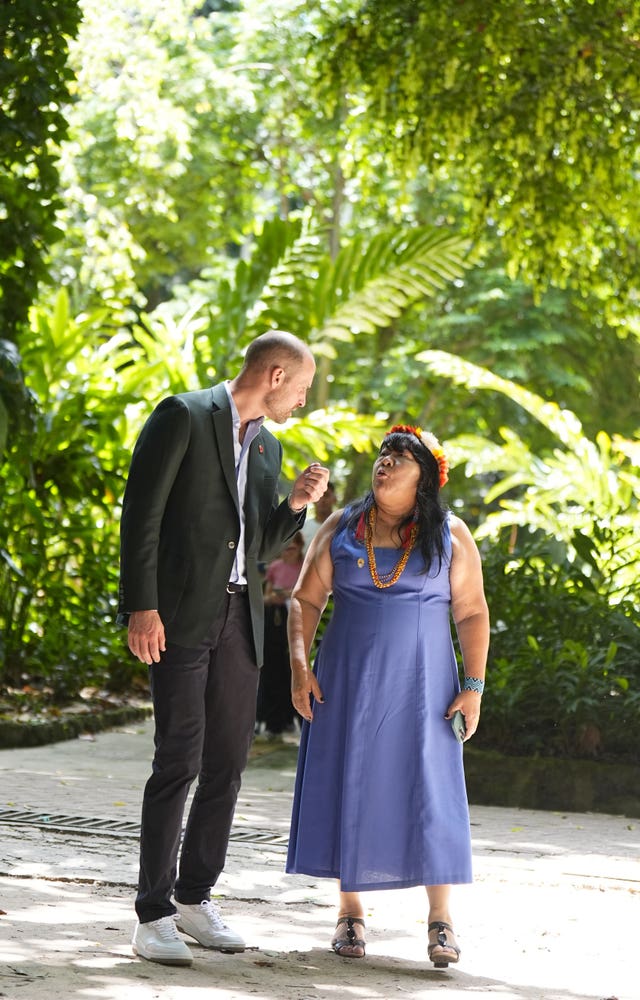
In a mini-rainforest oasis in the centre of Belem, home to the Museu Emílio Goeldi, a museum focused on the scientific study of the Amazon’s natural and sociocultural systems, William told the leaders, “We appreciate you all”.
He went on to say: “Thank you so much, all of you, we do hope things improve and everyone realises the importance of what indigenous people and communities do to protect the natural world.
“You are the guardians and protectors that we all need to support.”
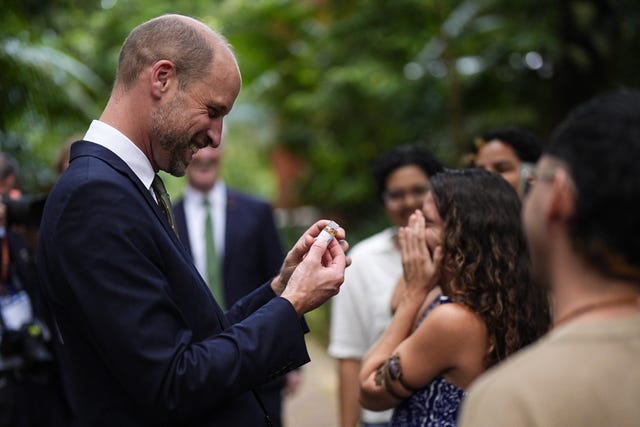
Among the five leaders William met was Juma Xipaia, 33, who has received death threats from organised crime and her fight to protect the Amazon was featured in the documentary Yanuni, which she co-produced with Hollywood star Leonardo Di Caprio.
The film looks at her fight, since childhood, against the construction of the Belo Monte hydroelectric dam in the Xingu river of the Amazon.
She told William how big business was ruining the environment, specifically in the form of the Belo Monte dam, the third largest in the world, and the Belo Sun mine.
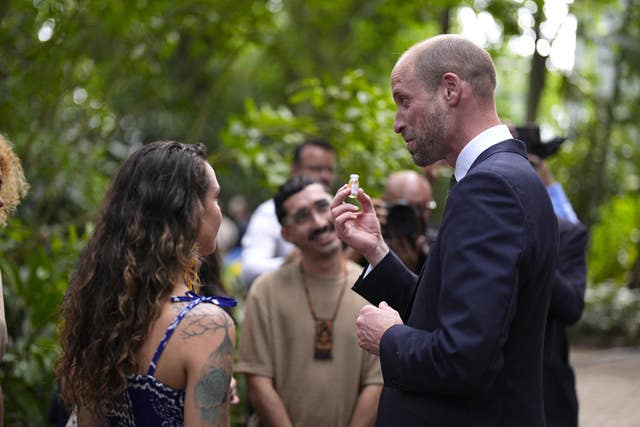
Speaking through a translator after meeting William, she said: “I told him that it is getting worse because of violence.
“I am a young woman and leader of my people, and I have already received six direct death threats and have been under protection from the UN for some time and decided to get back to my territory because an organised crime organisation was threatening our territory.”
She added that indigenous communities also faced “struggles around drugs, alcohol and violence against women and girls.”
When William first arrived, he was met by Stephanie al-Qaq, UK ambassador to Brazil, and Joenia Wapichana, the first indigenous female lawyer in Brazil and President of the National Association for Indigenous Peoples.
They walked together through the botanical garden of the museum grounds before hearing the stories of the leaders who have been trying to combat the impact that big business is having on their native lands.
When William asked whether they felt they had “justice” for what had happened to their land, he was told no, “because the legal system is oriented by political powers.”
Similarly, women indigenous leaders said they felt doubly disadvantaged and that their voices were not being heard.
He was told: “This is a unique moment at Cop30 to raise these issues and your royal highness’s influence is vital for that.”
Before he left, the prince was handed a letter that detailed the struggle of one of the indigenous groups.
Written by Angela Amanakwa Kaxuyana, the letter, which William said he would get translated into English, told of the plight of her people who were forced from their land during the 1968 military dictatorship.
She said that while in theory politicians have approved legislation to protect the land for the indigenous people, Brazil’s President Lula had yet to sign it off.