
Former Wolves hardman who was 'saved by God's hand' after a life of turmoil on and off the pitch
God has forgiven and embraced soccer sinner Derek Jefferson, despite the livid stud-marks that remain on a succession of forwards who pitted their skill against his centre-half savagery.
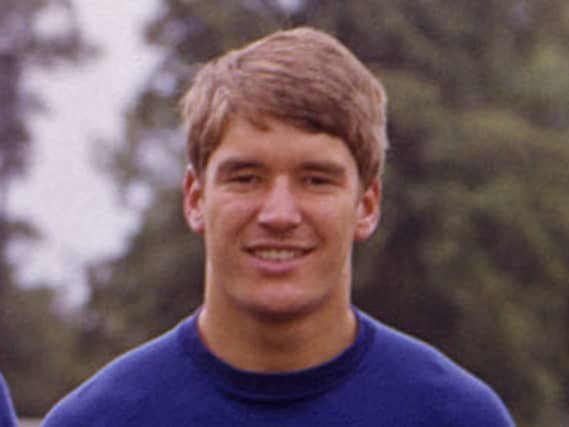


And in the Almighty, the grandfather has found purpose and fulfilment in a once troubled life.
Having witnessed the violence Jefferson doled out while prowling Wolves’ backline, his allegiance to Solihull Renewal Christian Centre – described as a “dynamic family church” - is hard to comprehend.
He has helped those battling addictions, he has provided church-led football coaching courses.

Derek is a very different individual from the brutal hatchet-man who spread a thick layer of fear over football pitches.
His private life was a chaotic rollercoaster ride of women, booze and brawls.
Derek is now one of God’s footballers, a description first bestowed on Old Gold hero Peter Knowles by protest singer Billy Bragg.
The father-of-six is happy, content and settled. He and second wife Linda – Derek’s rakish ways wrecked his first marriage – have been together for 43 years. She is the daughter of a Pentecostal preacher.
Sobriety, common sense and sadness have re-shaped the hardman. He lost a daughter when she was only two years old and, more recently, five friends were taken by Covid.
His 'Saul on the road to Damascus' moment came in 1978, following a serious motorway crash near Worcester.
“I’d been drinking, maybe taken something,” he told me this week, “and was in hospital for two days with concussion. I went back to my parents’ home in Middlesbrough to rehabilitate, attended church and realised the life I was living was not up to God’s standards.
“I just burst out crying. I dropped to my knees and asked God for forgiveness.”
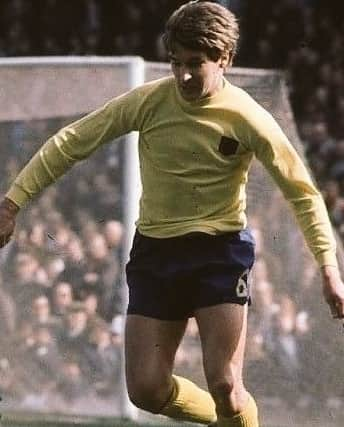
Derek had belatedly stepped back on the Biblical path his parents placed him on decades before. “As a child, they’d take me to a little evangelical church,” he said. “I’d sit at the back and throw sweets at the girls. I wasn’t interested.”
There are a number of 1970s terrace idols, still carrying the scars from X-rated collisions with Derek, who will wish Christianity called during his playing days.
He took no prisoners, often administering tackles so late they began in a different time zone.
If Chelsea defender Ron Harris was “The Chopper”, Molineux had a machete in Jefferson.
Match of the Day’s shocked panel of experts dubbed him an animal, tabloid newspapers peppered their pieces on his performances with descriptions such as “thuggish”, “obnoxious” and, famously, “a pain in the neck”.
Derek was an old-fashioned “stopper”: a man not employed to display creativity and flair, but only prevent the opposition scoring – often with menace, certainly with, to use a military term, “extreme prejudice”.
It was a role shared by such rugged individuals as Harris, Norman “Bite Yer Legs” Hunter and Tommy Smith.
“I had a job to do and my job was to prevent their centre-forward scoring,” Derek told me matter-of-factly. “You had to make sure they didn’t score, sometimes in ways that were not very gentlemanly.
“I was quite aggressive and today you probably wouldn’t get away with it.
“To be honest,” he shrugged, “I’m surprised I didn’t get sent off more than I did. I was the first man ever sent off for Ipswich Town.”
In fairness, many of those forwards – “I didn’t dislike any of them, I found them annoying,” Derek’s at pains to point out – elected to fight fire with fire. They and the man sent to mark them – sometimes physically as well as tactically – simply kicked lumps out of each other.
“When I was marking Kevin Keegan, the commentator said ‘these two really don’t like each other’,” he laughed.
And he vividly recalls no-holds-barred encounters with Leeds, a team with a “hard, but not always fair” reputation in the 1970s. “Facing them was always a brown trousers job,” he put it succinctly.
Away from the memories of blood and bruises, Derek’s career includes a claim to fame that few British players can boast. After leaving Wolves for the North American League, where he turned out for the Boston Minutemen and Washington Diplomats, Jefferson played against the legendary Pele on four occasions.
The many transgressions of Jefferson, who joined Wolves from Ipswich in 1972 and stayed for four seasons, have become the stuff of football folklore.
- He achieved the near impossible feat of getting World Cup hero Geoff Hurst, considered one of the game’s true gents, sent off. “I kicked him and kicked him until he turned round and kicked me,” he grinned. That must’ve been a tough one for even God to forgive.
- He scythed down Chelsea’s Peter Osgood with a tackle so brutal it sparked outrage in an era when poleaxing players was common-place. “It wasn’t great,” he conceded. “I was told at half-time that unless I stopped him, we’d get nailed. Five minutes into the second half I stopped him. Unfortunately, the ball was 10 yards away.”
- He bent Leeds’ Allan Clarke double with a perfectly placed elbow to the midriff during a defensive wall melee – then physically held him upright so the ref wouldn’t detect his indiscretion.
- During post-match pints following a game in Plymouth, Jefferson became embroiled in a bar-room brawl over a woman that left his spanking new club suit shredded. “The breast pocket, with the club’s name on, was just hanging,” he recalled. “The manager wasn’t happy.”
Derek, the product of a Morpeth, Northumberland, council estate, puts some of the turbulence of his playing days down to a lack of guidance from those shaping his fledgling career.
“I left home when I was 15 for Ipswich and went from pillar to post in digs,” he said. “There was no guidance. The fooball club did buy a house and put all the young players in the house, which was quite a break-through at the time.
“That didn’t stop us going out, drinking and getting involved in fist-fights.”
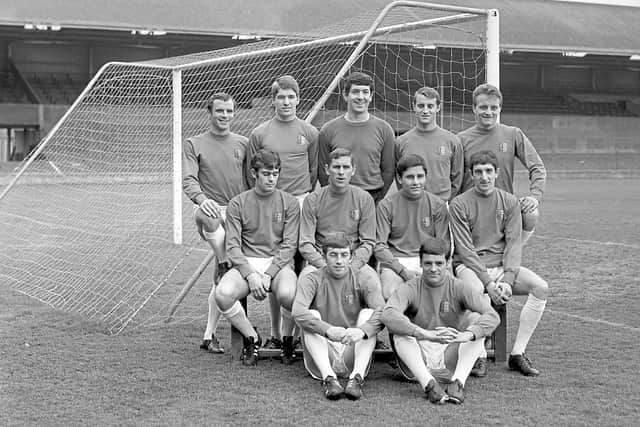
Derek, who lives in Solihull, has mixed emotions over his time at Molineux. His relationship with Wolves’ firebrand manager Bill McGarry was strained from the start.
His life in the Black Country unravelled following the death of daughter Victoria, aged just two.
Tragedy upped his alcohol consumption.
“When I talked to Bill McGarry (about signing for the club) I was on my own, no agents, just me. He guaranteed I’d play in the first team – I asked the question time and again.
“But Wolves already had two very good centre-halfs in Frank Munroe and John McCall. I realised I was brought in to put pressure on them and was dropped after five games.
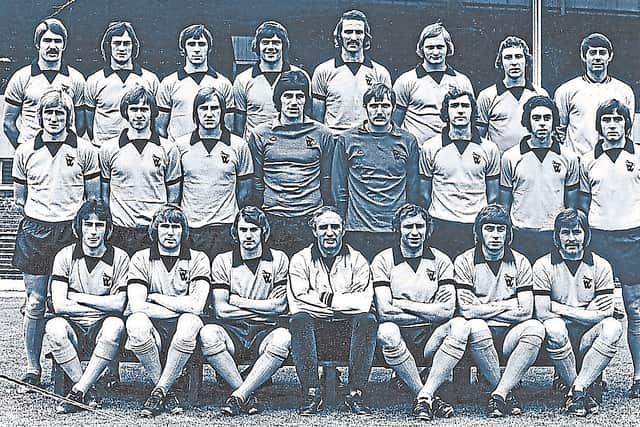
“Bobby Robson (Ipswich and England manager) had a big effect on me, Bill McGarry was a different story. You were there to do a job – his way or the highway.”
He drifted in and out of the first team, amassing 42 senior appearances.
Following the death of Victoria, who suffered a raft of illnesses before succumbing to pneumonia, the benders threatened to become binges as Derek attempted to bury the pain in a bottle. “It sent me a bit loopy,” he said.
“There’s no excuse for the way I lived. I had a friend who was a millionaire and he’d buy a bottle of Champagne to go out with. I had six months of doing that and there was a stage when I thought, ‘I’ve got to get out of this’.”
He thought it, he didn’t do it.
After a year in America, Derek, still on Wolves’ books, was farmed out to Sheffield Wednesday, then signed for Hereford, where he ended his playing career in 1978.
He was lured back by an opportunity that excited him. “I was offered the job of player-coach at Yeovil,” he said. “I rang the chairman to see everything was OK and he said he’d given the job to someone else.
“I was devastated. With my marriage falling apart, which was mostly my fault, I drank, I took something and crashed on the M5.”
Derek was pulled from the very depths by God’s hand, he believes.
He can now assess Derek Jefferson, the footballer, with cold detachment and honesty.
“I was building a reputation for myself and not for the best reasons – fighting in night clubs, womanising... I was obnoxious. I was a thug and tried to live up to that reputation.”
The old, snarling Jefferson still surfaces when he discusses those first division wars.
Yes, he’s reformed, but, when his time comes, St Peter would be wise to wear shinpads.
Comment Guidelines
Iconic Media encourages reader discussion on our stories. User feedback, insights and back-and-forth exchanges add a rich layer of context to reporting. Please review our Community Guidelines before commenting.