
Revolution of Wolves: Kenny Jackett on lighting the fuse in Molineux recovery
At the end of the 2012/13 season, Wolves were in a mess. Having had one manager in Mick McCarthy for almost six years, they had gone through three in just 15 months.

This article contains affiliate links. We may earn a small commission on items purchased through this article, but that does not affect our editorial judgement.
After Dean Saunders’ dismissal it was paramount that the next appointment was spot on.
Wolves had been relegated all the way through the divisions before – and without the right person in the manager’s seat, they were just one more disastrous season from it happening all over again.
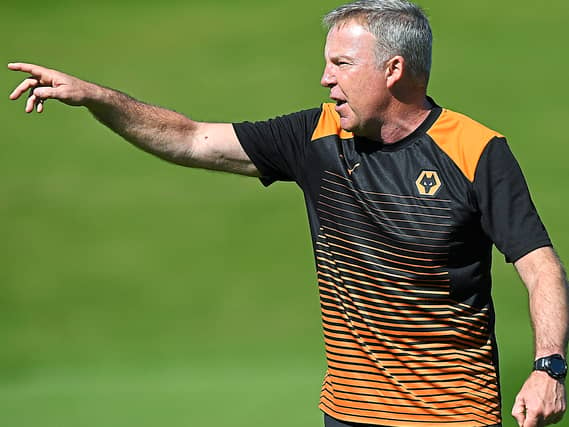
“I had done nearly six years at Millwall and had told the club towards the end of the season that it was going to be my last one there,” Kenny Jackett explains.
“A few jobs came up pretty quickly and I went for an interview at Sheffield United and put in for the Wolves job.”
Twelve candidates were interviewed as part of the initial process, including names such as Steve McClaren, David Weir, Paul Tisdale and Steve Cotterill. Ultimately it came down to a final interview shootout between Jackett and the emerging Uwe Rosler.
Wolves still had many players on the books from the Premier League era, good players and committed players but many still on sizeable contracts, especially for League One.
“The themes through the interviews were very specific to Wolves at the time, with part of it asking what I would do within the first 30 days, and also what was my attitude to developing young players,” says Jackett.
“The 30 days question showed me that they wanted someone to take some action in the first month to really set the tone and take the club in a different direction.
“A lot of decisions you take at a club are best done in the summer where you can have a complete reset, because it’s hard to do that during a season.
“So it was about what I thought Wolves needed to do straight away, and then how I would incorporate the young players, whom CEO Jez Moxey and head of recruitment Kevin Thelwell had said might not necessarily be brilliant from the start, but deserved a chance.
“I had done my homework and could sit there and confidently say I knew the Wolves squad – good, bad and indifferent – and knew what I would change if I was given the opportunity.”
Jackett took the Molineux hierarchy through his plans and it was here, in the series of meetings, that some dramatic proposals were hatched. These included the concept of a ‘Group 3’, or what colloquially became known as the ‘bomb squad’, of senior first-team players whose services would no longer be required and whom, from day one of pre-season, would be separated from the rest of the group.
“When I was assessing the squad and the desire to give young players a chance, I knew we had to squeeze the numbers,” Jackett continues.
“You don’t really want a squad of more than 25 players including three goalkeepers otherwise you end up spinning plates and the work becomes less constructive. With too many players the lads would end up wondering why the manager can’t make his mind up – it would be a shambles.”
“I knew Wolves had a good under-23 group and that there were players I needed to look at. I had seen Aaron McCarey in goal, Ethan Ebanks-Landell and Michael Ihiekwe at centre-back, Jamie Reckord at left-back, Zeli Ismail and Anthony Forde down the right, Lee Evans and Jack Price in midfield, Liam McAlinden and Jake Cassidy up front.
“Elsewhere, Richard Stearman had been out on loan as had Leigh Griffiths and Danny Batth, who had won League One with Sheffield Wednesday, and I wanted to bring them back in.
“I’d been wanting to have a chat with Bakary Sako because he had been making noises to Jez and Kevin that he wanted to stay which was good news.
“I would also be wanting to bring in some new faces as well so when you consider all that, we needed to make space in the squad.
“People called it the bomb squad and that’s fine but I spoke to every one of the fellas involved in that and almost every single one of them said they completely understood it.
“Some of them are good lads and if you take Stephen Ward for example, he acknowledged that the team hadn’t been good enough in the Premier League, and then hadn’t been able to settle back in the Championship.
“There was a feeling that group wasn’t going to be able to win the crowd back – rightly or wrongly – after two relegations, and Stephen felt it was a fair assessment to change things and that he too needed a new challenge.
“You can’t train with 30 players and so some of those more established lads had to move out of the way. There was also a recognition that we were in a difficult place with lots of issues to resolve across the playing squad,” Thelwell added.
“We had several players who wanted to continue to play at a higher level. So it was pretty much a ‘Phoenix from the Flames’ situation, where we said let’s start again, almost from scratch.
“We had a group who didn’t want to be part of it or couldn’t really be part of it because of the finances so we needed to move players on who weren’t going to be part of what we were trying to build.’
For Moxey and chairman Steve Morgan, hearing Jackett’s plans was something that resonated with their own views on the need for a hefty reshuffle of personnel, both for financial reasons but also the need to start afresh and regain the confidence of supporters.
“We had to sort the problem which to a large extent we had caused ourselves,” Moxey explains.
“Part of the recruitment talks during the interview process was to discuss what we thought was needed. We had our own views, we would never think about telling a manager what he should do with his team, but Kenny was the one candidate who really seemed to resonate with what was needed at the club.
“The year of that second relegation was a mess, firstly with Stale Solbakken and then with Dean Saunders, and going all the way down to League One gave us the opportunity to say: ‘We have taken all this flak and had a dreadful couple of years – now we need to lance the boil.’
“We were assessing the candidates to see who would be best placed to do that, and the ideas that Kenny came forward with matched our vision 100 per cent. He was saying that as long as we were prepared to fund what he wanted in terms of needing to let players go, and bring others in, then great.’
“It was a case of cometh the hour, cometh the man,” adds Morgan.
“We needed these players out of the club, and Kenny dealt with it head-on, and was excellent in doing so. He was the perfect head coach to come in at that time and help the club turn the corner.”
The identity of those in the ‘bomb squad’, who were only informed as they checked back in for the first day of pre-season, caused something of a stir. Roger Johnson and Jamie O’Hara whom, rightly or wrongly, had been associated with the team’s decline, were perhaps to be expected. Long-serving and promotion-winning captain Karl Henry, and equally loyal and dedicated ‘Mr Versatile’ Ward, less so.
Later they would be joined by Kevin Foley, player of the year during the Championship-winning 2008/09 campaign, and also then joint-record signing Kevin Doyle.
The latter two would find themselves back involved in the first team, as too O’Hara for a much shorter spell, but it was certainly a line in the sand in terms of moving on from the rollercoaster ride which had afflicted several seasons previously…
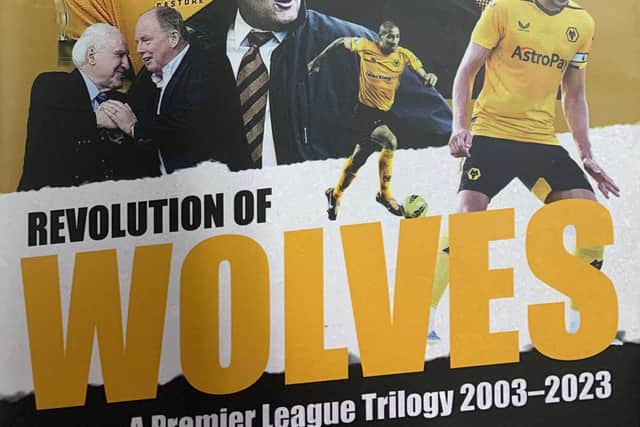
n Revolution Of Wolves: A Premier League Trilogy 2003-2023 examines a remarkable period in the history of one of English football’s most iconic clubs. Published by Pitch Publishing, it is available in Waterstones and online at Amazon https://www.amazon.co.uk/Revolution-Wolves-Premier-Trilogy-2003-2023/dp/1801506450
Comment Guidelines
Iconic Media encourages reader discussion on our stories. User feedback, insights and back-and-forth exchanges add a rich layer of context to reporting. Please review our Community Guidelines before commenting.