
This is what it really takes to be a firefighter in Shropshire
Have you ever wondered what it takes to be a firefighter?

My dream of a job in the emergency services (police dog handler to be precise) was dashed when at a careers fair at school in the 1970s I was told there was a minimum height requirement of 5'4". Thank goodness that requirement was dropped in 1990.
But I was intrigued when Shropshire Fire and Rescue Service announced it was recruiting wholetime firefighters and put on its website practice tests for those interested. I set out to see if I had, at least the non physical skills to go forward to apply.
I might get myself fit but a look at the practical tests undertaken in full protective kit and I realised I couldn't have passed even when I was half my age.
A spokesperson said: "Shropshire Fire and Rescue Service are looking for individuals who have the compassion to help people at their most vulnerable, individuals who have the courage to go in one direction when all around them are going in the other and individuals who have the communication skills to engage with all sectors of our community."
Applications for those who are interested close at midday on February 5.
If you go online to shropshirefire.gov.uk/wholetime-firefighters there is a plethora of information about the role, what it takes and the full recruitment process.
The services says that the common image of fire and rescue services is traditionally one of firefighters turning out in fire appliances and fighting fires.
"Some work absolutely involves attendance at fires, but the role of the Service, particularly in Shropshire is much wider, " a spokesperson said.
"Greater emphasis has been placed on the Fire and Rescue Service's role within the community, with firefighters spending more time raising awareness, conducting home safety assessments,
communicating fire prevention and other safety messages. Work and training is geared to responding at top speed to emergency calls, regardless of weather conditions or time of day or night.
"Every time firefighters are called to the scene of an emergency they must be prepared to deploy each and every skill in which they have been trained.
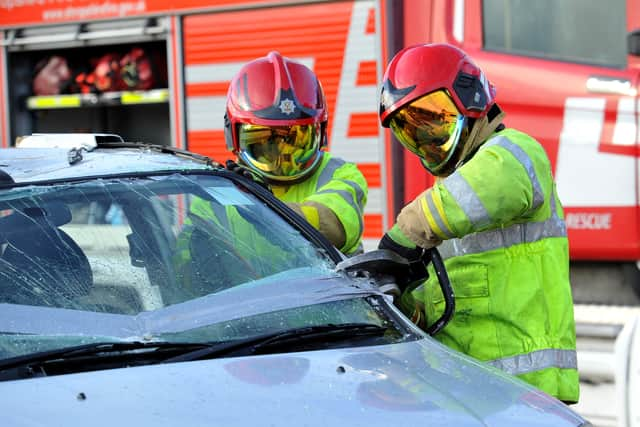
"Fully competent firefighters are skilled technicians capable of using the most modern equipment, methods and techniques to undertake the full range of firefighting, rescue, road accidents and other emergencies when called upon to deal with."
"When you arrive at an incident as part of a team under the command of a manager, firefighters have to absorb a great deal of information rapidly and apply skills learnt in conditions which will often be extremely dangerous and confusing."
The practice tests are based on three papers, numerical verbal and mechanical reasoning.
I reasoned that verbal reasoning would be the one I would be the best at, but with just 12 minutes to answer 12 practice questions, nerves kicked in.
There were questions varying from smoke alarms - battery and mains powered, to the main causes of accidental fires and at what time of day are there most fires. I was slightly disappointed to get just 8/12 questions right.
Numerical reasoning was as I expected as my maths skills for the questions completely failed me and I scored just 5 out of 12 and didn't even finish the test in time.
But what did surprise me was the 6/8 I scored for mechanical reasoning! I have to thank my Brownie Firefighting badge for my understanding of how oxygen helps a fire burn and that hot air rises.
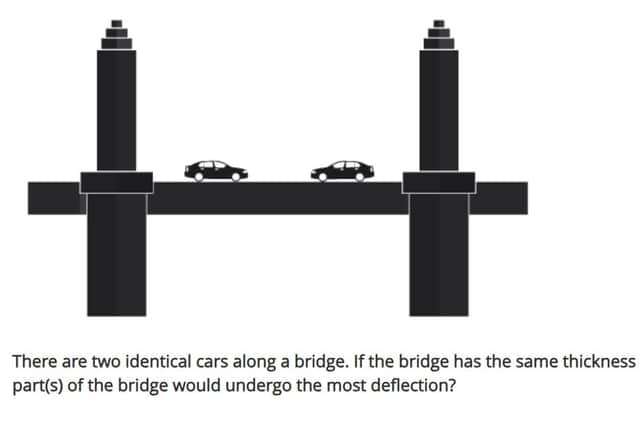
I also somehow understood questions on bolt cutters, wing mirrors and vehicles on a bridge, maybe I have common sense after all.
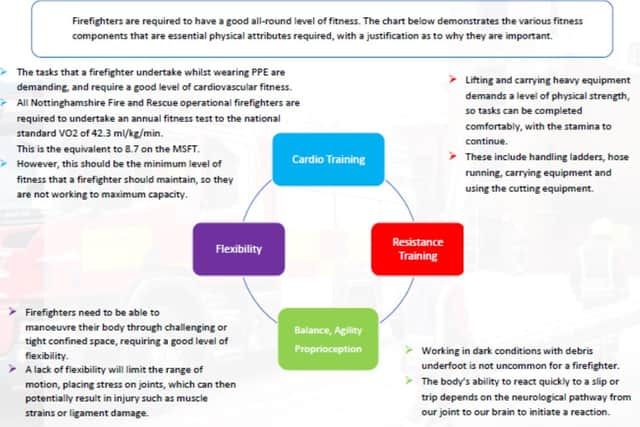
The National Firefighter Physical Tests are known as Job Related Tests or JRTs and are part of the selection process and the Fire Service offers a 12 week online programme of exercise to help candidates prepare. Candidates will be asked to complete a medical check prior to undertaking these tests.
Shropshire Fire and Rescue Service has six Job Related Tests
- Ladder Climb
- Casualty Evacuation
- Ladder Lift
- Confined Space
- Equipment Assembly
- Equipment Carry
The ladder climb is a test of confidence whilst working at height. An instructor will explain what is expected and demonstrate a 'leg lock' at ground level before commencing the test.
Wearing full Personal Protective Equipment (PPE), including a harness, candidates must demonstrate the correct ‘leg lock’ at ground level before commencing the test.
Candidates must then ascend a fully extended 13.5 metre ladder to approximately second storey height and demonstrate a ‘leg lock’ and lean back with arms outstretched and describe a symbol shown on the floor. The candidate will then descend the ladder and safely dismount.
The equipment carry sees candidates have to: Drag a hose reel from an appliance for 25 metres, then jog back 25 metres; Pick up and carry 2 coiled 70 mm hoses for 100 metres; Carry 1 coiled 70 mm hose at chest height for 25 metres, and then jog back 75 metres; Pick up and carry a 2.4 metre suction hose and basket strainer for 100 metres, then jog back 100 metres; Pick up and carry a simulated ‘Light Portable Pump’ (this will be a barbell on the day) for 100 metres (weighing approximately 25kgs).
Enclosed Space Simulation, combinesconfidence, agility and stamina to negotiate the crawl way within the specified time and will also identify claustrophobia.
Candidates in full fire kit and wearing a breathing apparatus facemask will be required to negotiate a measured crawl way within a set time.
Half the route will be with clear vision and the other half with obscured vision.
Candidates will then be fitted with a facemask which will obscure their vision and required to transport a small dummy through the crawl way.
There is only one way through crawl way which requires the candidate to safely negotiate obstacles and changes in levels/direction. Any drop-down sections must be negotiated feet first.
"Candidates are required to undertake physical tests which assess fitness levels, strength and manual dexterity as well as your level of confidence in exercises that simulate regular tasks involved in being a firefighter."
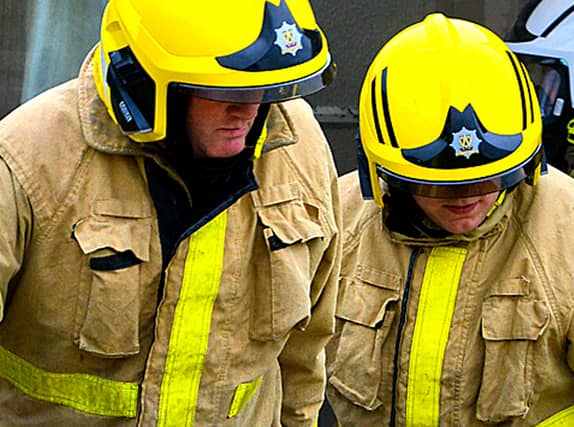
"Candidates will also be required to complete the tests wearing full personal protective clothing (PPE) which will be supplied and consists of a firefighter's helmet, over-trousers, tunic, boots and standard gloves."
Comment Guidelines
Iconic Media encourages reader discussion on our stories. User feedback, insights and back-and-forth exchanges add a rich layer of context to reporting. Please review our Community Guidelines before commenting.