Telford's Very Hungry Caterpillars . . . well, maggots
They have been dubbed Telford's Very Hungry Caterpillars . . . although it turns out they are, in fact, maggots.
And, with a lot of munching and a little luck, this is what they will turn into.
Tens of thousands of the grubs have descended on Telford, strippng trees of leaves and covering homes and wheelie bins.
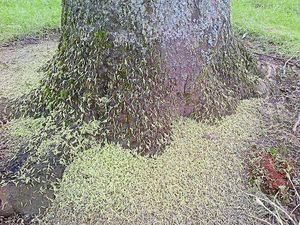
The larvae , which will eventually turn into ash saw flies, are capable of stripping a tree of its entire leaves.
They have been seen in Telford before, but it is believed the mild winter and warm spring have brought them in ever-increasing numbers this year.
Not content with attacking trees in Sutton Hill, more of the grubs have been spotted in gardens in Woodside.
Matthew Seabrook, tree officer for Telford & Wrekin Council, explained that they have now been able to identify the pests and are hoping that they can find a way to treat the soil around the trees to prevent the infestation next year.
He said: "This is the second year we have noticed them on these trees.
"We think, because of the mild winter and the wet spring, that has added to the proliferation of the saw fly.
"What happens is, the flies lay their eggs, they hatch, they then eat the leaves then they change colour, come down the tree and create a cocoon and bury in the soil underneath.
"We're going to find out how we can try and treat the ground underneath to try and reduce the problem."
Mr Seabrook said that in order to identify the cause of the problem, council officers have roped in some of the country's leading horticulturalists.
He said: "We have now been able to establish what they are thanks to a bit of help from the Royal Horticultural Society entomologists.
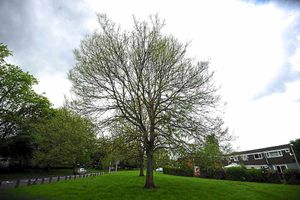
"Two weeks ago these trees were in full leaf, they do generate some late foliage as a reaction but it will not be as prolific as it should be.
"They will leaf up a big more but it will probably be a few months before they have some more foliage."
Stuart Edmunds, a spokesman for the Shropshire Wildlife Trust, said: "I contacted the county experts on flies and caterpillars and the best suggestion I have had is that they are actually larvae of tomostethus nigritus; the Ash Sawfly.
"There are over 450 species of sawfly in the UK, so the research has been tough work."
Not content with stripping trees in Sutton Hill, more of the grubs have been spotted in gardens in Woodside.
Karla Brown, 25 and Michael Hunnisett, 27 have found the creepy-crawlies over trees in their garden and covering their wheelie bin.
They have lived in their home in Wantage for two years but said they have never seen anything like the number of caterpillars that have appeared.
Miss Brown said: "I first noticed them three days ago. I noticed one then I looked on the tree and they were everywhere.
"It is my worst fear, loads of little things around. They've been going over the path as well.
"There's loads of black stuff all round the bottom and I've been looking on the internet and it said they might be eggs.
"I noticed a few of the leaves on the tree start curling up, then they just started disappearing."
Fly facts:
The green, worm-like larvae of the ash sawfly chew the leaves of ash trees in spring
During the early stages of an infestation of the fly in trees, its larvae make small pinholes in the leaves
The brownheaded ash sawfly spends the winter as a full-grown larva within a cocoon in soil around the base of previously infested ash trees
The larvae are active in May and become full-grown by early June
Late spring frosts can kill-off large numbers of the fly
They can be treated with most garden insecticides