
Curfew imposed on two areas of Paris to prevent further disorder
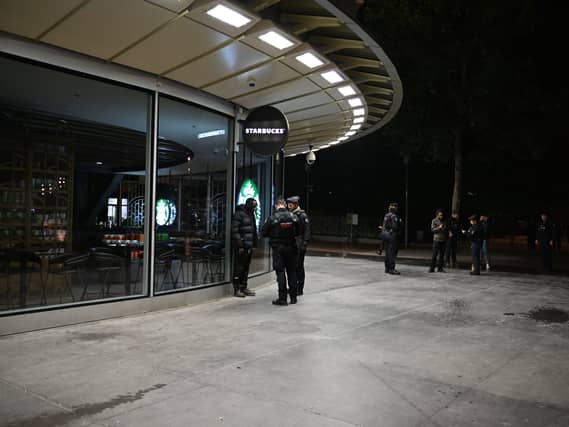

The measures followed some of France’s worst rioting in years over the weekend.
Paris police issued an overnight curfew on Monday in two areas of the French capital, after a weekend marred by France’s worst rioting in years that targeted city halls, other public buildings and thousands of businesses across the country.
The order aimed to protect “people and property from the violence and looting”, Paris police said.
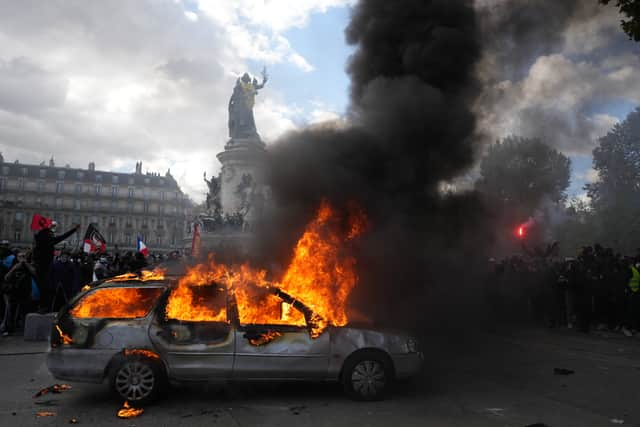
The curfew prohibits anyone from entering or remaining on the Place de la République, where rioting took place on Saturday, and the shopping neighbourhood of Les Halles, which has been subject to looting.
The curfew was in effect from 11pm on Monday (10pm BST) until 6am on Tuesday (5am BST). In addition, gatherings and demonstrations were banned from 8pm (7pm BST), the Paris police said.
On Monday, French prime minister Sébastien Lecornu called for “very limited” and “localised” curfews.
In northern France, local authorities imposed a curfew for children and teenagers under 18 in several cities, including Lille, starting from Monday and for the next two days from 8pm to 6am. Nice, on the French Riviera, also imposed an overnight curfew for minors from 9pm.
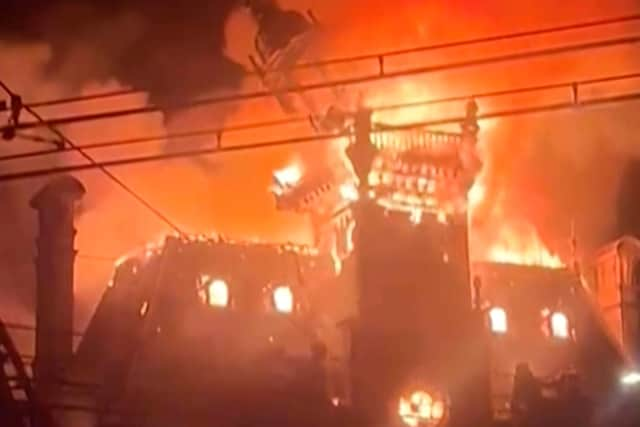
Mr Lecornu defended the police handling of the unrest, saying that “despite scenes of severe violence and extensive property damage, no-one was killed, and that is a miracle”.
Mass protests in France are often tainted by violence on the fringes of otherwise peaceful marches, leading to clashes with police.
Saturday’s unrest recalled the riots that followed the fatal police shooting of a teenager in 2023, when authorities imposed local curfews, and violence during the yellow vest movement that began in 2018 over fuel prices and broader economic grievances.
The prime minister’s instructions come after interior minister Laurent Nuñez offered his resignation on Sunday. But French president Emmanuel Macron refused it, “given the need for continued command of law enforcement in the current context”.
He instructed Mr Nuñez “to take all necessary steps to ensure full transparency about the failures in planning and intelligence-gathering that led to the violence”, the statement said.
Mr Macron also asked for the introduction of “new policing tactics on the ground as quickly as possible” to put an end to the violence.
On Sunday evening, groups set fire to bins, bicycles and other objects in the streets and looted businesses in Paris, Lyon, Marseille and other cities. That followed the violence during nationwide protests Saturday against rising living costs and poor conditions in schools. At least 2,400 people were arrested across the country.
Authorities estimated on Monday that at least 3,000 businesses were damaged or looted in several cities.
During the unrest, flames engulfed the 19th-century City Hall in Limoges, in central France, causing its roof to collapse and nearly destroying the building.
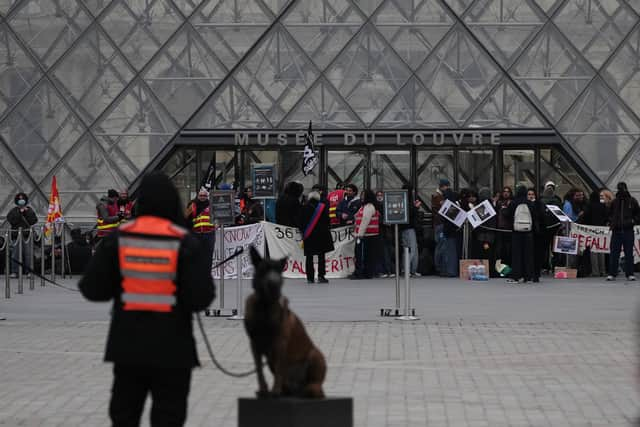
On Monday, clean-up crews and firefighters cleared shattered glass and other debris from the streets of Paris.
Ouri Zagoury, owner of a video game shop near Paris’ Place de la République, said that he closed the shop on Saturday afternoon, but then saw looters forcing their way in on surveillance cameras.
“There were so many people coming in and out. And even though I called the police, they said not to intervene, that they would come, but they never did, which is another problem,” Mr Zagoury said.
Jordan Bardella, president of the far-right National Rally party, pointed to the government’s failure to prevent violence.
“The government has failed, the head of state has failed in his essential duty of protecting the French people,” he told reporters at the party’s headquarters.
“I call on the people of France now, beyond their right to protest, to use their voting power.”
He is campaigning alongside far-right leader Marine Le Pen, whose polling numbers have suggested for months that she is the front-runner in next spring’s presidential election.