Deep freeze hits Ukraine as Trump says Putin agrees to halt power grid attacks
The US leader said Vladimir Putin had agreed to halt attacks on power in the Ukrainian capital and other regions as bitter winter weather takes hold.
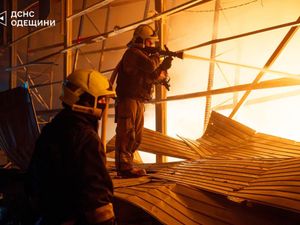
Ukraine is awaiting signs that Russia is abiding by a commitment US President Donald Trump said Moscow had made to temporarily halt attacks on Ukraine’s power grid, as Kyiv and other regions suffer their bitterest winter weather for years.
Mr Trump said Russian president Vladimir Putin had agreed to his request not to target the Ukrainian capital and other towns for one week, as the region experiences frigid temperatures that have brought widespread hardship to civilians.
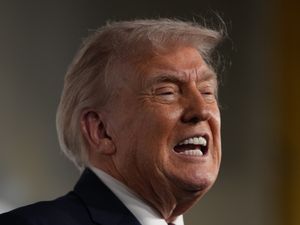
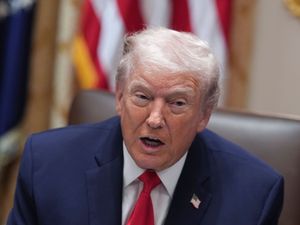
“I personally asked President Putin not to fire on Kyiv and the cities and towns for a week during this … extraordinary cold,” Mr Trump said during a Cabinet meeting at the White House, adding that Mr Putin has “agreed to that”.
The US leader did not say when the call with Mr Putin took place nor when the moratorium would go into effect, and the White House did not immediately respond to a query seeking clarity about the scope and timing of any limited pause.
Kremlin spokesperson Dmitry Peskov confirmed on Friday that Mr Trump “made a personal request” to Mr Putin to stop targeting Kyiv for a week until February 1 “in order to create favourable conditions for negotiations”, Mr Peskov said.
The mention of February 1 was confusing since that is only two days away — not a week. Also, the cold weather is expected to get worse next week, with temperatures dropping even further.
Asked if Moscow agreed to Mr Trump’s proposal, Mr Peskov said: “Yes, of course.” But he refused to answer further questions about whether the agreement covered only energy infrastructure or all aerial strikes, and when the halt on strikes on Kyiv was supposed to start.
Ukrainian president Volodymyr Zelensky was sceptical about Mr Putin’s readiness for such a step as Russia’s all-out invasion approaches its four-year anniversary next month with no signs that Moscow is willing to reach a peace settlement despite a US-led push to end the fighting.
“I do not believe that Russia wants to end the war. There is a great deal of evidence to the contrary,” Mr Zelensky said on Thursday.
He said that Ukraine is ready to halt its attacks on Russia’s energy infrastructure, including oil refineries, if Moscow also stops its bombardment of the Ukrainian power grid and other energy assets.

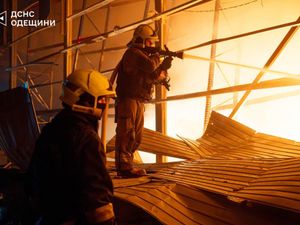
Over the past week Russia has struck Ukrainian energy assets in the southern Ukrainian city of Odesa and northeastern Kharkiv. It also hit the Kyiv region on January 28, killing two people and injuring four.
Russia fired 111 drones and one ballistic missile at Ukraine overnight, injuring at least three people, the Ukrainian Air Force said. The Russian defence ministry, meanwhile, said that its air defences overnight shot down 18 Ukrainian drones over several Russian regions, as well as the annexed Crimea and the Black Sea.
Russia struck Ukrainian energy assets in several regions of Ukraine on Thursday but there were no strikes overnight, Mr Zelensky said on Friday.
In a post on social media, he also noted that Russia has turned its attention to targeting Ukrainian logistics networks and that Russian drones and missiles hit residential areas of Ukraine overnight, as they have most nights during the war.
Kyiv, which recently has endured severe power shortages, is forecast to enter a brutally cold stretch starting on Friday that is expected to last into next week. Temperatures in some areas will drop to minus 30C.
Russia has sought to deny Ukrainian civilians heat, light and running water over the course of the war, in a strategy that Ukrainian officials describe as “weaponising winter”.
The possibility of a respite in energy sector attacks was discussed at last weekend’s meeting in Abu Dhabi, the capital of the United Arab Emirates, between envoys of Ukraine, Russia and the United States, Mr Zelensky said, adding that he had agreed to adhere to a “reciprocal approach” on energy assaults.
“If Russia does not strike us, we will … take corresponding steps,” he told reporters.
Further talks were expected on Sunday in Abu Dhabi but that could change because of a spike in tensions between the United States and Iran.
It was unclear whether and how any partial truce might work amid ongoing wider fighting and mistrust between the two countries.
“There is no ceasefire. There is no official agreement on a ceasefire, as is typically reached during negotiations,” Mr Zelensky said. “There has been no direct dialogue and no direct agreements on this matter between us and Russia.”
Ukraine had originally proposed a limited energy ceasefire at talks in Saudi Arabia last year, Mr Zelensky said, but it gained no traction.
Disagreement over what happens to occupied Ukrainian territory, and Moscow’s demand for possession of territory it has not captured, are a key issue holding up a peace deal, according to Mr Zelensky.
“We have repeatedly said that we are ready for compromises that lead to a real end to the war, but that are in no way related to changes to Ukraine’s territorial integrity,” he said.
“The American side understands this and says that there is a compromise solution regarding a free economic zone.”
Ukraine demands control over such a zone, he said.