Immigration crackdown chief to leave Minneapolis
US President Donald Trump is scaling back the federal presence in the city in the wake of a second fatal shooting by Ice officers.
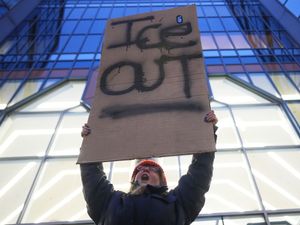
US Border Patrol commander Gregory Bovino is expected to leave Minneapolis on Tuesday.
The Trump administration is reshuffling the leadership of its immigration enforcement operation and scaling back the federal presence after a second fatal shooting by Immigration and Customs Enforcement (Ice) officers.
President Donald Trump said he was placing his border tsar, Tom Homan, in charge of the mission, with Mr Homan reporting directly to the White House, after Mr Bovino drew condemnation for claiming the man who was killed, Alex Pretti, had been planning to “massacre” law enforcement officers, a characterisation that authorities had not substantiated.

Saturday’s fatal shooting of Mr Pretti, an intensive care unit nurse, by Border Patrol agents ignited political backlash and raised fresh questions about how the operation was being run.
Mr Bovino’s leadership of highly visible federal crackdowns, including operations that sparked mass demonstrations in Los Angeles, Chicago, Charlotte and Minneapolis, has drawn fierce criticism from local officials, civil rights advocates and congressional Democrats.
A person familiar with the matter told The Associated Press that Mr Bovino is among the federal agents leaving Minneapolis.
The departure accompanies a softer tone from Mr Trump on the Minnesota crackdown, including the president’s touting of productive conversations with the governor and Minneapolis mayor Jacob Frey.
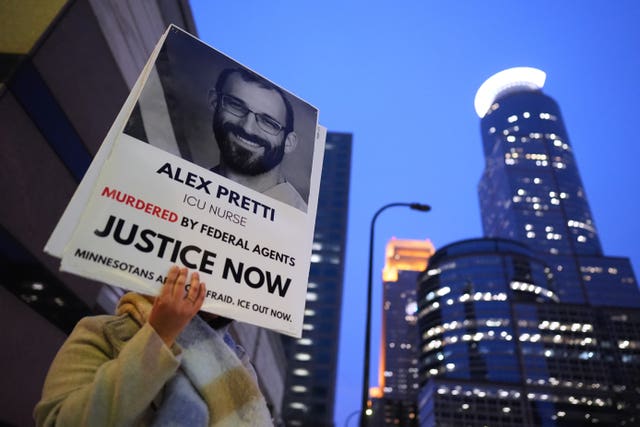
The mayor said he asked Mr Trump in a phone call to end the immigration enforcement surge, and Mr Trump agreed the present situation cannot continue. Mr Frey said he would keep pushing for others involved in Operation Metro Surge to go.
Mr Homan will take charge of Ice operations in Minnesota. Mr Frey said he planned to meet Mr Homan on Tuesday.
Mr Trump and Democratic governor Tim Walz spoke in a phone call and later offered comments that were a marked change from the critical statements they have exchanged in the past. Their conversation happened on the same day a federal judge heard arguments in a lawsuit aimed at halting the federal immigration enforcement surge in the state.
“We, actually, seemed to be on a similar wavelength,” the president wrote in a social media post.
Mr Walz, in a statement, said the call was “productive” and that impartial investigations into the shootings were needed. Mr Trump said his administration was looking for “any and all” criminals the state has in their custody. Mr Walz said the state Department of Corrections honours federal requests for people in its custody.
Meanwhile, lawyers for the administration, the state and the cities of Minneapolis and St Paul appeared on Monday before US District Judge Katherine Menendez, who is considering whether to grant requests to temporarily halt the immigration operation.
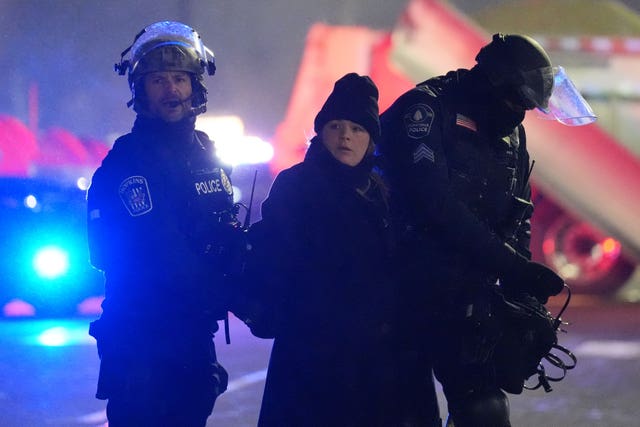
She said the case was a priority but in an order later on Monday she told the federal government’s lawyers to file an additional brief by 6pm on Wednesday. She told them to address, among other things, the assertion by the state and cities that the purpose of Operation Metro Surge is to punish them for their sanctuary laws and policies.
Lawyers for the state and the Twin Cities argued the situation on the street is so dire it requires the court to halt the federal government’s enforcement actions.
“If this is not stopped right here, right now, I don’t think anybody who is seriously looking at this problem can have much faith in how our republic is going to go in the future,” Minnesota assistant attorney heneral Brian Carter said.
The judge questioned the government’s motivation behind the crackdown and expressed scepticism about a letter Attorney General Pam Bondi recently sent to Mr Walz. The letter asked the state to give the federal government access to voter rolls, to turn over state Medicaid and food assistance records, and to repeal sanctuary policies.
“I mean, is there no limit to what the executive can do under the guise of enforcing immigration law?” Judge Menendez asked. She noted that the federal requests are the subject of litigation.
Brantley Mayers, a Justice Department attorney, said the government’s goal is to enforce federal law. Mr Mayers said one lawful action should not be used to discredit another lawful action.
Judge Menendez questioned where the line was between violating the constitution and the executive’s power to enforce the law. She also asked whether she was being asked to decide between state and federal policies.
“That begins to feel very much like I am deciding which policy approach is best,” she said.
At one point, while discussing the prospect of federal officers entering residences without a warrant, the judge expressed reluctance to decide issues not yet raised in a lawsuit before her.
The state of Minnesota and the cities sued the Department of Homeland Security earlier this month, five days after Renee Good was shot by an Immigration and Customs officer. Mr Pretti’s shooting added urgency to the case.