Ukraine’s battered power grid faces unprecedented challenge – energy minister
Russia has hammered Ukraine’s power grid, especially in winter, throughout the war.

Russia has not spared a single Ukrainian power plant from attack since its all-out invasion, Ukraine’s new energy minister said.
Denys Shmyhal was speaking as a recent escalation of aerial bombardments left hundreds of thousands of people without heat or light for days amid the coldest winter for years.
Mr Shmyhal said Russia has conducted 612 attacks on Ukraine’s energy infrastructure objects over the last year. That barrage has intensified in recent months as nighttime temperatures plunge to minus 18C.

“Nobody in the world has ever faced such a challenge,” Mr Shmyhal told politicians in a speech at Ukraine’s parliament.
Russia has hammered Ukraine’s power grid, especially in winter, throughout the war. It aims to weaken the Ukrainian will to resist in a strategy that Kyiv officials call “weaponising winter”.
Securing from abroad new missile supplies for air defences that can counter Russia’s power grid attacks is a difficult and exhausting process, Ukrainian President Volodymyr Zelensky said, revealing that some of the country’s air defence systems were out of missiles and at Russia’s mercy until a new shipment arrived on Friday morning.
Obtaining supplies requires intense diplomatic pressure due to minimum stockpile levels and national laws in allied countries, according to the Ukrainian leader.
“But honestly, what do those rules and laws mean when we are at war and we desperately need these missiles?” Mr Zelensky said.
The grim outlook roughly halfway through the winter season coincides with uncertainty about the direction and progress of US-led peace efforts.

Mr Zelensky said on Friday that a Ukrainian delegation is on its way to the United States to try to finalise with Washington documents for a proposed peace settlement that relate to post-war security guarantees and economic recovery.
If American officials approve the proposals, the US and Ukraine could sign the documents next week at the World Economic Forum in Davos, Switzerland, Mr Zelensky said at a Kyiv news conference with Czech President Petr Pavel.
US President Donald Trump plans to be in Davos, organisers say.
Russia would still need to be consulted on the proposals.
In Ukraine, the hardship was acute amid extended blackouts.
“This is a critical moment,” Jaime Wah, the deputy head in the Kyiv delegation of the International Federation of Red Cross and Red Crescent Societies, said on Friday.
“This is the hardest winter since the escalation of the conflict: punishing cold temperatures and the lack of heating and electricity are affecting millions who are already pushed to the edge by years of violence and economic strain,” he told a briefing in Geneva.

Ukraine’s power shortage is so desperate that Mr Shmyhal urged businesses to switch off their illuminated signage and exterior decorations to save electricity.
“If you have spare energy, better give it to people,” the energy minister said. “This is the most important thing today. People will be grateful.”
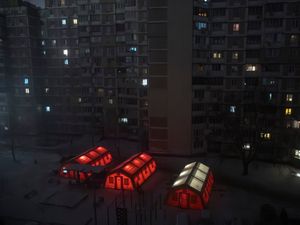
Ukraine has introduced emergency measures, including temporarily easing curfew restrictions to allow people to go whenever they need to public heating centres set up by the authorities, Mr Shmyhal said, adding that hospitals, schools and other critical infrastructure remain the top priority for electricity and heat supplies.
Officials have instructed state energy companies to urgently purchase imported electricity covering at least 50% of their own consumption, according to Mr Shmyhal.