Kenyan police clash with demonstrators leaving 10 dead
Police officers stopped vehicles from accessing the centre of Nairobi.
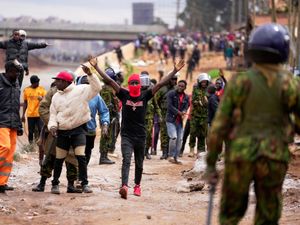
Police in Kenya have clashed with demonstrators during the latest anti-government protests, leaving 10 people dead, according to the state-funded human rights commission.
Authorities blocked major roads leading into the capital, Nairobi, and most businesses closed amid the strictest measures yet to contain the unrest.
Protesters lit bonfires and threw stones at police. Police fired and hurled tear gas canisters, injuring demonstrators.
Young men carried another man, his shirt drenched in blood, saying he had been shot. The protests were reported in 17 of 47 counties.
Kenyans had planned demonstrations on July 7 to protest against police brutality, poor governance, and to demand President William Ruto’s resignation over alleged corruption and the high cost of living.
July 7 , known as Saba Saba, is a significant date in Kenya’s recent history, marking the first major protests 35 years ago that called for a transition from a one-party state to a multi-party democracy, which was realised in the 1992 elections. Saba Saba is Swahili for Seven Seven, representing July 7.
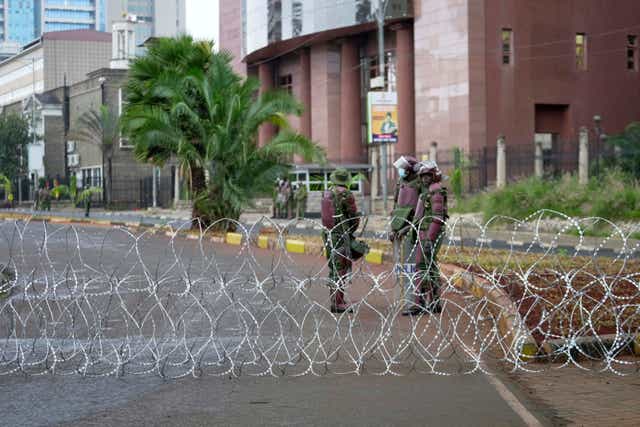
Police officers were stopping private and public vehicles from accessing the city centre. They were also blocking most pedestrians from entering the capital, only allowing through those deemed to have essential duties.
“There is no reversing the Gen Z Saba Saba-like spirit,” said Macharia Munene, professor of history and international relations at United States International University Africa in Nairobi.
“Attempt to criminalise protests is reactive and will not work. It instead makes the government appear retrogressive and desperate enough to subvert the constitution.”
Public service minister Geoffrey Ruku had urged all government employees to report to work on Monday, insisting that the demonstrations would not disrupt public services.
Interior minister Kipchumba Murkomen said on Sunday that the government would not tolerate violent protests and that police would be deployed to ensure public safety.
The roads leading to the country’s parliament and the president’s office were barricaded using razor wire.
On the outskirts of the city in Kitengela town, police fired tear gas on Monday to disperse protesters who had lit bonfires on the road that connects to neighbouring Tanzania.
“They have blocked the roads, blocking us from our work. I am a roadside vendor and I am supposed to get to town and buy merchandise to sell along the road,” said protester Caleb Okoth. “What do they want us to eat? People are being beaten like dogs for protesting for their rights.”
The country has recently experienced a wave of violent demonstrations, initially sparked by calls for police accountability following the death of a blogger in police custody.
During protests on June 17, a civilian was shot at close range by police officers, further angering the public and prompting plans for additional demonstrations.
On June 25, at least 16 people were killed and more than 400 injured during protests against police brutality, which were timed to coincide with the one-year anniversary of anti-tax protests where over 60 people lost their lives.