
Police feared dissident gun attack if Drumcree parade went ahead, court told
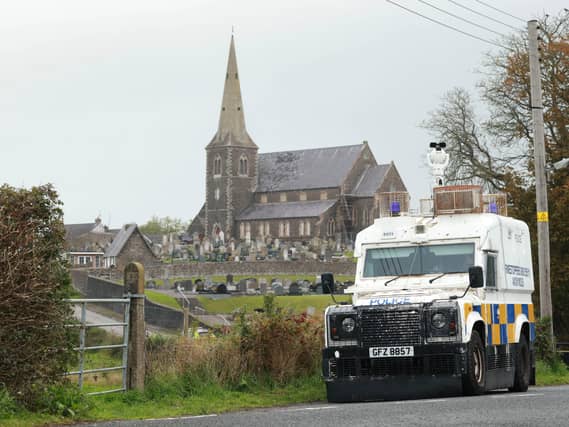

An application for judicial review against the decision to ban the parade is being heard in Belfast.
Police feared that dissident republicans would attack officers with guns if they had facilitated the Drumcree parade passing along the Garvaghy Road in Portadown, Co Armagh, the High Court in Belfast has heard.
During a legal challenge to a decision by the Northern Ireland Secretary Sir Chris Bryant to ban the parade, the court also also heard reference to comments from a police document which referred to “feelings of PIRA” (Provisional IRA).
A barrister for the Police Service of Northern Ireland (PSNI) told the court that when the decision to prohibit the Orange Order march had been taken, all “lawful and proportionate options” to facilitate the policing of the parade had been “exhausted”.
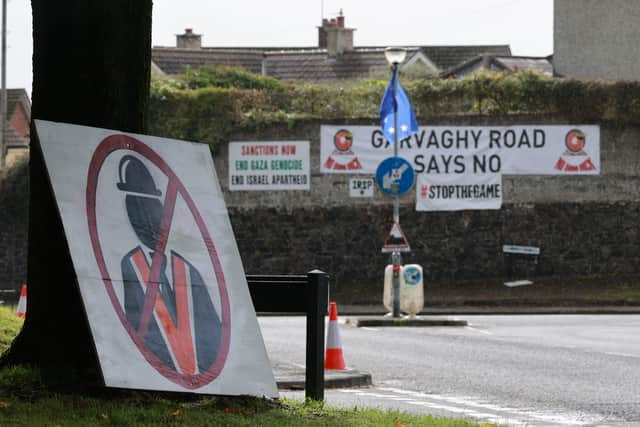
Members of the Orange Order are seeking a judicial review after Sir Chris halted the parade from going along the mainly nationalist Garvaghy Road amid large-scale protests by residents opposed to the procession.
His decision on October 9 followed a two-week stand-off.
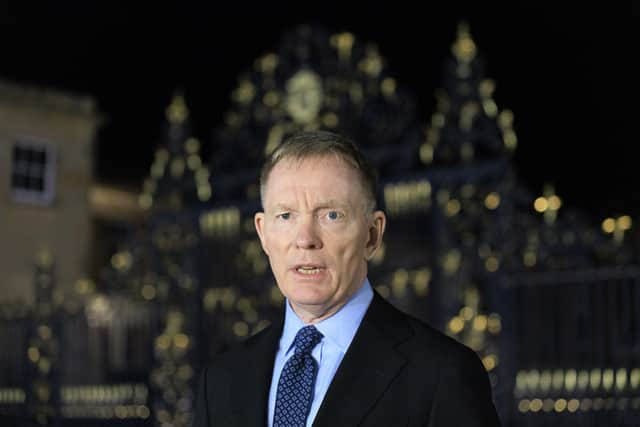
The application for judicial review against that decision is being heard by Mr Justice Scoffield.
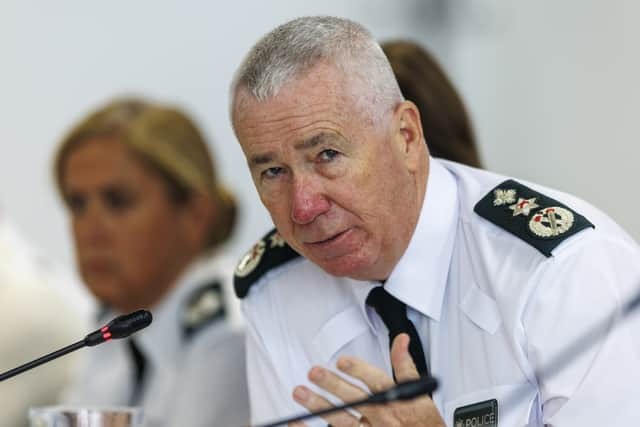
It includes a challenge to the decision by PSNI Chief Constable Jon Boutcher to ask Sir Chris to review the determination made by the Parades Commission, which had given the go-ahead for the parade.
During the hearing, Richard McConkey KC, who represents a member of the Orange Order who has brought the challenge, said the case did not require the court to decide if the parade should have proceeded, but it “concerns the legality of the decision-making route” to ban the parade.
The barrister read from an intelligence assessment provided by the chief constable to the Northern Ireland Secretary about the security situation.
The barrister said the assessment had said it was “almost certain” the parade would be accompanied by a protest on the Garvaghy Road.
He said: “It continues, ‘it is highly likely that persons will continue to travel to Garvaghy Road from across Northern Ireland to support protest activity and it is highly likely that the protest will continue to involve significant numbers of persons, and will continue to seek to block the road to prevent a parade in Garvaghy Road’.”
Mr McConkey said the assessment then records “significantly more serious intelligence”.
The barrister added: “It goes on, ‘It is almost certain that dissident republicans have attended the protest, and it is possible that dissident republicans have already accessed the firearms in the Garvaghy Road area, and it is possible that in the event of police removing protesters, firearms may be used to attack police’.
“There is then reliable intelligence indicating that mainstream republicans are concerned about their ability to prevent disorder or control dissident republicans, and it remains likely that the police intervention will be met with serious disorder, which may involve the use of petrol bombs.”
The barrister said police were “assessing a developing and potentially extremely serious public order situation”.
The barrister then referred to a senior officer having access to nine intelligence risk assessments on October 7, two days before the parade was banned.
Mr McConkey said a police record from the officer included the phrase “the feelings of the PIRA”.
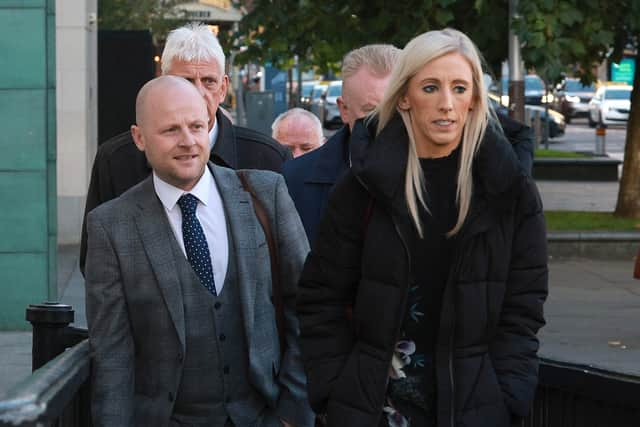
He said: “The ‘feelings of the PIRA’ is the language of the contemporaneous police record, and I rehearse it because it’s one of the matters in which Silver (Command) was expressly mindful, according to the documents.”
Mr McConkey then turned to a statement from Mr Boutcher stating the parade could have caused serious disorder which could have had “catastrophic, potentially long term consequences” for the Northern Ireland Executive and the peace process.
He said: “The question is whether the preservation of the Northern Ireland Executive or of the wider peace process was treated as an independent end in itself.”
The barrister said the “preservation of a political institution or political process” is not a freestanding policing function.
Barrister for the PSNI, Peter Coll KC, said the Chief Constable had to look at a “bigger picture” than police commanders on the ground.
He said: “By this stage, by October 9, what essentially had developed had been a stalemate position between the respective parties, with the police in the middle.
“So, essentially, the police position was no viable means of actually achieving this procession being completed in compliance with the determination on an operational basis.”
He added: “One might ask the rhetorical question how long should the police allow the situation to go on without trying to take some kind of a step to bring it to a position that somebody makes a decision about what is going to happen?”
Mr Coll said a “prolonged stalemate” had developed by October 9.
He added: “Protests by residents and their supporters had continued to impact on the notified route, and while the police operation to that point in time had clearly assisted in creating space and time for the high-level talks to take place, unfortunately, those had come to an end unsuccessfully, and the position essentially was by October 9 that the respective parties’ positions remained fundamentally closed.
“There was nothing to suggest that the situation was likely to change, and that any further period of time would result in a different position being faced by the police.”
The barrister said the PSNI operation had already been in place “substantially longer” than had been envisaged.
He said the PSNI assessment was that all “lawful and proportionate options” to facilitate the policing of the parade had been “exhausted”.
The barrister said any attempt to facilitate the parade down the road “would have involved substantial public order intervention”.
He said this would have carried an “unacceptable risk of serious injury to the public, to police officers, with serious and prolonged disorder, and a wider contagion effect, with disorder and significant further impact on policing across Northern Ireland”.
Mr Coll added: “The current policing operation, as with that date, simply could not be sustained indefinitely.
“In the chief constable’s judgment, it was no longer viable to give effect to the police commissioner’s determination.”
The hearing continues.