
Shropshire's housing gold rush: How developers set their sights on towns and villages for 1000s of new homes
Applications have been submitted across the county
Over the past 12 months, anyone with even a passing interest in local developments will have noticed an explosion of applications for new homes across the county.
Town-specific Facebook pages have been littered with discussion over proposals for new Shropshire estates, often from residents who feel concerned at the impact of more housing but powerless to influence the outcome.
The concerns come in many forms: people worried about losing their idyllic country surroundings or favourite dog walking route, people worried about how roads, schools and GP surgeries will cope - with seemingly little chance of new facilities to offset the population increase.
The numbers are clear and show that it is not just anecdotal grumbling - there has been a significant increase in housing applications across Shropshire in recent months.
The reasons are complicated but there are likely two major factors behind the sudden explosion of proposals. They relate to the decisions and actions - or inaction - of both the Labour Government and Shropshire Council.
The first came in December 2024. After coming to power with an ambitious pledge to build 1.5 million new homes in England in just five years, Keir Starmer’s Government updated its housing target methodology for councils across the country.
For Shropshire Council, the impact was significant and immediate.
The authority saw its annual target for the number of new homes rise from 1,070 per year to 1,994 - nearly double. That target has since risen further to 2,046.
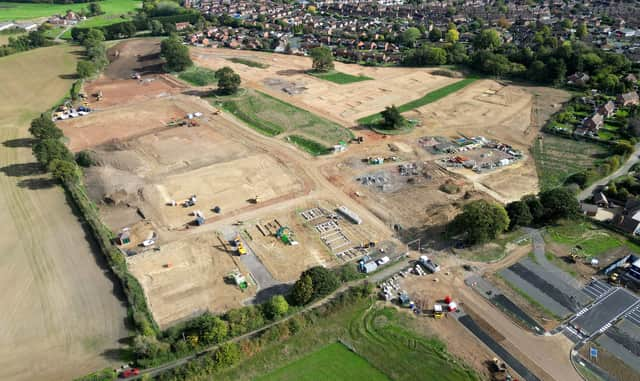

Having to provide more than 2,000 new homes every year has had a major impact.
Without delving too deeply into the ins and outs of national planning policy, councils meet the targets through a ‘five-year land supply’.
That supply is effectively a list of ‘deliverable’ sites earmarked for housing within the council’s area which, when combined, meet the target over a five-year period.
Shropshire Council’s second major problem was already brewing when the Government note landed on its desk in December 2024.
At that point the council had been going through the examination of its proposed Local Plan, intended to cover 2016 to 2038.
Although ‘Local Plan’ is an incredibly mundane title, the document is in reality one of the most important prepared by councils across England.
It sets out housing plans over a lengthy period of time and includes specific pieces of land throughout the council’s towns and villages which are earmarked for housing developments.
In what many saw as the worst possible outcome for the residents of Shropshire, concern and frustration from the planning inspectors reviewing the Local Plan saw the council forced to abandon the process in July 2025.
Without an up-to-date Local Plan the council has no fresh list of housing sites, and is relying on those left over and undeveloped from its previous plan, to meet its five-year land supply target.
This shortfall of new sites means the council is falling short on its land supply target - a situation where planning rules open the doors to speculative sites being used for development.
From the point the Local Plan was withdrawn developers and land-owners were effectively on notice that there would be an opportunity to build on sites across Shropshire that would previously never have been considered.
The combination of ever-higher housing targets, the five-year land supply requirement and the lack of an up-to-date Local Plan has tilted the presumption of planning approval in favour of the applicants.
Where previously only sites listed within an adopted Local Plan would be likely for success, Shropshire’s double whammy opened up the chance for speculative developers to fill the void.
The impact on the county is borne out by the numbers.
In the 12 months up to the withdrawal of the council’s Local Plan the authority received outline applications for roughly 2,833 houses.
In the 12 months since, there have been submissions for around 4,676 homes - 1,843 more than the previous year.
The figures are even more stark when it is considered that the applications for 2,833 homes in the year before July 2025 included 1,500 from just one single development - the Tasley Garden Village on the outskirts of Bridgnorth, which was approved earlier this year.
It is worth pointing out that outline applications are not the only proposals received over that time period, but they are a simple indicator of opportunity within the planning system because they are proposals at an early stage, where developers have yet to agree the detail of what the scheme may look like.
Outline approval is also frequently sought by land owners who can then sell the site, complete with outline planning permission, for a considerable sum to housing developers who will then build the homes.
The list of sites over the 12 months since the Local Plan was withdrawn is considerable and takes in nearly every corner of the county.
Not all will receive the go-ahead, and some have already been rejected, but conditions have conspired to tilt the scales in favour of the applicant.
In Whitchurch there have been plans for sites of 62 and 280 homes; in Wem, 32, 40 and 175; in Market Drayton 20 and 270; and in Shrewsbury 570, 430, 210, 31, 22, 18, 98, and 22.
In Oswestry there are proposals for 335 homes; 32 in Condover; 115 in Shawbury; 58, 155 and 33 in Baschurch; 200 in Shifnal; 75 in Church Stretton; 300 in Much Wenlock; 75 in Albrighton; 100 in Burford; 96 and 60 in Cressage; 60 and 35 in Prees; 65 in Woore; and 30 in St Martins.
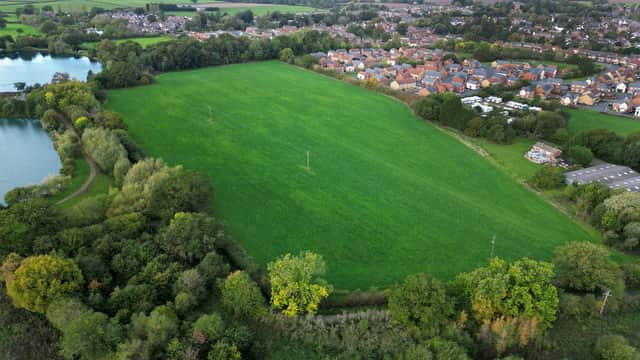
Some of those sites were put forward in Shropshire Council’s abandoned Local Plan, others have been proposed by land owners sensing an opportunity.
The situation is recognised by the council, planning agents, and campaigners concerned about the impact of opportunistic development, which they fear could result in housing built without dedicated planning for the infrastructure needed to support new residents.
Some of the applications submitted in the 12 months since the withdrawal of Shropshire Council’s Local Plan
- 280 homes off the A41 at Whitchurch
- 335 homes to the south of Mount Road in Oswestry
- 115 homes to the east of Wem Road in Shawbury
- 200 homes to the south of Lamledge Lane in Shifnal
- 155 homes off Prescott Road in Baschurch
- 270 to the north of the A53 Shrewsbury Road in Market Drayton
- 300 to the east of Bridgnorth Road in Much Wenlock
- 570 to the east of Battlefield Roundabout in Shrewsbury
- 430 homes to the east of Preston Street in Shrewsbury
- 32 homes to the west of Whitchurch Road in Wem
- 42 homes to the west of Alma Close in West Felton
- 210 homes to the north of New Pulley Lane in Bayston Hill
- 75 homes of Patshull Road in Albrighton
- 100 homes of Boraston Drive in Burford
- 96 homes off Shore Lane in Cressage
- 60 homes to the north of Station Road and Mill Lane in Prees
- 65 homes to the south of Audlem Road in Woore
- 60 homes to the west of Harley Road in Cressage
- 98 homes to the east of Merrington Road in Bomere Heath
- 65 homes next to Cloverfield, Chester Road in Whitchurch
- 175 homes between Aston Road and Church Lane in Wem
The difficulty of the council’s position is made clear in its own determination of planning applications over recent months, and the arguments submitted by developers hoping to win approval for new schemes.
Earlier this year the council approved 450 new homes for a site off Ellesmere Road in Shrewsbury. The approval came against significant local concerns over the impact that traffic from 450 new homes would have on Ellesmere Road and Shrewsbury’s railway station gyratory.
The site also fell outside the town’s development boundary.
But the scheme was approved, with the council’s planning department explicitly saying the decision was taken “in light of the council’s current five-year land supply position”.
Last month the council approved 42 homes in Wem, with its planning officers explaining that the “council’s inability to demonstrate a five-year supply of deliverable housing land” was a substantial factor in approving the scheme where “adverse effects have been identified”.
Reports submitted with plans for Taylor Wimpey and Persimmon Homes’ bid to build another 430 homes at Shrewsbury’s Weir Hill - already the site of a controversial housing development - provide further evidence of how the situation is being used to push for approval.
A planning statement provided with the scheme detailed “compelling grounds” for approving the plan, saying: “The council cannot demonstrate even the minimum five-year supply of land for housing and the shortfall to that required supply is significant.”
It added: “The Development Plan for Shropshire was only intended to run until 2026. It is out of date in its own terms and does not make provisions for housing to plan for the future housing needs of Shropshire. Any new Plan Review is now at its very early stages, given the collapse of the previous Plan Review.”
When faced with similar five-year land supply issues in the past, Shropshire Council shortened the period developers had to submit follow-up ‘reserved matters’ applications.
These come after outline approval and set out the specific shape of developments.
That period was shortened to 12 months, with outline permissions expiring if the follow-up was not submitted by the deadline. The mechanism is seen as a way of ensuring developers only apply if they are intending to build immediately.
Asked if it had considered similar measures now, Shropshire Council said: “The council has previously used shorter implementation periods to support housing delivery. Following review, the current position is to consider implementation timescales on a case-by-case basis, having regard to the circumstances of each proposal and relevant planning policy considerations.”
Asked about the situation the council now finds itself in, the authority said: “Both the increase in housing need resulting from the Government's revised standard methodology and the absence of a recently adopted Local Plan have contributed to the current position on five-year housing land supply.
“Whilst Shropshire’s housing supply and housing delivery in recent years has remained relatively strong, the benchmark this is measured against – the local housing need - has changed significantly.”
Despite the situation the authority has stressed that applications must still take the impact on local services and facilities into account, adding: “The council recognises that speculative development proposals can generate local concern.
“All planning applications are assessed against the adopted development plan, national planning policy and relevant consultation responses before a decision is made.
“This allows important considerations to be taken into account, including the impact of development on local infrastructure.”
Charles Green, from the Shropshire branch of the Campaign to Protect Rural England, said the circumstances have “pushed the council under a bus” and questioned whether the pace of housing development will be matched by the infrastructure required to service it.
He said: “The Government's drive for more houses, at a time when Shropshire Council does not have an up-to-date Local Plan or a proven five-year housing land supply, has pushed the council under a bus.
“The latest August 2026 version of the main planning rules in the NPPF [National Planning Policy Framework], combined with the new housing targets based on housing stock rather than demographic projections, has left Shropshire Council vulnerable to speculative planning applications, which developers have not been slow to spot, as evidenced in this upsurge in outline planning applications.
“The result will indeed be many more houses being built in Shropshire, but for who? Will it really help with the housing crisis... or the climate crisis and the biodiversity crisis? And will Shropshire Council be able to ensure that all this new development will be of high quality and that all the relevant infrastructure of roads, schools, health services, sewerage etc will keep pace with it?"
Asked about the impact of increased housing targets on the ability to provide sensibly planned development in Shropshire, the Government’s Ministry of Housing, Communities and Local Government said it expected councils “to explore all options” for the homes “their communities need”.
A spokesman said: “All areas, including Shropshire, must play their part to end the housing crisis and build the homes this country needs.
“Our revised housing targets will mean more homes are built in the right places, and we expect local authorities to explore all options to deliver the homes their communities need.”
Meanwhile one of the county’s most senior planning agents said the increase in applications had been “inevitable”.
Stuart Thomas, CEO at Shrewsbury-based Berrys, said the increase in applications had been “inevitable” given the collision of circumstances, and that the collapse of the Local Plan had been the overriding factor in the authority’s current predicament.
He said: “If in the next 12 months the council gets its five-year land supply in place but does not have an adopted Local Plan I still think you would see a number of applications being successful on appeal.”
Mr Thomas said the combination of factors had come together to create opportunity for developers.
He said: “You have had a bit of a perfect storm in Shropshire - with an outdated Local Plan, a failure to get the new Local Plan adopted, the Government’s shift in its methodology, you would never have a better set of circumstances if you were a land owner or a developer.”
But the CEO said the developments have been balanced out by concerns over viability, and the ability of those behind housing schemes to get them built when faced with a significant increase in building costs amid global economic uncertainty.
Mr Thomas also disputed the assumption that the situation is entirely beneficial to land owners, developers and the planning business; he said all would prefer the certainty of an adopted Local Plan where people know what will be approved and what will not.
He said: “It is not good for anyone frankly. You have a system without any rules or structure or organisation around it so the costs are exceptionally high for land owners and developers without any understanding of the real outcome.
“I have always said it is not good for anyone - it is not good for communities, it is not good for the council, and it is not good for the development industry.
“From our perspective advising people I always say ‘I can tell you what should happen but I can’t tell you what will happen’ - it is that uncertainty that is not good for the industry.”
The question now is how long Shropshire is set to find itself in this position.
The answer is probably until its next Local Plan is in place - a process that could take until 2029.
The council is currently in the lengthy process of preparing the document, but in the meantime there is no sign of the pace of applications slowing.
Given the increase in housing targets the fresh plan will need to include more housing than its abandoned predecessor - opening up the possibility of major developments such as plans for thousands of homes on land to the west of Tong, which were rejected by the council last time round.
Candidate sites have already been submitted for the Local Plan, which is set to cover the period 2046, with landowners and developers looking to secure a place in the final document.
Councillor David Walker, Shropshire Council’s cabinet member for planning, said the authority understands public concern over speculative development, which is why it must “get the new Local Plan right”.
He said: "Creating thriving, sustainable communities and delivering the homes Shropshire people need is a key priority for this administration.
“Ours is a large and diverse county, with market towns, villages and rural communities each facing different opportunities and challenges.
“We need homes that reflect the diverse needs and aspirations of our residents, whether that is helping young people stay in the communities where they grew up, providing affordable homes for working families, supporting older residents to live independently, or creating opportunities for people and businesses to prosper.
"The Local Plan is central to achieving that ambition. It will provide a clear, long-term framework for where homes, jobs, infrastructure and services should be located, while protecting and enhancing the qualities that make Shropshire such a special place to live, work and visit.
"We recognise the concerns many residents have about speculative development, which is why it is so important that we get the new Local Plan right.
“We are committed to preparing an infrastructure-led plan that reflects local priorities, is shaped by the views of residents and stakeholders, and provides a sound and robust framework for the future development of the county."
Comment Guidelines
Iconic Media encourages reader discussion on our stories. User feedback, insights and back-and-forth exchanges add a rich layer of context to reporting. Please review our Community Guidelines before commenting.