What does war in the Middle East mean for my finances?
Here, the Press Association looks at how the conflict could impact people’s finances in different ways.
Conflict in the Middle East has been unleashing turmoil in the world’s financial markets and has pushed wholesale oil prices to levels not seen for years.
This has ignited worries about the possible knock-on effects to economies around the world, and how it will impact the cost of living for households up and down the UK.

Here, the Press Association looks at how the conflict could affect people’s finances in different ways.
– What’s happening to gas and oil prices?
A major impact of escalating conflict in the Middle East is on the world’s oil and gas supplies.
Prices have been climbing higher amid concerns that the fighting is disrupting supply and limiting the ability to transport to countries around the world.
This is because Iran has effectively blocked commercial ships from passing through the Strait of Hormuz, leading traffic through the waterway to reach a near-standstill, according to reports.

The Strait of Hormuz is a crucial shipping route, used by tankers carrying about one fifth of the world’s oil supplies and seaborne gas.
The price of Brent crude – a global benchmark for oil produced from the North Sea – has shot passed 100 dollars a barrel to reach levels not seen since the summer of 2022.
Natural gas prices have also been soaring after Qatar’s state-backed energy company QatarEnergy last week said it had halted production of liquified natural gas because of attacks on its facilities.
– What does this all mean for my energy bill?
The UK imports oil and liquified natural gas (LNG) from a variety of places, not just the Middle East.
However, if supplies passing through the Strait of Hormuz are disrupted, then demand for alternatives go up and there could be a significant rise in gas and electricity prices, which is what happened after Russia’s invasion of Ukraine in 2022.
This is because wholesale gas prices feed through into electricity prices and how much it costs to heat people’s homes.
Analysts at Cornwall Insight have forecast that household energy bills could rise by 10% from July following sharp increases in wholesale gas prices.
This would mean Ofgem’s price cap for July to September surges to £1,801 a year for a typical dual fuel household – an increase of £160 or 10% on April’s cap.
However, it said the final price cap figure would be based on average wholesale prices over a three-month period, meaning that it would depend on how long gas prices stayed elevated and how long the period of volatility continued.

Meanwhile, National Gas, which owns and operates Britain’s gas network, said it had no concerns about the security of gas supplies at the current time.
The vast majority of Britain’s gas, around three quarters, comes from the UK continental shelf and Norway, and around 18% comes from LNG, of which the majority is produced in the US.
– What about petrol and diesel prices?
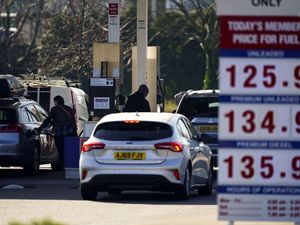
The cost of crude oil can have a significant effect on wholesale fuel prices, which is sending costs at the petrol pumps sharply higher.
The RAC said the average price of a litre of petrol at UK forecourts was 137.5p on Sunday after rising nearly 5p since February 28 when the conflict in the Middle East started.
Average diesel prices were up almost 9p over the same period to 151p.
Think tank the Energy and Climate Intelligence Unit said its analysis of the historic link between oil and fuel prices shows oil trading at 100 dollars a barrel means petrol prices could hit about 150p per litre, while oil hitting 120 dollars a barrel means petrol prices of about 170p per litre.

RAC head of policy Simon Williams said last weak that oil prices would “have to rise significantly and stay that way for some time to have a dramatic effect”.
Other experts suggested that motorists could see price rises happen gradually for both petrol and diesel.
– Are prices in shops going to be affected too?
Rising oil and shipping costs alongside disruption to supply routes and raw materials could start to filter through to shop prices in the months ahead.
Analysts have said specific categories to watch include fragrance, particularly oud and other luxury scent bases, and foods produced in the Middle East like dates, olive oil, nuts and spices such as saffron.
Beyond that, the Middle East largely imports rather than exports everyday food products, meaning that the world’s food supplies are unlikely to be hit directly.
However, the region is a major producer of fertiliser used for farming, such as ammonia and sulphur, so any disruption could drive up costs for famers around the world.
Experts said fertiliser price spikes could affect products like bread, cereals, pasta, potatoes and animal feed.

Furthermore, UK brands who rely on global supply routes that pass through or near the region could be affected if shipping costs increase or delivery times lengthen, should the conflict spread and persist.
Balwinder Dhoot, director of growth and sustainability for the Food and Drink Federation (FDF), said it was “too soon to say what the the full impact of the conflict in the Middle East will be on UK food and drink”.
He said: “However, with food manufacturers already under strain from years of rising business costs, and food inflation running higher than historical averages, seeing the spike in gas prices is a concern.”
He added that it was an “energy intensive sector” and called for government support to help weather the price spikes.
– What could this mean for inflation and interest rates?
Some experts have warned that if oil and gas prices remain elevated, this could push up inflation in the UK.
The British Chambers of Commerce (BCC) said that higher oil and gas prices linked to the war could push up Consumer Prices Index (CPI) inflation in the UK to 2.7% by the end of 2026, compared with a previous 2.1% forecast.
This could discourage the Bank of England from cutting UK interest rates in the near-term, while it monitors the situation in the Middle East.
The National Institute of Economic and Social Research (Niesr) predicted that a prolonged energy price shock means rates could rise above 4%, from the current 3.75%, by the end of the year.
– What’s happening to mortgages?

A string of major mortgage lenders have hiked their rates in recent days, following rises in swap rates as global events unfold. Swap rates are used by lenders to price mortgages.
HSBC UK, NatWest, Nationwide Building Society and Coventry Building Society are among the lenders who have pushed up some mortgage rates amid the changing market conditions.
Financial information website Moneyfacts said it had seen several other lenders adjusting rates on Monday.
Its figures also indicate that some average rates on fixed mortgages have jumped over the weekend.
The average two-year fixed homeowner mortgage rate on the market on Monday morning was 4.87%, up from 4.84% on Friday.
The average five-year fixed homeowner mortgage rate on Monday morning was 4.98%, rising from 4.96% on Friday.