Killer released by mental health workers informed by race research, inquiry told
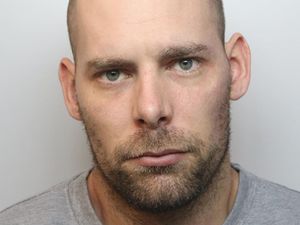
Valdo Calocane was sentenced to an indefinite hospital order after killing three people in Nottingham in June 2023.
A schizophrenic man who killed three people caused a woman to jump out of her window after he was released by mental health professionals who considered the “over-representation” of young black men in detention, an inquiry has heard.
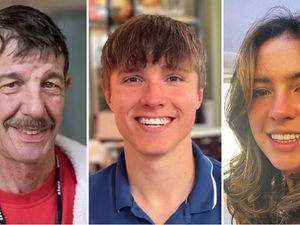
Valdo Calocane, who had been diagnosed with paranoid schizophrenia, killed University of Nottingham students Barnaby Webber and Grace O’Malley-Kumar, both 19, and caretaker Ian Coates, 65, and attempted to kill three more people, in Nottingham in June 2023.
In her opening statement on Monday, Counsel to the Inquiry Rachel Langdale KC said that nearly three years earlier in May 2020, Calocane kicked at a woman’s door while he was experiencing psychosis, leading her to jump from the first floor window out of fear and damage her spine.
Mental health workers and doctors had been “leaning towards” sectioning Calocane who had been arrested on suspicion of criminal damage earlier that day, but “the team of professionals considered the research evidence that shows over-representation of young black males in detention”, the inquiry heard.
They said the decision to treat Calocane, who is referred to as VC in proceedings, in the community would have been “based purely on his current needs, acuity of symptoms and the risks”, and not based on the patient’s demographic, Ms Langdale said.
Calocane was released into the community after their assessment, the inquiry heard.
Ms Langdale said: “An even more serious incident occurred shortly after VC’s return from custody.
“You will hear evidence, chair, from a former resident of Brook Court who heard a knock on her door soon after she had returned from work at around 8pm.
“It was VC. She asked who it was and he said: ‘It’s me, open please.’
“She repeated the question, but he just knocked louder and louder. He began kicking. She was alone in the flat and describes her fear at this point.
“She was so frightened that she jumped out of a first floor window, causing serious damage to her spine.”
Ms Langdale added that the chair of the inquiry, Deborah Taylor, may ask why Calocane was released at that stage and whether release straight into the community was appropriate.
She continued: “The inquiry will also explore the appropriateness of the decisions made in this Mental Health Act assessment and its consideration of risk.”
Ms Langdale said the Royal College of Psychiatrists is not aware of any evidence that suggests concerns that the “disproportionate use of restrictive measures in respect of black patients impacts the approach taken by practitioners”.
She added: “There is no evidence that psychiatrists are not admitting patients because they are black.
“The inquiry may wish to consider further in oral evidence whether race was a factor in restrictive practices not being used as a result of publicity about mental health reforms in the period 2020 to 2022.
“The evidence thus far received by the inquiry does not suggest it was.”
The inquiry heard that after the incident, Calocane’s mother said that she would prefer that her son goes to hospital for treatment “as he is a risk to others in his current mental state”.
In a mental health assessment the next day, Calocane was described as “perplexed, very distracted, and appearing to be psychotic”, the inquiry heard.
Ms Langdale said: “He explained that he had broken the neighbour’s door after hearing a woman screaming. He denied taking drugs.
“The impression was first episode psychosis due to sleep deprivation and stress, with a risk to VC’s own safety and others. It was concluded that he did not have capacity to agree to hospital admission. Detention pursuant to section two was recommended.”
Calocane sent his parents files over Christmas 2022, along with a document explaining he “had been hearing voices in his head all the time, but this wasn’t the result of mental ill-health”, but it was explained by “mind control technology”, the inquiry heard.
After the attacks on June 13, analysis of Calocane’s phone was undertaken, which show he researched “mind control technology” and watched videos including of a shooting. He also viewed documents with some content relating to the law and police powers, Ms Langdale said.
Calocane largely kept a low profile during his fourth hospital admission in early 2022, spending most of his time on his phone. Ms Langdale said the inquiry will “explore with treating clinicians whether they ever asked VC what he was viewing on his phone, if not, why not, and whether patients routinely have unfettered access to their phone”.
His risk assessment was updated for the final time prior to the attacks on February 28 2022 – which noted “that given the history of violence and aggression, there should not be home visits, and if a home visit was required it should be a joint visit; no lone working”.
Ms Langdale added: “We will ask why this assessment of the risks to the community medical team did not apply equally to other students and the wider public.”
Judgments made and decisions taken in the period after the attacks are of “enormous significance to the bereaved families and survivors”, Ms Langdale said, adding: “Was everything done that could be done within the first responses to prevent the deaths of Barney, Grace and Ian? Given the time taken to apprehend VC, were the later attacks preventable? The inquiry will examine what judgments were made in the circumstances faced.”
By 4.07am an operational firearms commander asked whether armed authority was being considered to search for the attacker. The commander was informed by a chief inspector that the priority was the victims as they had reports of a second victim, the inquiry heard.
Authorised firearms officers have greater first response training and equipment, which is why they had been sent to the victims of the first attacks, Ms Langdale said, then she questioned whether it was necessary for these officers to remain at the scene once the ambulance service arrived.
The commander has told the inquiry that he and other firearms officers were frustrated that no authority to deploy firearms officers had been granted in response to the first attacks.
Ms Langdale added: “This special authorisation is given where the authorising officer has reason to suppose that officers may have to protect themselves or others from a person who is so dangerous that the deployment of armed officers is considered appropriate.”
Evidence will be given to the inquiry that there was no information known or available to the chief inspector at that time “which would have strongly indicated the random nature of the attack or that it would become a marauding attack”, the inquiry heard.
Ms Langdale highlighted an “an important radio discussion at 4.32am between Chief Inspector David Mather and Inspector Peter Shaw”.
She said: “Inspector Shaw observed that, in his words, ‘we have got some cops looking for the suspect haven’t we, if not many’. Chief Inspector Mather responded, ‘he’s going to be long gone now’ and asked him to concentrate on the victims at the scene.”
Calocane was sentenced to an indefinite hospital order in January 2024 after admitting manslaughter by diminished responsibility and attempted murder – something which has been widely criticised by the victims’ families.
Ms Taylor will produce a report and provide recommendations by May 2027, the inquiry heard.