Westminster committee urges Government to formally name Stakeknife
The Army’s former spy within the IRA was widely believed to be west Belfast man Freddie Scappaticci, who was 77 when he died in 2023.
A Westminster committee has urged the Government to formally name the former agent known as Stakeknife.
The Army’s former spy within the IRA during the Troubles was widely believed to be west Belfast man Freddie Scappaticci, who was 77 when he died in 2023.
Operation Kenova, a probe which examined the activities of Stakeknife, who has been linked to at least 14 murders and 15 abductions, concluded that more lives were probably lost than saved through the operation of the agent.

However it was unable to confirm Stakeknife’s identity in its final report in December after the Government refused its authorisation to do so.
Successive governments have refused to do so, citing the long-standing policy of neither confirm nor deny (NCND).
Then, Northern Ireland Secretary Hilary Benn said the Government was considering its position on naming Stakeknife following a Supreme Court judgment related to the disclosure of intelligence information in the case of the murder of Paul Thompson.
Kenova chief Sir Iain Livingstone, and PSNI Chief Constable Jon Boutcher, who previously led the investigation, have urged the Government to name Stakeknife.
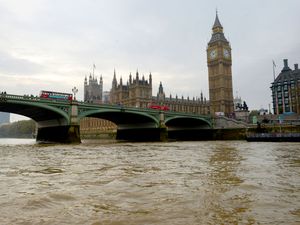
The Northern Ireland Affairs Committee joined that call in a report published on Monday.
The MPs from across a number of parties concluded that revealing the identity of Stakeknife would be “strongly in the public interest”.
They also contend it would “help build trust and confidence in the agencies of the state among all communities”.
It comes after the committee held an evidence session on Operation Kenova last month, during which it heard from Sir Iain and Mr Boutcher.

The report said the committee has been reassured that formal identification would not put any active agents at risk, discourage existing agents from continuing their work, or deter the recruitment of new agents.
It also contends that naming Stakeknife would also indicate to agents guilty of conduct beyond acceptable limits that they will not be protected or shielded from the consequences of their actions.
Committee chairwoman Tonia Antoniazzi said refusing to name Stakeknife is having an impact on their victims.
“As Operation Kenova’s final report makes clear, the ongoing refusal to confirm or deny Stakeknife’s identity is having a profound and lasting effect on victims and their families who have already been through so much,” she said.
“Given the reassurances we’ve heard that active agents won’t be put in harm’s way and future recruitment won’t be compromised, formal identification in this specific instance is appropriate, proportionate and in the public interest.
“By naming Stakeknife, the Government can send a strong signal that agents who cross a line will not receive the protection of anonymity and help to build trust and confidence across all communities in Northern Ireland.”
The committee has recommended that the Government should review, in consultation with MI5 and the PSNI, the application of NCND in all legacy-related cases, considering specifically the principles outlined in this report.
It also indicated that it plans to monitor Government progress on the implementation of Operation Kenova’s other conclusions and recommendations.
Mr Boutcher welcomed the committee’s report and reiterated his call for the Government to identify Stakeknife, saying this would “bring much-needed closure to many victims and families”.
“The committee recommendation supports the findings of the Operation Kenova report, which included that Stakeknife should be named with a specific recommendation for a review of the UK Government policy on its neither confirm nor deny (NCND) policy as it is applied to cases that occurred during the Troubles in Northern Ireland,” Mr Boutcher said.
“The application of NCND must not be allowed to cover up acts of wrongdoing by the state. I am grateful for the committee taking such care in examining this matter.”
A UK Government spokesperson said: “The behaviour described in Operation Kenova’s final report is deeply disturbing.
“It should not have happened, and in recent decades, there have been significant reforms to agent handling practice, including through legislation.
“The use of agents is nowadays subject to strict regulation, overseen by the Investigatory Powers Commissioner and the Investigatory Powers Tribunal.
“The Government is not yet in a position to formally respond to the request by Operation Kenova to name Stakeknife as there remains ongoing litigation, and consideration of the recent judgment in the Thompson Supreme Court case.
“The Secretary of State has committed to updating Parliament on the matter as soon as he is able to.”