‘Major upgrade’ to Met Office system could help avoid flight delays
Its new system brings clearer and more accurate cloud and fog predictions which are critical for managing flight schedules.
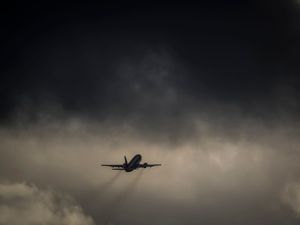
A “major” upgrade to the Met Office’s forecasting system could help avoid flight delays, the forecaster has said.
Its new system brings clearer and more accurate cloud and fog predictions needed for managing flight schedules.
Winter temperature forecasts are also closer to real life, which the Met Office said will assist those making plans to manage the energy grid, grit roads and de-ice aeroplanes.
Severe weather event warnings also can be made sooner as it has extended its global forecasts from seven to 10 days.
The forecasters said it is the “most significant scientific upgrade in more than three years”.
Science Minister Lord Vallance said in a statement: “The Met Office’s new supercomputer has allowed more accurate forecasting, particularly for cloud and fog, two difficult areas for forecasting.
“Improvements in weather science benefit us all, from more flights running on time, to roads being gritted when they need to be, to enabling earlier preparations for storms that risk lives and damage to homes and businesses.”
The Met Office’s director of science, Simon Vosper, told a press briefing: “We made a range of improvements, first and very topical at the moment is the UK’s rainfall, so the quality of our rainfall forecasts has improved very markedly.
“We’re getting much more realistic rainfall intensities from the modelling system.”
This follows the forecasters’ announcement that it has rained every day so far this year in the south west of England and South Wales, with 50% more rainfall than usual in January.
Mr Vosper added: “The representation of cloud in the modelling system has improved, and particularly the height of the cloud cover, be it low or high cloud and very low cloud which is of course mist or fog.
“That greater accuracy is particularly beneficial for aviation.
“When you’re trying to (run) busy airports, organise flight itineraries and run busy airports like Heathrow, low cloud and fog can be a real problem, so having more accurate forecasts there is very, very beneficial.”
It is the first upgrade on the Met Office’s supercomputer, supplied by Microsoft, that it transitioned to in May.
The Met Office said: “The upgrade marks a major step forward in the UK’s weather and climate science capability delivering tangible improvements that will make forecasts easier to interpret. ”
On its improved cloud and fog guidance, it said: “This advancement will be vital for industries such as aviation, where precise weather information is critical to manage flight schedules, avoid delays, and ensure safe take offs and landings, especially in situations with low cloud bases, mist and fog.”