Millions seeking help for minor ailments in England’s A&Es
Health officials have warned of a ‘tidal wave’ of winter illnesses in English hospitals.
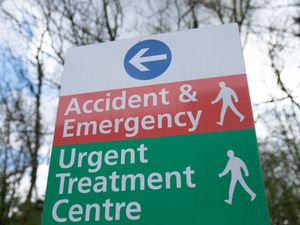
Millions of patients are seeking help in A&Es for minor conditions, figures show.
Analysis revealed that in five years A&E medics dealt with almost 1.9 million cases of people seeking help for a headache.
Almost 1.4 million A&E attendances in England from 2020/21 to 2024/25 were due to a cough and 1.2 million were for a sore throat.
One million A&E attendances were due to earache, according to analysis by the Press Association.
There were almost 69,000 A&E attendances for a blocked nose, 4,200 for hiccups and 290,000 where the chief complaint was constipation.
The 2020/21 year covers the first year of the coronavirus pandemic, when many patients steered clear of hospitals.
The figures show how A&E attendances for some medical emergencies – such as the heart stopping – have stayed relatively consistent during and since the pandemic.
For instance, 10,293 attendances due to cardiac arrest were logged in 2020/21, compared with 10,744 in 2024/25.
The number of cases diagnosed in A&E as a broken hip was 43,646 in 2020/21 and 43,326 in 2024/25.
For other conditions there has been a steady increase in attendances, starting in the immediate aftermath of the pandemic and continuing in the following years.
Some 44,000 cases of “cough” were dealt with in 2020/21 and the number has risen every year to reach 435,728 in 2024/25 – a near tenfold-increase.
There were 59,120 A&E attendances where the chief complaint was diarrhoea in 2020/21, rising each year to reach 143,591 by 2024/25.
A&E attendances rose from 40,962 to 70,933 for constipation, 211,266 to 396,724 for backache, 9,795 to 20,516 for nausea, and 587 to 1,093 for hiccups.
PA analysis shows that medics noted that “no abnormality was detected” for 2.2 million A&E attendances in 2024/25, while more than half a million patients walked out before a first diagnosis was made.
Health officials have warned of a “tidal wave” of winter illnesses sweeping the NHS.
The NHS said this month that A&Es were facing a significant number of “unnecessary” admissions as they sought to point people towards appropriate help for certain conditions.
NHS England said a significant number of patients sought help last winter for a variety of illness which could have been handled by GPs or pharmacists.
Rory Deighton, acute and community care director at the NHS Confederation, said: “The NHS fully supports the Government’s ambition to move more care closure to home, and this shift will play a crucial part of helping patients manage their conditions more effectively without needing to go to hospital.”
Daniel Elkeles, chief executive of NHS Providers, which represents NHS trusts, said: “Patients choosing to attend A&E for help with relatively simple conditions like earache lays bare a failure to give people enough access to convenient, responsive services closer to home where they can get the help they need there and then.
“Our new year’s wish would be to see neighbourhood healthcare ‘turbocharged’ to create many more primary care appointments, in communities and GP practices, to boost patients’ satisfaction with the NHS and ease pressure on busy A&Es.”
Dr Ian Higginson, president of the Royal College of Emergency Medicine, said that while some of the conditions “may seem minor, there will be serious illness in some of the patients described”.
He went on: “However, as this data shows, people are arriving through the doors of our emergency departments (EDs) with issues that we would not traditionally consider as ‘urgent’ and require emergency care.
“This is a symptom of the healthcare system not working as it was designed to.
“Just like our EDs, our colleagues in primary and community services are at capacity when their services are open, but those services often aren’t open when patients need them.
“The system has also become unnecessarily complex and patients can struggle to figure it out.
“If people are unable to access services, or they are unsure of other services available to help them, they will come to ED.”

Professor Victoria Tzortziou Brown, chairwoman of the Royal College of General Practitioners, said: “We need better, clearer systems to help patients navigate the NHS and get to the right place first time, and better resourced general practice so that we can alleviate pressure across the health service.”
National Pharmacy Association chief executive Henry Gregg said: “Millions of hours are spent waiting in A&E for minor issues that can instead be conveniently treated in a community pharmacy.
“Pharmacists are highly trained health care professionals and can now supply prescription medicines on the NHS without the need for a GP appointment, for a range of common illnesses.”
An NHS England spokesperson said: “The last place a patient wants to be when they have a minor illness is a busy A&E – that’s why this winter NHS staff are working hard to expand the number of routes into the health service so patients can get fast and convenient care closer to them.
“We have launched a campaign urging people to use the range of alternatives to A&E to get them the help they need in the most appropriate place – whether the services are online, over the phone or in-person.
“As always, the public should use A&E and 999 for life-threatening conditions and serious injuries – and for non-life-threatening care, call NHS 111 or use 111 online, which can direct you to the most appropriate place – whether that be your local pharmacy, a walk-in centre or clinical self-help advice.”
NHS officials are due to reveal how hospitals are coping with winter pressures as they release the latest winter statistics for the health service in England.