
George Orwell’s 1984 Big Brother is becoming a reality in 2026
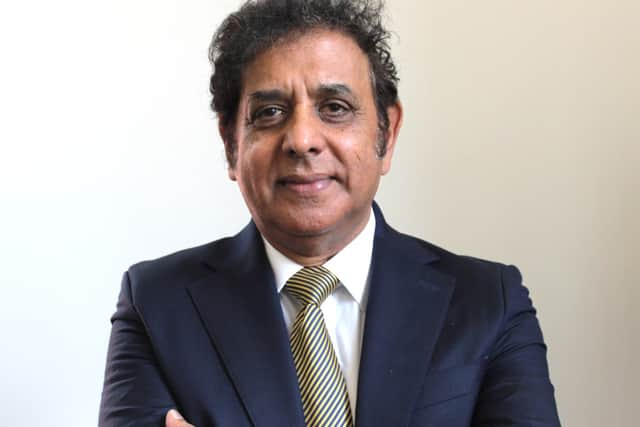
‘As a society we have developed an extraordinary sensitivity about language’ - Roshan Doug on today’s Big Brother
A camera in Bristol caught me making a mistake. I had simply missed a sign and driven into a bus-only zone.
Fair enough – I was in the wrong. Although a tad grieved, I will pay the fine. But it set me off thinking.
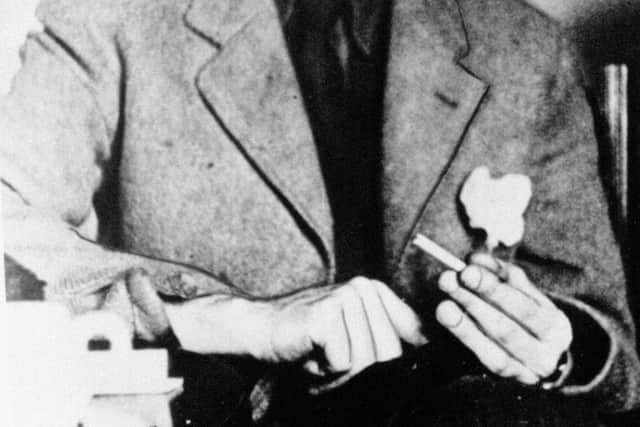
George Orwell imagined a world in which people were watched, corrected and controlled until they began policing themselves.
His dystopian novel, 1984, was supposed to be a warning about the future. Nearly eighty years later, as cameras monitor our roads and arguments over language grow ever more anxious, parts of Orwell’s nightmare feel uncomfortably close.
We now have speed cameras, bus-lane cameras, CCTV and automatic number-plate recognition. I’m not suggesting cameras are necessarily a bad thing. But there is a difference between security and privacy.
I can already hear somebody saying: ‘So what if you’re being watched? If you’re not doing anything illegal, you’ve got nothing to worry about.’
But I have never understood that argument. Privacy isn’t the same thing as secrecy. I don’t expect privacy because I am secretly planning a bank robbery. I expect privacy because I am a human being.
Think about your bathroom. You don’t normally have enormous windows so that everybody passing your house can watch you having a shower. You’re not doing anything illegal or illicit. You simply expect that little corner of your life to be private. You close the door, pull
the curtains and get on with it.
So why should that principle suddenly disappear when I step outside my front door?
Orwell understood the psychological effect of surveillance. In his novel, he writes: ‘There was of course no way of knowing whether you were being watched at any given moment.’
That uncertainty was part of the oppression. You behaved differently because you felt you were being observed (Think North Korea).
And there is something even more worrying than cameras: language.
Orwell’s government creates Newspeak not simply to introduce new words, but to make certain thoughts increasingly difficult to express. ‘The whole aim of Newspeak,’ he writes, ‘is to narrow the range of thought.’
Look at our own arguments today. What constitutes hate? What constitutes offence? What constitutes harm? What words are acceptable? What are we allowed to say about sex and gender? Where does legitimate criticism end and unacceptable speech begin? And who decides?
I’m not suggesting genuine threats, harassment or incitement to violence should be tolerated. Of course they shouldn’t.

But we have developed an extraordinary sensitivity about language, and people have found themselves investigated or arrested over things written online – sometimes serious threats, but sometimes foolish, flippant, provocative or supposedly humorous comments.
Celebrities such as Jordan Peterson, J.K. Rowling, and John Cleese have illustrated the increasingly fierce arguments surrounding words, language and gender identity.
You don’t have to agree with any of them. That’s precisely the point. A free society has to tolerate opinions with which we profoundly disagree – including opinions about our politicians, our government and our reality.
Perhaps something even more subtle has happened. We have become part of the government.
We police one another as State operatives. Someone says something and immediately comes the response: ‘You can’t say that.’ ‘You
can’t use that word.’ ‘That’s offensive.’
Suddenly we are doing the censoring ourselves. I mean, since when did hurting somebody’s feelings become a crime? Being offended is part and parcel of living in a diverse society. So what?
Over-sensitivity makes us self-conscious. I have to admit that even I experience this. Sitting here writing a newspaper column, I
sometimes think twice about the language I use. Not because I’m threatening anybody or advocating violence, but because I know that a perfectly ordinary word can be interpreted in a particular way and suddenly the argument becomes about the word rather than the idea.
I sometimes catch myself thinking: ‘Perhaps I’d better phrase that differently.’ And then I think: hang on – isn’t that precisely how self-censorship works?
Orwell called his fictional concept thoughtcrime. We don’t necessarily need an official Thought Police. We can become the Thought Police ourselves. We watch one another, correct one another and anticipate what somebody else might find offensive before we even speak.
You don’t have to silence everybody if you can persuade them to silence themselves.
That is why I worry about casually labelling language as anti-Semitic, homophobic or Islamophobic. Genuine hatred, threats and incitement should obviously be challenged. But labels can also become a convenient way of shutting down debate. Once people become frightened of being labelled, they start censoring themselves.
The irony is that we can end up doing precisely what a free society is supposed to prevent.
Instead of allowing people to make arguments, challenge ideas and occasionally say something foolish, we become obsessed with ensuring that every word is safe, approved and unlikely to offend anybody.
But human beings are not machines, and conversation is not a risk assessment form.
Sometimes people say stupid things. Sometimes they are provocative. Sometimes they are rude. Sometimes they are funny. Sometimes they are wrong.
That is part of living in a free society.
* Roshan Doug is a social commentator and educationalist. He is a former Birmingham poet laureate.
Comment Guidelines
Iconic Media encourages reader discussion on our stories. User feedback, insights and back-and-forth exchanges add a rich layer of context to reporting. Please review our Community Guidelines before commenting.