
Decision on Telford Local Plan which could see 20,000 homes be built up to 2041 expected next week

Local plan sets out plans for more than 20,000 homes to be built up to the year 2041.
Reports to leading councillors reveal what government planning inspectors and council officials believe as councillors sit on the brink of key decisions about Telford and Wrekin's 'vital' local plan.
The local plan sets out the development blueprint for the borough up to 2041 including where houses will be built, how green spaces will be created and protected and a raft of policies.
The borough council's ruling cabinet will be asked next week to consider accepting an inspectors' recommendation that 147 main modifications be made to the plan to make it sound.
Inspectors Mike Worden and Catherine Carpenter recorded that Telford & Wrekin Council had asked for them to make recommendations for modifications.
A series of examination hearings earlier this year heard that the plan would have to be changed to cover the period from 2021 to 2041 instead of 2020-2040.

This had the effect of increasing the number of new homes needed from 20,200 dwellings to 20,680, and increase from 1,010 dwellings per year to 1,034 homes per year. A number of the modifications support this adjustment.
The number includes an increased contribution of 153 dwellings per year to help the Black Country with its housing needs. The council had increased this from 126 per year.
The inspectors recorded that "Telford and Wrekin has a long history of a connection to the Black Country and migration from there has played a key part in the growth of the borough.
"Having assessed migration data the council calculated that an appropriate figure to reflect trends would be around 126 dwellings per annum but considered that this should be increased to 153 dwellings per annum to account for support to the wider housing market area.
"This figure has the formal support of the Black Country authorities through statements of common ground.
"We consider this to be an appropriate contribution towards the unmet need of the Black Country authorities."
The planning inspectors agreed that some 11,300 homes have already been either given planning permission from 2021 to 2025, or were expected to be found.
Some 10,231 homes are expected to come from "new allocations" in the plan period.
The inspectors found that the council has a "total supply" of around 21,500 dwellings, which is more than the required 20,680.
The inspectors found that this meant that the "plan provides specific and developable sites for the plan."
The inspectors report also agrees that the council can deliver what it needs to in the first five years of the plan.
They found that the council has a total housing supply of 6.2 years - 5,914 homes when it needs enough for five - 4,781 dwellings representing a supply of 6.2 years.
Inspectors found that even if an oversupply of past completions was not taken into account there would still be around 5.4 years’ housing land supply.
"We can therefore be confident that the plan provides for a specific and deliverable supply of sites for the first five years following adoption."
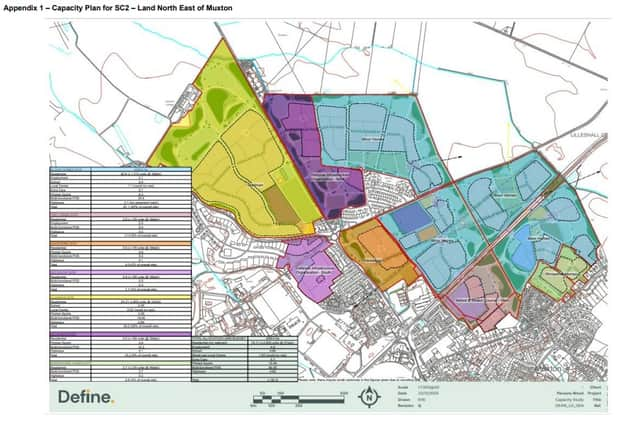
Also considered was the council's plan to build nearly 8,000 new homes in three 'sustainable communities'.
These are 2,100 homes on land and Bratton, around 2,700 north east of Muxton and around 3,100 on land north of Wheat Leasows.
Inspectors consider that close to 7,000 are expected to be built by 2041.
Inspectors noted that "significant progress has been made in the pre-planning work between the council and developers/promotors."
But they added "we consider that there needs to be greater community involvement in the design and detailed shaping of the sites, and we recommend modifications which include this.
"The allocation of the three Sustainable Communities accords with the development strategy of the plan and represents the logical extension of Telford northwards. The principle of the allocations is sound," the inspectors found.
Hearings earlier this year also heard the council defend a policy to have 25 per cent 'affordable housing' on sites in Telford.
But the inspectors rules that "based upon the council’s own viability evidence a requirement of 25 per cent affordable housing in the Telford built up area is not justified and the evidence clearly indicates that this should be 20 per cent."
But the inspectors agreed with the council that higher levels of affordable housing could be achieved if public subsidy was forthcoming for particular schemes.
Overall the inspectors concluded that the un modified plan had a "number of deficiencies in respect of soundness" and they would "recommend non-adoption of it as submitted."
But they noted that the council had has requested that we recommend main modifications to make the plan sound and capable of adoption.
"We conclude that with the recommended main modifications the Telford and Wrekin Local Plan Review satisfies the requirements and is sound."
Council officials stress that it is "critical" the borough has a robust up to date plan in place.
They say it will mean that green spaces can be protected and it "will remove the risk of speculative development, create jobs and bring forward new affordable housing opportunities and support regeneration of existing housing stock."
Officials warn that without a plan the council would "lose planning powers making it easier for developers to seek planning permission in areas this Plan seeks to protect."
Council officials have warned that withdrawing the plan "is a highly risky and damaging approach that would expose the borough to a considerable period of unplanned speculative development."
It would also result in a loss of infrastructure funding from developer contributions and government grants to support growth in the borough.
"This would impact the council's ability to make improvements to the highway networks, fund improvements bus, walking and cycling networks as well new and expanded schools.
"It would also result in less good quality affordable and adaptable housing for rent for our residents coming forward."
If the cabinet approves the changes the local plan will then be recommended to the full council for approval.
Comment Guidelines
Iconic Media encourages reader discussion on our stories. User feedback, insights and back-and-forth exchanges add a rich layer of context to reporting. Please review our Community Guidelines before commenting.