
Rare Icelandic swan spotted in Shropshire for first time in 11 years
Magnificent whooper swan puffs out its chest after epic 1,200-mile journey to UK
Stunning images show a rare whooper swan puffing out its chest and stretching its wings after flying over 1,200 miles to the UK for the winter.
The elusive large bird was spotted enjoying a mid-flight rest in Walcot Lake, Shropshire, as it navigated its way from Iceland.
Photographer Andrew Fusek-Peters couldn’t believe his luck when he snapped the swans at the beauty spot for the first time since 2015.
The giant male swan with its mainly orange beak can be seen patrolling the waters for food before displaying its impressive 9ft wingspan.
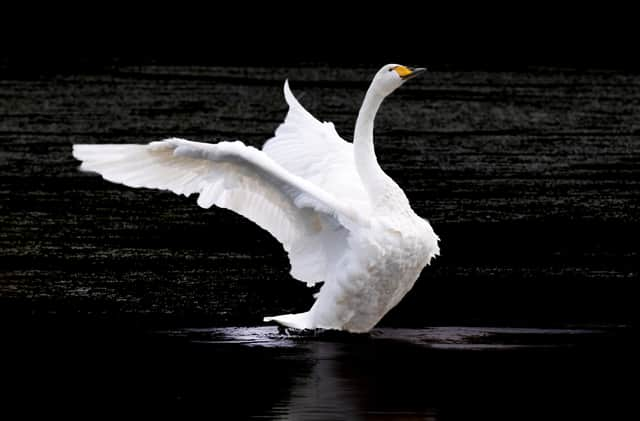

Andrew captured the bird puffing out its chest and airing its feathers after a series of dives.
Andrew, 61, of Lydbury North, Shropshire, said: “They’re on their way to the feeding grounds from Iceland, they stop off at places to feed and rest, it’s a long way.
“To get here they’re flying at over 30,000ft which is impressive, we know that as airline pilots see them and log it.
“They’re just on another level of elegance compared to the standard mute swan - the colour of the beak alone is amazing.
“They’re just lovely. They were making that very distinct sound that they make.
“The whooping sound is extraordinary, it’s a little honk that’s completely different from the standard swan.”
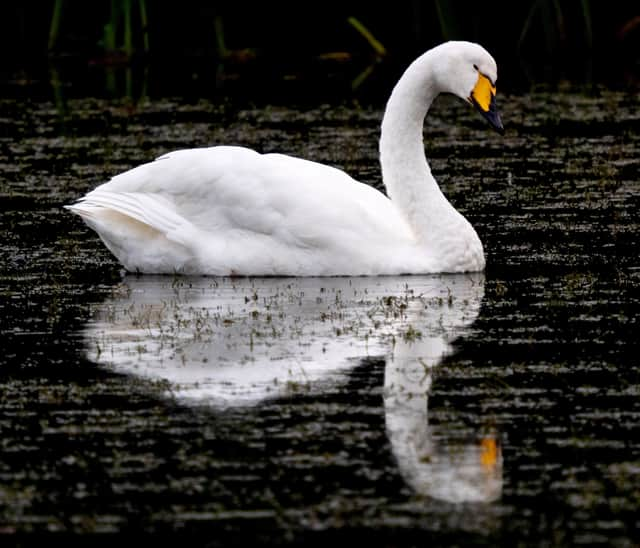
Whooper swans fly from Iceland to winter in northern England and East Anglia each year from October to March.
The birds, which can weigh up to 14kg, form lifelong monogamous pairs and gather in tight family groups.
Andrew added: “Like any swan they preen, they dive under water so they get wet.
"They puff up to dry their wings to dry themselves out.
“They’re very chilled out and not really bothered by humans.
“They come in the big numbers and almost never breed here.
“They are on the amber list of endangered birds, they’re a bird that needs to be looked after.
“They were last seen at the lake here in 2015, they tend to prefer the wetland sites.
“They’re really quite special to see.
“Not to knock the mute swan, but you really feel these are the prettier of the two."
Comment Guidelines
Iconic Media encourages reader discussion on our stories. User feedback, insights and back-and-forth exchanges add a rich layer of context to reporting. Please review our Community Guidelines before commenting.