
The Black Country hangman: How a petty criminal found fame as the 'Dudley Higgler'
Because he was born in 1805, we would probably describe hangman George Smith as a 'colourful character'.
Had he been born in 2005 he would probably be called a 'lout'.
"Often loud and drunk and a petty criminal, he was once jailed for running naked through Wednesbury," writes Helen Harwood in her new book, Illustrated Tales of the Black Country.
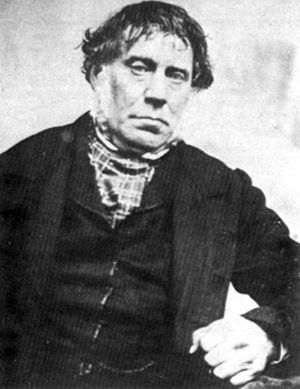
In 1825 Smith, who was born in Rowley Regis, was jailed for 12 months for poaching, and in 1829 he did one month for petty larceny. He served three months for the same offence in 1839, and the following year he was in prison again, this time at Stafford. And it was here that he found his true role in life.
Harwood's book looks at the lives of many of the Black Country's characters and Smith, who went on to achieve notoriety as the 'Dudley Higgler', was certainly one of them.
While Smith was serving time for not paying his debts, executioner William Calcraft was summoned to Stafford jail to carry out the double execution of James Owen and George Thomas. The pair had been convicted of the gruesome 'Bloody Steps Murder' of Christine Collins near Rugeley, a passenger who had been travelling by narrowboat to meet her husband. The murder shocked the nation, and more than 10,000 were expected to turn out to see the killers meet their end on April 11, 1840.
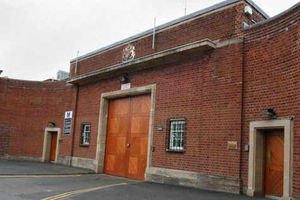
Unfortunately, on the day of the execution, Calcraft's assistant 'Old Cheese' Cheshire had been out on the lash, and failed to turn up on time, meaning Calcraft needed to find a new helper at short notice. None of the prison warders wanted the job, leaving prison governor Thomas Brutton with little choice but to ask the prisoners if anyone wanted to volunteer, with early release as the incentive. Smith offered his services, on condition that the debts which had landed him in prison in the first place would also be paid off.
And if Smith was not the ideal next-door neighbour, it seems he was a jolly good hangman. Governor Brutton was certainly impressed with how the two murderers died almost the moment the bolt was drawn. In 1843, Smith's services were called upon again, when he was invited to Lancaster to help Calcraft with the hanging of Betty Eccles, who had murdered her stepson.
Smith was also much cheaper than Calcraft, who charged £10 a hanging to travel from London. His first official contract came in August 1843, when he was tasked with executing 26-year-old Charles Higginson, who had murdered his five-year-old son and buried his body in a copse in Bishop's Wood.
He was appointed Staffordshire's principal hangman, and became a familiar sight in his long white coat and top hat, picking up the nickname of the 'Dudley Higgler' - Black Country slang for strangler. He would hang 21 convicts at Stafford, including Sarah Westwood in 1844, and 13 in other prisons.
But while Smith might have found his true vocation following his mis-spent youth, it did not mean he was an entirely reformed character. In 1850 he found himself behind bars once more, serving three months for bigamy of all crimes. But Harwood says his illicit extracurricular activities presented little impediment to his day job.
"His increasingly long criminal record was not a hindrance to his daytime occupation, which he carried out with a cold detachment," she writes.
However that did not mean he never made mistakes, and on one occasion he almost paid with his life.
On August 20, 1860, the Higgler was tasked with hanging 28-year-old Francis Price at Warwick, for the murder of his ex-girlfriend, 24-year-old Sarah Pratt, in Birmingham.
"It was the normal practice to allow the condemned time to pray and ask for forgiveness, and when they'd finished to inform the hangman by dropping a white handkerchief," says Harwood.
"On this occasion, for some reason, Smith was impatient and, drawing the bolt early, he dispatched Price to his death."
An angry crowd of about 3,000 people threatened to storm the scaffold, and fearful for his life, he sought the protection of police, who ushered him away to the prison.
"Thinking the danger had passed, Smith headed to the railway station, only to discover that a large number of people there were Brummies who recognised him. Only the actions of stationmaster Mr Chiltern and his staff prevented him being thrown onto the track."
Harwood said Stafford's last public hanging, on August 7, 1866, also suffered a misfortune, when it became apparent that Smith had been negligent in attaching the rope to the crossbeam. The defendant, 35-year-old William Collier, dropped to the ground when the trapdoor opened, forcing Smith to try again. His second attempt was more successful.
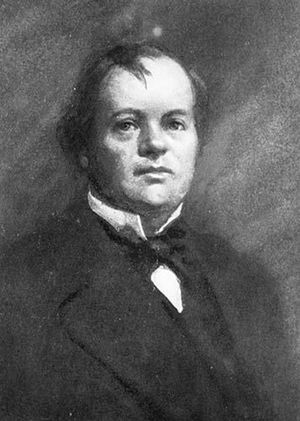
His most famous 'victim' was 31-year-old Dr William Palmer, the infamous 'Rugeley poisoner', who had to be tried at the Old Bailey over concerns he would not get a fair trial in Staffordshire. An estimated 30,000 people attended the execution. It was something of a role-reversal for the pair - they had previously met when Smith was a prisoner and Palmer a visiting magistrate to Stafford jail.
Smith retired in 1872, after suffering from dropsy, possibly as a result of his drinking, and settled into a characteristically anarchic retirement running a 'wobble shop', an unlicensed beer shop, from his home called Hangman's Hall.
"Surprisingly, friends and relatives of those he'd executed would sometimes visit to compliment him on the swift and clean way he had dispatched of 'poor Jim' or 'poor Tom'," says Harwood.
He died a pauper at Oakham, Dudley, on Good Friday in 1874.
Illustrated Tales of the Black Country by Helen Harwood, by Amberley Publishing, is on sale now priced £15.99.