Powers to seize mobile phones over Channel crossings come into force
The new powers come after the Border Security, Asylum and Immigration Act became law in December.
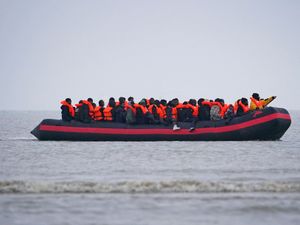
Mobile phones and sim cards will be seized from migrants without needing to arrest them from Monday as part of efforts to tackle Channel crossings and people smugglers.
Officers will begin taking electronic devices from people at Manston processing centre in Kent, with technology on site to download data from them in a bid to gather intelligence on people smugglers.
The new powers for law enforcement agencies are hoped to speed up investigations and come after the Border Security, Asylum and Immigration Act became law in December.
Border security minister Alex Norris said: “We promised to restore order and control to our borders which means taking on the people smuggling networks behind this deadly trade.
“That is exactly why we are implementing robust new laws with powerful offences to intercept, disrupt and dismantle these vile gangs faster than ever before and cut off their supply chains.
“These operational measures sit alongside sweeping reforms to the system, to make it less attractive for migrants to come here illegally and remove and deport people faster.”
A total of 41,472 migrants arrived in the UK in 2025 after crossing the English Channel – the second highest annual figure on record.
The yearly total was 13% higher than the figure for 2024, when 36,816 migrants made the journey, and 41% higher than 2023’s total of 29,437.
It was also 9% below the all-time high of 45,774 in 2022.
Shadow home secretary Chris Philp said Labour have confined themselves to “cosmetic tweaks” and that there is no deterrent to those crossing the Channel.
Instead, he pressed for quitting the European Convention on Human Rights (ECHR) to take effective action, which Labour has rejected in favour of reforming the treaty to address the issue.
The Government’s new law also introduces new criminal offences such as up to 14 years in jail for storing or supplying boat engines to bring migrants to the UK via the English Channel smuggling route.
Smugglers downloading maps on where to depart on small boats or researching the best places to buy equipment for the dinghies could also face up to five years in prison.
The UK’s Border Security Commander, Martin Hewitt, tasked with curbing Channel crossings said more than 4,000 disruptions against smuggling gangs have taken place since his unit was set up, such as by seizing cash and convicting key players.
He said Monday marks a “key moment” to go further with extra tools to crack down on smugglers.
Home Secretary Shabana Mahmood has also announced plans for a raft of reforms in what she described as “the most significant changes to our asylum system in modern times” in a bid to deter people from coming to the UK and make it easier to deport them.
Shadow home secretary Chris Philp said: “Seizing phones may help at the margins, but it will not fix the small boats crisis, which is raging out of control under this Government.
“With more than 41,000 people arriving in 2025, the Government needs to get a proper grip on the situation.
“Only the Conservatives will leave the ECHR and deliver our Borders Plan which will restore control of our asylum system.”
The charity Freedom From Torture said subjecting migrants to “invasive searches” immediately after they have survived a journey across the Channel was “profoundly inhumane” and called for ministers to expand safe and legal routes to prevent dangerous crossings.
Officers will be able to carry out searches for a hidden sim card inside someone’s mouth and ask them to take off their coat, jacket or gloves.
Natasha Tsangarides, associate director of advocacy at Freedom from Torture, said: “Applying these powers indiscriminately to everyone arriving by small boat risks treating all refugees as a security threat, regardless of evidence, and shows a shocking disregard for the fundamental right to privacy.
“Cruel border practices will not stop people fleeing danger. As long as torture and conflict continue, smugglers will adapt and desperate people will keep taking risks to reach safety.”