
The doomed little village that disappeared to make way for Telford town centre
Close-knit community of Dark Lane was sacrificed and is now just a memory
As Telford's town centre took shape in the landscape, the village of Dark Lane was destroyed forever.
It is one of Telford's lost communities, sacrificed in the creation of the new town, its residents rehomed with varying degrees of enthusiasm.
The bulk of Dark Lane comprised long rows of terraced homes, called Long Row, Bottom Row, and Top Row (or Payne's Row). These were in the area of Dale Acre Way, Dalelands, Downemead and Danesford on the modern Hollinswood housing estate.
A farm stood on what would become the northern corner of Matheson House office block, and Abbey Villas was buried under Telford's indoor shopping centre.
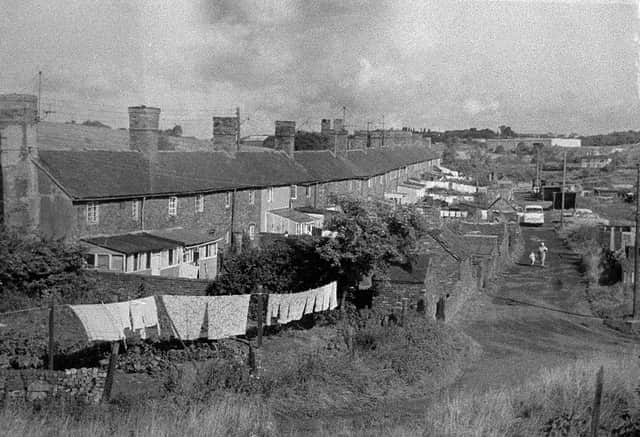

The village was doomed by the decision to earmark the area for Telford town centre. Properties were compulsorily purchased around 1970 and residents moved out.
There were mixed feelings. On the one hand they were sad about the loss of their community, in which all those families, like the Tarts, the Goughs, the Withingtons and the Plants, used to know each other, while on the other they were pleased about having better accommodation.
By modern standards, life in Dark Lane was short of comforts. Getting water had meant going to a spring, although standpipes were put in after the Great War.
Today there cannot be more than a handful of people who remember Dark Lane but happily although it is gone, a local couple made sure it was not forgotten. Around the start of the millennium Dennis and Melville Rogers, who were acutely aware that first-hand knowledge of this disappeared community was dying out, recorded Dark Lane's story, collecting people's memories and pictures, and producing a little booklet.
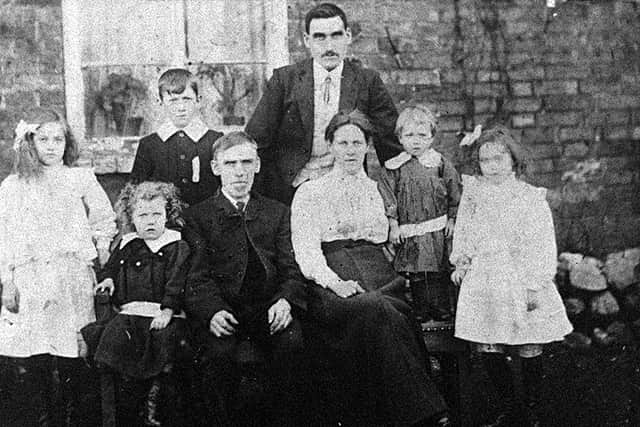
Melville's father George Wilson, who was Dark Lane born and bred, died in 2000 at the age of 90, and two days before he died was able to name every family who lived in the 44 houses of the village, and the occupation of the head of the household, in 1918.
Melville was born in Dark Lane, and her mother Gladys Wilson ran the post office - it was actually called "Malinslee Post Office" - from the parlour of their home at 36 Dark Lane. Melville had left Dark Lane on her marriage in 1953.
Among those to mourn the loss of Dark Lane was the Shropshire Star's very own Shirley Tart. Her birthplace was a two-bedroom cottage, 17 Malinslee, which stood between Dark Lane and Dawley.
The late Shirley would say that she was born on a supermarket car park as her birthplace ended up as the car park for Carrefour hypermarket, one of the first big stores for the new Telford shopping centre, itself now disappeared.
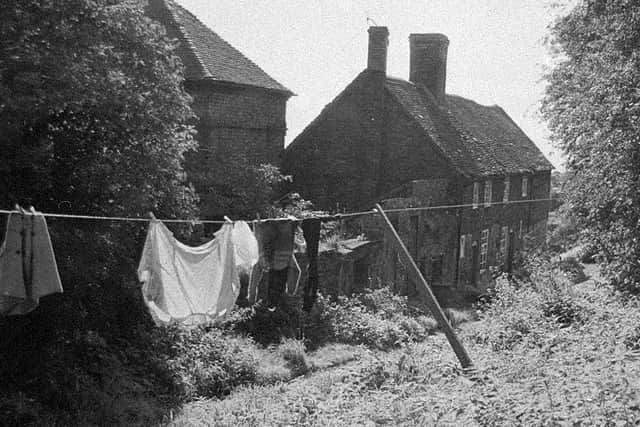
She would lament: "The little 19th-century village of Dark Lane which had sheltered so many generations (usually from the same families) was reduced to a replica of a massive and grotesque bomb site.
"We had long since left by then, but the sacrifice of a village – not much more than a hamlet really – was acute and painful. And for those still living there, apart from having to move home, the worst part was knowing that the little Methodist chapel at the bottom of the village opposite Crawford’s Farm would have to go as well.
"In a community where everyone was Methodist – that’s what happens when there’s nowhere else handy to go – there was a real grief as the solid, square building with its neat pews, old peonies and a million memories also left the scene."
Comment Guidelines
Iconic Media encourages reader discussion on our stories. User feedback, insights and back-and-forth exchanges add a rich layer of context to reporting. Please review our Community Guidelines before commenting.