
The Shropshire hillfort said to be where King Arthur’s Queen Guinevere was born

It’s known as one of Britain’s best-preserved hillforts, and it’s right here in Shropshire
Standing proudly above Oswestry, the Old Oswestry Hillfort is a remarkable reminder of a world that existed long before our modern towns.
Widely considered one of Britain's best-preserved hillforts, Oswestry’s famous mound might be most familiar to Salopians for the stunning views it offers over the county.
It is a mythical place, long associated in local legend as the birthplace of King Arthur's Queen Guinevere.
Today its enormous grassy banks and deep ditches seem peaceful, but more than 2,000 years ago this would have been a place teeming with activity.
The history of the site stretches back thousands of years, with evidence of early human activity (flint tools and a stone axe) suggesting people used the hilltop way back in the Neolithic period (from around 4,000BC to 2,300BCE).
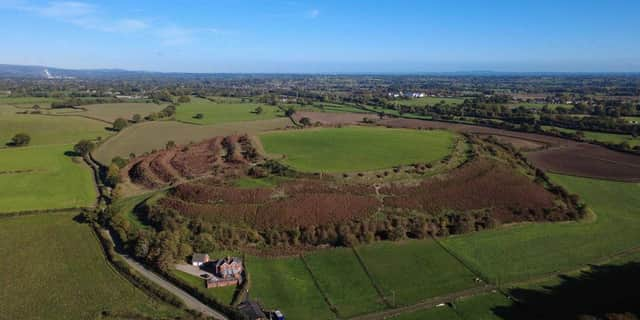

But it was during the Iron Age that Old Oswestry developed into the impressive hillfort we recognise today.
The fort was surrounded by several enormous banks and ditches, built in several stages over many centuries.
These formidable defences would have made the settlement difficult to attack, but the ramparts were not just practical structures - their enormous scale would have demonstrated the wealth and importance of the community living within them.
Instead of the open grassland visitors see today, the hilltop would have been home to several roundhouses. First made of daub-and-wattle, and later, kerbed with stone.
Discoveries of pottery originating from Wiltshire and salt containers from Cheshire provide fascinating evidence that this community had trading connections with places far beyond the immediate area.
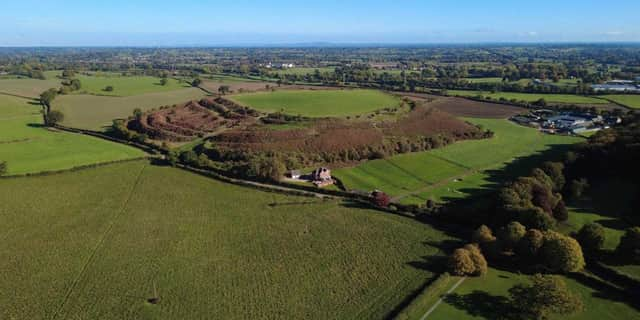
The hillfort was abandoned towards end of the Iron Age (likely around the time of the Roman conquest), but that did not mark the end of Old Oswestry’s story.
For several centuries the landscape became associated with Wat's Dyke, an extensive earthwork running through the Welsh Marches.
Historians suggest the dyke could have served as a border between the Anglo-Saxon and British population - or perhaps the boundary of a now-forgotten kingdom which ruled the Shropshire and Cheshire area in the post-Roman period.
Perhaps more surprising is the hillfort's role in much more recent history. During the First World War, the nearby Park Hall was used to train soldiers, including Shropshire-born poet Wilfred Owen.
Old Oswestry was used as part of the training ground, and trenches were dug into the historic site and the use of explosives created shallow craters that are sometimes mistaken for archaeological features.
English Heritage, which today manages the site, says much of the archaeology of the interior of the fort was damaged at this time.
Today, Old Oswestry Hillfort remains one of Shropshire’s most remarkable historic landmarks, offering visitors a chance to walk in the footsteps of the people who called this landscape home thousands of years ago.
Comment Guidelines
Iconic Media encourages reader discussion on our stories. User feedback, insights and back-and-forth exchanges add a rich layer of context to reporting. Please review our Community Guidelines before commenting.