
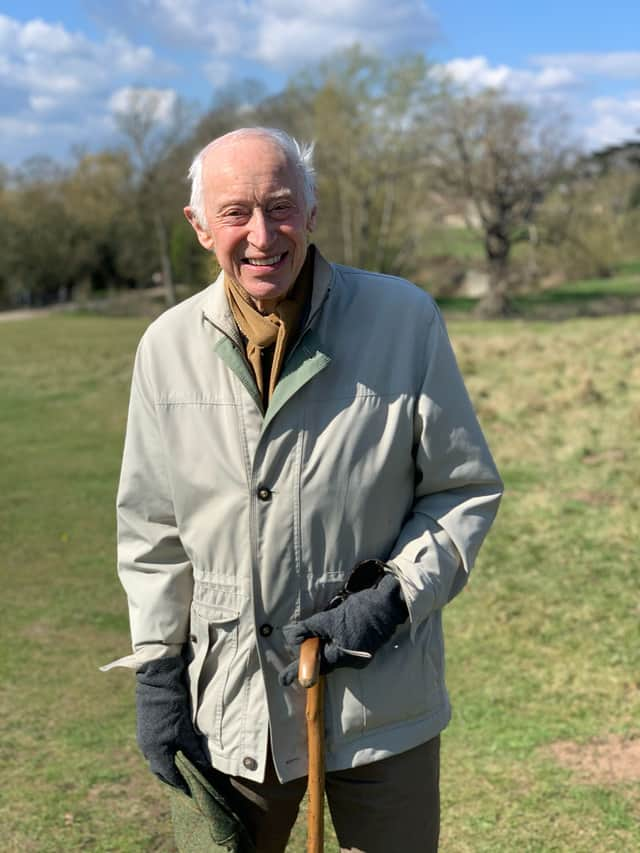
Key Shropshire campaigner in saving the historic Battle of Shrewsbury has died aged 93
Selby Martin was awarded the MBE in the Queen’s 2022 New Year Honours list in recognition of his community work in Shropshire.
A civic and environmental campaigner who was a key figure in saving the historic Battle of Shrewsbury site from being ruined has died at the age of 93.
Selby Martin was awarded the MBE in the Queen’s 2022 New Year Honours list in recognition of his community work in Shropshire, which had included roles as chairman of Shrewsbury Civic Society and chairman of Shrewsbury branch of the Campaign for the Protection of Rural England.
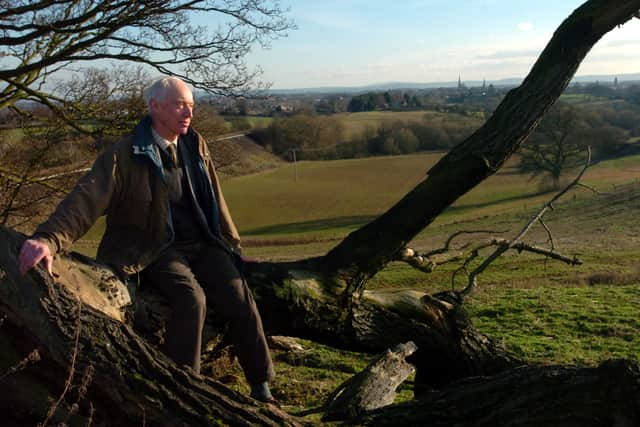
In the 1980s the site of the bloody 1403 Battle of Shrewsbury was threatened with being redeveloped with a giant Toyota car plant but thanks to the efforts of Selby and others it was spared.
“I had a role in it, but I would like to make clear I was not fully responsible. It was also down to the help of others and circumstances,” he would modestly insist.

There would be further threats and the famous actor Robert Hardy, who was on the English Heritage committee for battlefield sites, became involved, ultimately resulting in the site being given protection.
Brought up in Broadstairs, Kent, Mr Martin became a British diplomat, with postings during the height of the Cold War in Moscow and Bulgaria, as well as Bolivia and Pakistan. He would write a book about his experiences called “From Communism To Community.”
After 16 years in the diplomatic service, he came to Shrewsbury to teach, and for 25 years was a master at Shrewsbury School.
He is survived by children Jessica, Timothy, and David, and four grandchildren. A service of thanksgiving will be held at St Chad’s Church, Shrewsbury - where Selby had been a church member since 1973 and would become a churchwarden - on May 27 at 11.45am, after a private family committal.
Son David highlighted some other battles fought by his father.
“At Nobold Lane there is a series of springs which supplied Shrewsbury with water in Tudor times. These were under threat through neglect in the 1990s, but they are now interpreted and can be viewed from walkways. He got the northern part of the Shrewsbury bypass moved, to protect the battlefield site, and campaigned against the North West Relief Road. He campaigned to protect the environment in Mid Wales as well,” he said.
One of his various community roles was as chairman of Radbrook Residents Association.
“The developer was not going to build any shops, but Selby helped ensure there was a shopping centre at Radbrook Green so there were facilities for the community there.”
A widower, Selby had met future wife Rachel Millington on a skiing trip in the Alps. He loved travelling, particularly the Scandinavian countries, was multi-lingual, and had a passion since childhood for fishing - he had a great time fishing during his time as a wartime evacuee in Scotland - and later beekeeping.
He was still cycling at the age of 87, albeit ultimately on an e-bike.
In his memoirs of his time as a diplomat, he evoked a life which was the stuff of spy thrillers - although he was not himself a spy - being tailed everywhere by the KGB or state agents, and constantly on the alert for secret microphones.
His favourite posting was La Paz, Bolivia. During his time there was a royal visit from Prince Philip who, Selby recalled, insisted on driving himself on the treacherous roads with hairpin bends high in the Andes. In La Paz he drove so fast that two of his motorcycle escort dropped out.
Selby wrote home: “He is a most impressive and easy person to get on with, very witty, at the same time remarkably knowledgeable about every subject under the sun.”
When war waged in 1403
Although the powerful Percy family had supported the Lancastrian King Henry IV when he took the throne from Richard II in 1399, the rebellion of 1403 stemmed from the king’s failure to sufficiently reward the family for the costs they had incurred in doing so.
In addition, as if to add insult to injury, the infamous Sir Henry Hotspur Percy who had been successfully campaigning against the rebellious Welsh patriot Owain Glyndŵr had not received payment for his services.
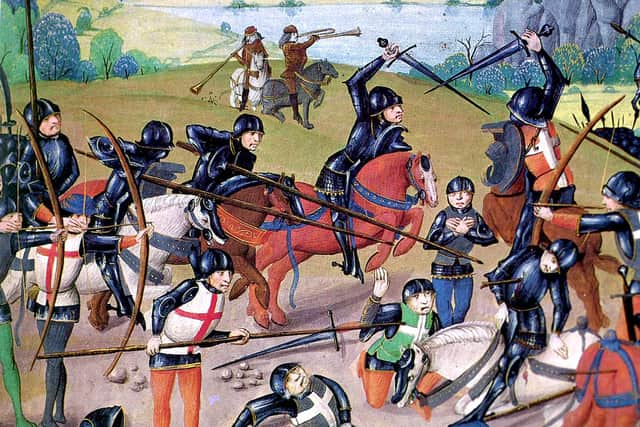
The Percys formed an alliance with Glyndŵr and Edward Mortimer to conquer and divide up England. With a hastily mustered force Hotspur set off for Shrewsbury to join forces with the other rebels.
By the time he reached the town Hotspur’s army had grown to around 14,000 men; most notably he had recruited the services of the Cheshire archers.
Hearing of the plot against him, the king had hurried to intercept Hotspur and both armies faced each other on 21 July 1403.
In a closely fought encounter Hotspur was killed, apparently shot in the face when he opened his visor. With the loss of their leader, the battle came to abrupt end.
Comment Guidelines
Iconic Media encourages reader discussion on our stories. User feedback, insights and back-and-forth exchanges add a rich layer of context to reporting. Please review our Community Guidelines before commenting.