
Memorial bench honours First World War gunner whose love letters touched a community
A memorial bench has been dedicated at St Edward's Church in Knighton to commemorate First World War Gunner Willie Webber
A memorial bench has been unveiled at St Edward's Church in Knighton in honour of First World War Gunner Willie Webber, more than a century after he was killed in action.

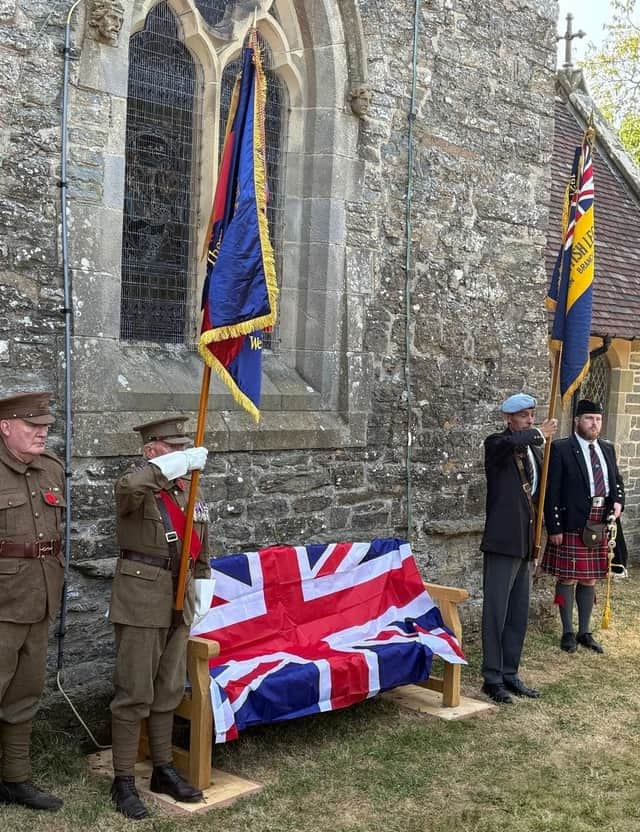
The dedication took place on July 23, bringing together local residents, veterans, clergy and community groups to remember Gunner Webber, who served with the Royal Garrison Artillery and was killed on October 2, 1918.
The tribute has its roots in an extraordinary discovery made by author and researcher Andrew V. Garner, who became the custodian of more than 100 wartime letters written by Gunner Webber to his wife, Gladys, in January 2025.
The letters, written while Willie was serving with the British Expeditionary Force, revealed the couple's deep affection and hopes for the future together. Andrew painstakingly transcribed the correspondence before retracing the couple's lives in Knighton with the help of local historians Phillip and Amanda Jones.
Among the places they visited were the couple's former home, Shakey Bridge, Ye Wells Hotel in Llandrindod Wells where Gladys had worked, and St Edward's Church, where Willie and Gladys married on December 17, 1917.
A contemporary newspaper report described the bride wearing a cream silk dress trimmed with lace and orange blossom, carrying a bouquet of pink carnations before the newlyweds left the church through an honour guard formed by convalescing soldiers from the local Red Cross Hospital.
Andrew later visited Windmill Cemetery in Pas-de-Calais, France, where Gunner Webber is buried. He also travelled to the nearby site where Willie and fellow gunner David Evans were killed after a premature firing caused their gun to explode.
Deeply moved by the letters and discovering that Gunner Webber was not commemorated on a memorial in either his birthplace of Plymouth or Knighton, his last known home, Andrew decided to create a permanent tribute.
With the support of St Edward's Church and the Reverend Rachel Storer, a crowdfunding campaign raised £1,600 in just two-and-a-half weeks to provide a memorial bench in the church grounds, where Willie and Gladys began their married life.
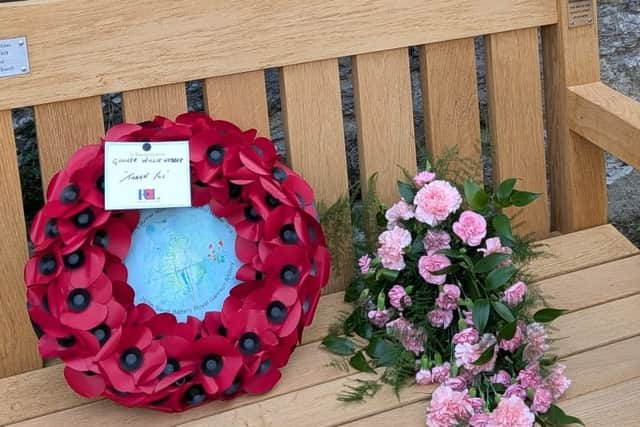
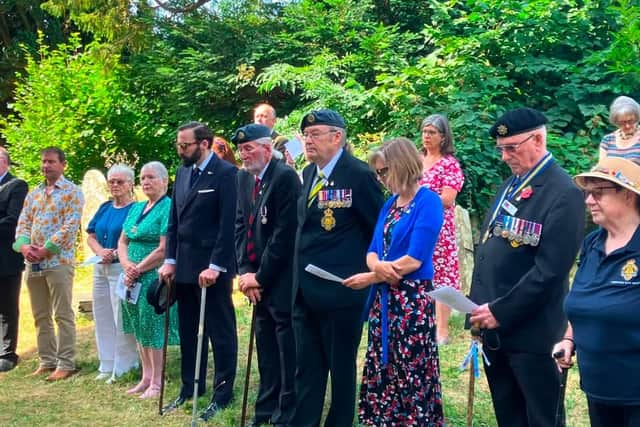
The dedication ceremony was attended by the Vice Mayor of Knighton, representatives of the Army Cadet Force, Knighton and Hereford Royal British Legion, members of the Welsh Guards Pilgrims, local clergy and residents.
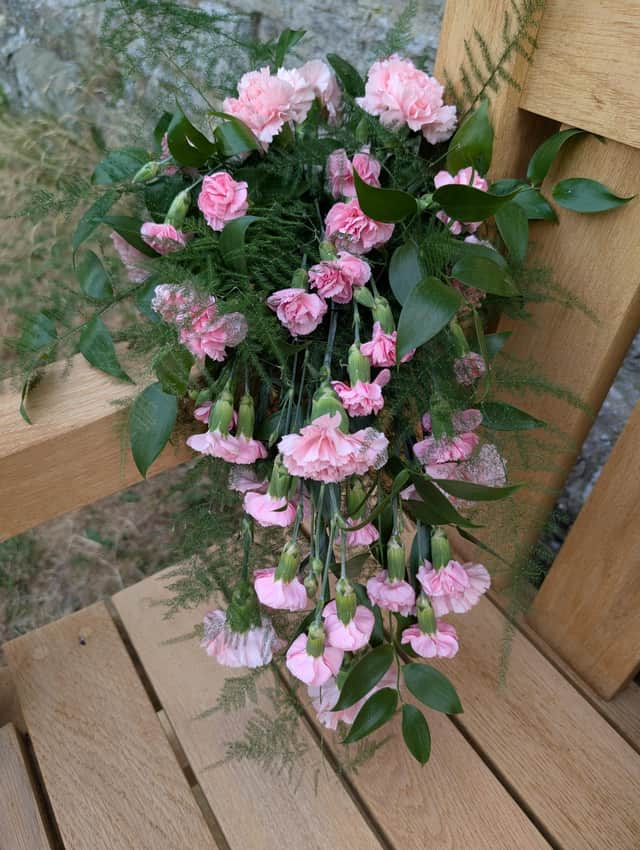
A bugler performed the Last Post, while a piper played a lament. Keith Bugden, the original owner of the letters, laid a Victorian-style bouquet of pink carnations in memory of Gladys, echoing the flowers she carried on her wedding day.
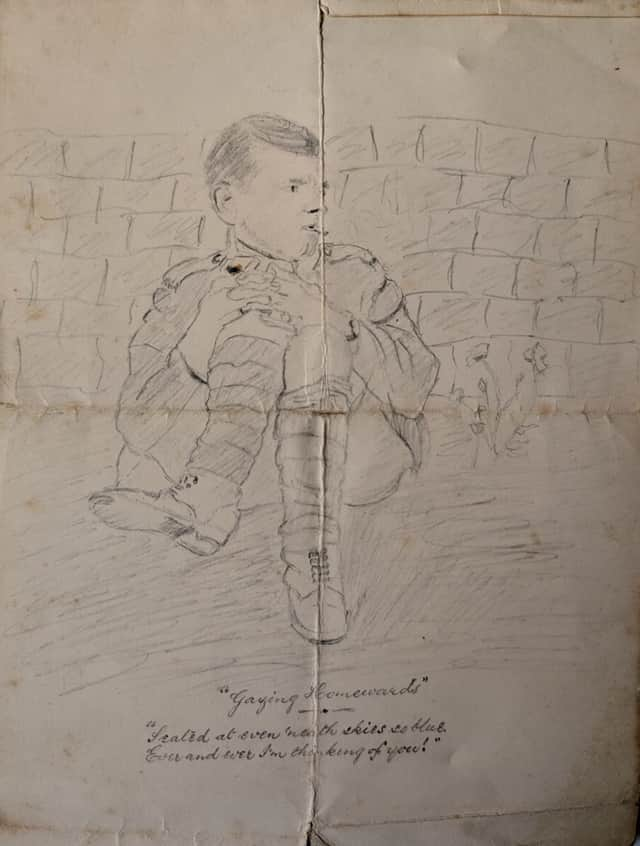
During the service, words written by Lieutenant Hugh Reginald Freston, who was killed in 1916, were read in remembrance of those who never returned from the Great War.
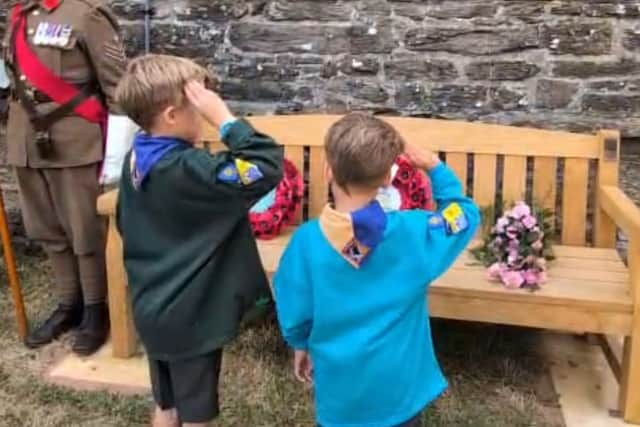
The ceremony concluded with the Welsh and British national anthems, a salute by Scouts Dylan and Finley Featherstone, aged eight and five, and the ringing of St Edward's bells by the East Radnor Bellringers. A special melody for the occasion had been composed by Lynn Scales.
Andrew has since shared Willie and Gladys' story in his book, Silent Voices – Gazing Homewards – On Active Service, ensuring that the couple's remarkable story of love, sacrifice and remembrance can continue to inspire future generations.