
Commission wrong to allow Drumcree parade, according to narrow majority in poll
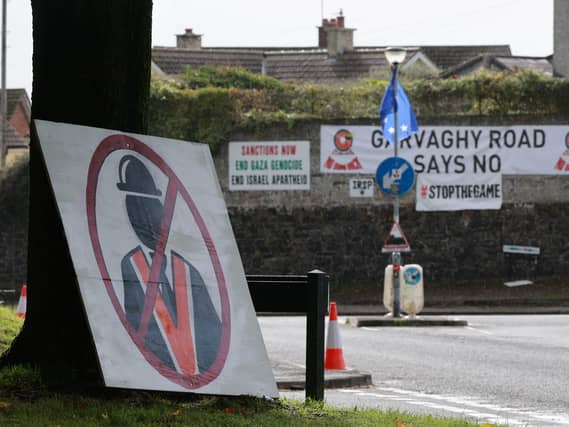

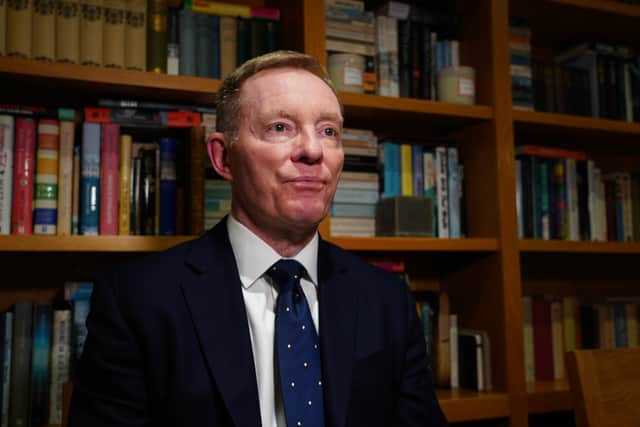
The research also found a narrow majority believe Secretary of State Sir Chris Bryant was right to ban the parade.
A narrow majority of people in Northern Ireland believe the Parades Commission was wrong to give the green light to the first Orange Order parade along the Garvaghy Road in almost 30 years, a poll has indicated.
The research, carried out by More In Common, also found the same 53% think Northern Ireland Secretary Sir Chris Bryant was right to step in and ban that Drumcree parade route.
Most nationalist and Alliance voters were found to have overwhelmingly backed the decision by Sir Chris, while Protestants were divided, with 54% believing that the move was wrong, and 28% that it was right.
The poll also looked at voting intention, and found Sinn Féin’s support has increased from 25% in July to 30% in October, while the DUP has risen from 17% to 18%.
The findings were the result of online polling of 1,019 adults following the move by Sir Chris to block the parade on October 9.
Of the other parties, the UUP was found to have remained on 13%, the TUV dropped one percentage point to 11%, Alliance dropped two percentage points to 9%, the SDLP remained at 9%, independents and others dropped one to 4%, the Green Party dropping one to 3%, People Before Profit dropped one to 3% and Aontu remained on 1%
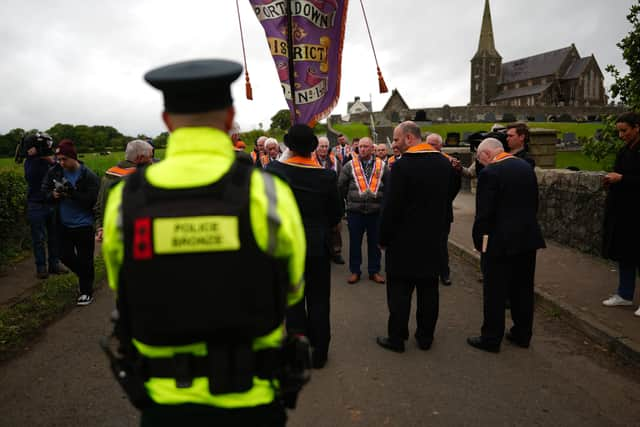
Sir Chris intervened following an almost two-week stand-off between Orange men and Garvaghy Road residents in Portadown over the parade route allowed by the Parades Commission.
Large crowds of protesters opposed to the parade had gathered on the Garvaghy Road, and police decided they could not safely accommodate the procession.
A police investigation is currently under way into potential breaching of the Parades Commission determination, with First Minister Michelle O’Neill, along with a number of Sinn Féin and People Before Profit representatives interviewed voluntarily by officers.
In what has been described as the largest examination of public attitudes in Northern Ireland so far following the resurfacing of the Drumcree dispute, 53% of respondents said Sir Chris was right to block the parade.
This includes 91% of Sinn Féin voters, 84% of SDLP voters and 81% of Alliance voters. In terms of the unionist parties, 85% of TUV voters thought the decision by Sir Chris was wrong, as well as 76% of DUP voters and 55% of UUP voters.
The poll found that Protestants as a whole are more divided on the issue, with an overall 54% believing the decision was wrong and 28% that it was right.
In terms of the Parades Commission decision, 87% of Sinn Féin voters, 75% of SDLP voters and 74% of Alliance voters said it was wrong to give the go-ahead to the parade, while 73% and 74% respectively of DUP and TUV voters took the opposite view, and UUP voters were split, with 46% saying it was the right decision and 39% saying it was the wrong decision.
Meanwhile, 38% of respondents sympathised more with the Garvaghy Road residents, and 21% with the Portadown Orangemen, and 41% do not take a side. Among Protestants, the poll found that more do not take a side (44%) than back the Orangemen (42%).
In terms of the future of Stormont, some 64% of those surveyed said it makes little or no difference to their own lives, and just 39% said they would be concerned if the institutions collapsed again, and 32% would not be concerned.
Half of those surveyed (49%) said Drumcree is not a strong enough reason for any party to pull out of the Executive, while 27% say it is.
A large majority (82%) said it matters that the dispute ends without violence.
Conleth Burns, associate director (Ireland and Northern Ireland) at More in Common, said the poll indicates that Sinn Féin are the political beneficiary of Drumcree.
“Our research here sets out to describe what a representative snapshot of people in Northern Ireland think about Drumcree and what it means for life and politics here,” he said.
“On the politics, it’s clear from our results here that Sinn Féin have been the main political beneficiary from the Drumcree fallout (up five points since our polling in July), but the DUP remain the main party of unionism in our polling and have held steady since our last poll at the end of July.
“Beyond the politics, it’s clear that divides on Drumcree are deeply felt across Northern Ireland. Communities disagree sharply on what has happened, who is to blame and what an acceptable ending to the dispute could look like.
“Two in five don’t pick a side, and most people say they understand why the other side feels as it does. Asked what matters most in how this ends, people of every party and across communities give the same answer: that it ends without violence, and one ending – the lodge’s right to parade confirmed, and not used – is acceptable to voters of every party.”