US tariffs are ‘here to stay’, warns Bank of England rate-setter
Alan Taylor indicated that tariffs could lead to shockwaves across the economy for ‘many years’.
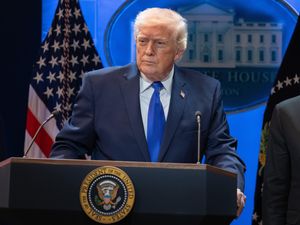
US tariffs are “here to stay” and could lead to shockwaves across the economy for “many years”, a Bank of England policymaker has warned.
Alan Taylor, one of the central bank’s nine-strong Monetary Policy Committee (MPC), nevertheless indicated that it would take time for the impact of recent changes to tariff plans to feed through.
On Friday, a US Supreme Court ruling struck down large parts of President Donald Trump’s major tariff programme launched last year.
The court voided the “reciprocal” tariffs he levied on nearly every other country as a result.
The president responded by saying he would be increasing the global tariff rate to 15%, “effective immediately”, hitting back at the Supreme Court’s ruling as an “extraordinarily anti-American decision”.
Mr Trump signed an executive order enabling him to bypass Congress and impose the tax on imports from around the world, but they are limited to 150 days before the administration must seek approval.
On Monday, Mr Taylor said previous history related to US protectionist measures from the 1930s indicates that it will take time for the economic impact to feed through.
He said: “The fundamental thing to realise is that those tariffs are here to stay at some number that is an order of magnitude bigger than it was two years ago.
“I think we should expect this shock to play out also over many years.
“It’s not going to be like an immediate shock that passes through.”
Mr Taylor, who was among a minority of MPC members to call for a cut to interest rates earlier this month, indicated he believes there could be up to three cuts to UK interest rates before they settle.
Interest rates currently sit at 3.75% after they were held at the level during the February vote, with a five-to-four vote in favour of maintaining this level of borrowing costs.
Mr Taylor told an audience at Deutsche Bank: “Inflation risks are shifting to lower inflation and higher unemployment.
“I think we might have two or three rate cuts to go before the theoretical neutral level.”