Complaint against incoming Archbishop of Canterbury Sarah Mullally dismissed
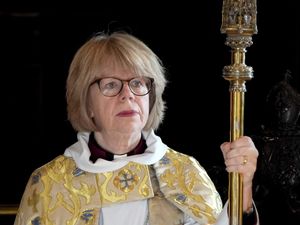
Dame Sarah will become the Church of England’s top bishop in a ceremony at St Paul’s Cathedral on January 28.
A complaint against the incoming Archbishop of Canterbury over her handling of an abuse allegation has been dismissed.
Dame Sarah Mullally should face no further action on the issue, Archbishop of York Stephen Cottrell decided.
The complainant, a man known as Survivor N, has a right to ask for the decision to be reviewed.
Dame Sarah will legally become the Church of England’s top bishop in a ceremony at St Paul’s Cathedral in London on January 28.
She will then be formally installed, or enthroned, at Canterbury Cathedral on March 25.
In December it was revealed she had been accused of improperly handling a complaint against a priest in London, where she currently serves as bishop.
Lambeth Palace officials said the complaint was made in 2020, but was not followed up on due to “administrative errors and an incorrect assumption about the individual’s wishes”.
Dame Sarah was not informed of the complaint at the time, church authorities said.
According to an investigation by Premier Christian News, N claimed he was abused by a priest in Dame Sarah’s diocese of London and that the response to his allegations caused him to have serious mental health issues.
It was claimed Dame Sarah had contacted the priest about the allegations, in breach of the Church’s safeguarding procedures.
A diocese of London spokesperson said N’s allegations against a priest were originally received and investigated in 2014 and 2015, and no safeguarding concerns were found.
The spokesperson added that a restraining order had later been sought by the Metropolitan Police in relation to N’s contact with the priest concerned and was issued in 2017 and remains in place.
On Thursday, the Church confirmed no further action against Dame Sarah but said the 2020 complaint against the priest had been revisited and was being looked at again.
A spokesperson from the office of the Archbishop of York said: “On 7 January the Archbishop of York issued his determination not to take any further action in relation to a CDM (clergy discipline measure) complaint originally filed against Bishop Sarah Mullally in 2020.
“The complainant can under Section 13(3) of the measure request this decision is independently reviewed by the President of Tribunals.”
In a statement last year, Dame Sarah said it was “clear” that a complaint made against her in 2020 “was not properly dealt with”.
She added that she was “seeking assurance that processes have been strengthened to ensure any complaint that comes into Lambeth Palace is responded to in a timely and satisfactory manner”.
The Church said the 2020 complaint against a priest had been revisited and is now being “considered and determined” by the Bishop of Fulham, the Right Reverend Jonathan Baker.
Under the church’s internal disciplinary process, known as CDM, outcomes can range from a conditional discharge where no penalty is imposed, to removal from office, resignation by consent and a lifetime ban from ministry.
Andrew Graystone, who speaks on behalf of some survivors of Church abuse, described the current complaints procedure as “incestuous”, adding that victims are therefore unlikely to have much confidence in it.
He told the Press Association: “No-one will be surprised that the Archbishop of York has dismissed the complaint against his friend and colleague the incoming Archbishop of Canterbury, given that in three weeks time it will be her job to pass judgment on disciplinary complaints against him.
“Survivors of abuse in the Church of England aren’t likely to have any confidence that they will be treated justly, given the incestuous complaints processes of the Church of England.”