
Threats to Telford’s trees revealed in report to scrutiny committee

Promoting the planting of trees is a key part of Shropshire's Local Nature Recovery Strategy, a meeting heard.
Trees across Telford & Wrekin are being put under increasing pressure partly through the impact of climate change, a meeting was told.
A top councillor told her colleagues that Telford & Wrekin Council has increased resources available to its teams to help deal with tree loss and safety.
Members of the council’s environment scrutiny committee were given an update on the local nature recovery strategy which aims to help improve the state of nature across Shropshire.
The strategy notes that climate change, global trade and travel have been promoting the spread of tree diseases which are being increasingly detected.
Councillor Carolyn Healy said ash dieback is “taking a lot of time” and the council’s team of two tree officers is being given extra resources to help.
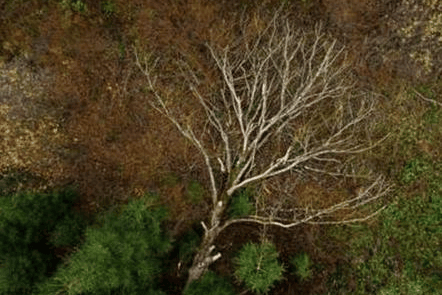

She told last Wednesday’s (April 29) meeting that more resources have been drafted in from council contractors to help remove trees, make them safe and carry out surveys.
“We have increased that resource,” she said.
The councillor told her colleagues that the council is using a “good mix of native and non-native trees” to avoid pathogens.
She added that trees from southern European countries are being used as part of the mix because they are “better able to withstand drier, hotter summers”.
Telford & Wrekin Council received Tree Cities of the World recognition. It has a tree canopy cover of almost 20 per cent.
But the committee was told of the work that has to go on behind the scenes to protect trees.
Members of the committee were told that the council’s policy is to plant more trees than are lost through storm damage. Recent storms have caused the loss of hundreds of trees each time.
Councillor Healy said the council monitors how many trees are removed and how many are planted to “plant more than we lose.”
But she revealed that tree loss has NOT led to a loss in canopy cover.
She told the meeting that trees felled by storms in “shelter belts” on the side of roads may actually be helping.
Councillor Healy told the meeting that management of the shelter belts had not been happening “to the extent it should have done”.
This has meant that tree felling has been done in a “messy way” by storms.
“It isn’t always bad although it might seem to be with the physical number of trees that have come down,” she said.
Fallen trees create gaps which creates an “opening for growth” for younger trees which then fill those gaps.
Council official Alan Preece told the meeting that they are “trying to create the most robust habitats possible” but “climate change makes that much more challenging.”
He added: “We are only ever one shipping container away from the next loss of species of tree, and it has been like that for a very long time.”
Mr Preece said: “we don’t know which way to jump because we don’t know what the next disease will be.”
He added that some industry colleagues who have spent their entire careers creating woodlands are seeing them lost when they come to retirement.
“We need to plan for and have cross sector support,” he added.
Comment Guidelines
Iconic Media encourages reader discussion on our stories. User feedback, insights and back-and-forth exchanges add a rich layer of context to reporting. Please review our Community Guidelines before commenting.