
The speeding repeat offender who may have made Shropshire history

This article contains affiliate links. We may earn a small commission on items purchased through this article, but that does not affect our editorial judgement.
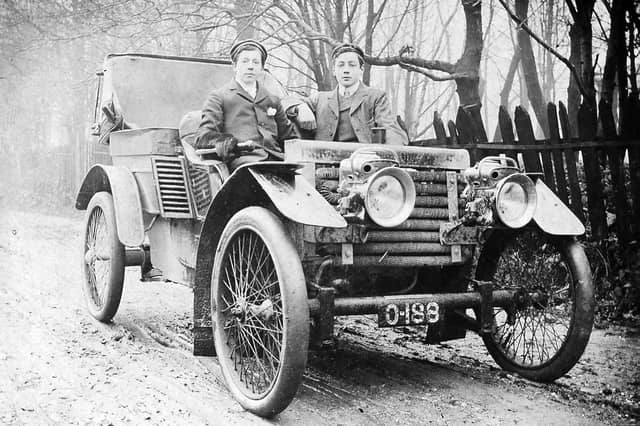
Victorian motor car inventor got into bother with the police through putting his foot down
Crawling along, wary of being done for speeding...
With the spread of 20mph speed limits, not much has changed in motoring since Victorian days when early pioneers took to Shropshire roads in their new-fangled cars. They were a hated breed then too.
So who was the first motorist to be prosecuted for speeding in Shropshire?
It may have been Edward John Pennington, who was seen by witnesses driving his motor carriage at speeds variously given as 18 to 25mph in the parishes of Shifnal, Boningale, and Albrighton, on April 23, 1898.
The speed limit at the time was 14mph. He also was accused of failing to stop when signalled to do so by people approaching in horse-drawn vehicles.
Despite defence quibbling over the speed, and claims that he only went a little over while travelling downhill, and that in any case he had “three powerful brakes” and the vehicle could be pulled up within a distance of a few yards, the Shifnal court imposed fines and costs coming to nearly £19, which was stiff for the time.
Mr Pennington seems not to have learned his lesson, and certainly would have benefited from a speed awareness course. On June 6 he was up for speeding again, this time before the beaks in Wolverhampton, accused of driving on May 9 in Wergs Road at a furious rate. Pennington was described as a motor car inventor who was staying at the Victoria Hotel in Wolverhampton.
One Superintendent Price told the court there had been a number of complaints about his driving, and action was needed or loss of life or injury might result. Estimates from witnesses as to his speed were 30mph, 25mph, and 20mph.
Edward Denning, who was cycling along Wergs Road, tried to follow the car, covering about a mile in a little over two and a half minutes, but told the court amid laughter that all he could make of the motor car was "the smell of it."
Pennington was fined £2 10s. in his absence, plus costs.
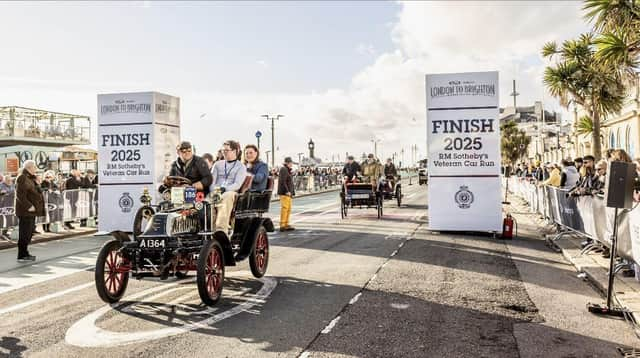
The dangers from motoring were, of course, very real, and unless you can prove differently, the first victim of a motor car in Shropshire was four-year-old labourer's son Alfred Ditcher.
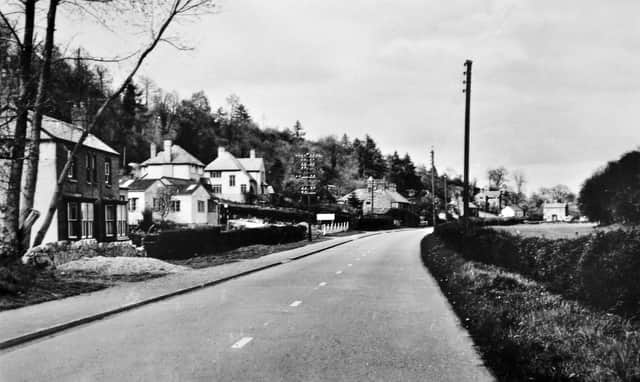
On May 16, 1904, he was clipped by a passing car in the border village of Pant and suffered a fatal head injury.
The driver was Gerald Dugdale, of Llwyn, Llanfyllin, who was driving his 12hp car from Llanfyllin to Oswestry, with his brother and sister, and a friend, as passengers.
Cars were still a great novelty, and as they had driven through Llanymynech some children had run to the middle of the road and thrown their caps under the car, coming dangerously near the wheels.
When Mr Dugdale and his party neared “the Pant,” as it appears to have been known then, he had seen a gingerbeer cart drawn up alongside the road and some children almost in the centre of the road.
His evidence to the subsequent inquest was that he had blown his horn several times, shut off the engine, and applied the brake, and the children moved away. Then, just as the car was passing the cart, Alfred ran out from behind it. It was impossible to stop in time and although the boy got clear of the wheels, he caught the splashboard, which threw him to the ground.
The coroner pointed out that it was clear that Mr Dugdale was doing no more than 10mph. The legal limit by this time was 20mph. The jury returned a verdict of accidental death.
While this motorist was exonerated, the public mood was hostile. A well-attended meeting in Shrewsbury almost exactly a year earlier had called for legislation because of the menace to the public caused by the “high speed at which motor cars are frequently driven."
A society called the Shropshire Association For Protection Against Reckless Motor Car Driving was formed at that meeting on May 23, 1903, amid various horror stories about reckless motorists. Suggestions included a numbering system for cars, and what amounted to a black box to reveal at what speed they had been driven.
Licence plates were introduced soon afterwards, but we're still waiting for black boxes.
- The mystery tent at Jackfield's bridge celebrations more than a century ago – see the story and pictures here
- You can enjoy this and more with our weekly FREE Nostalgia Newsletter - with scores of archive pictures and exclusive features on the history of Shropshire and Mid Wales - all sent to your inbox every week. Sign up here
- For anyone curious about where their own family story leads, MyHeritage DNA kits are currently £19.90, excluding shipping. The test can help explore genetic origins and identify DNA matches who may share branches of your family tree.
Comment Guidelines
Iconic Media encourages reader discussion on our stories. User feedback, insights and back-and-forth exchanges add a rich layer of context to reporting. Please review our Community Guidelines before commenting.