
The slow train to nowhere: How HS2 lost its way
‘Slow Train’ to London – the ongoing farce that’s HS2, writes Dr Steve McCabe
Back in the late 1980s I read a highly amusing book by Stephen Pile, The Return of Heroic Failures, which, as a follow-up to his 1979 book, The Book of Heroic Failures, provided a wealth of stories celebrating spectacular inability to achieve desired objectives or results.
I’m reminded of Pile’s book in reading the latest news concerning High Speed 2 (HS2), an infrastructure project which now seems to almost be in a state of perpetual calamity concerning the time it’s taking to complete and the eyewatering cost to taxpayers (us).
Announced 17 years ago in January 2009 by Lord Adonis of the then Labour government, HS2 would supplement the 67-mile HS1 link between London and the Channel Tunnel to Europe with additional lines north from the capital to Birmingham, Manchester and Leeds on high-speed track and connecting to Glasgow, Liverpool, Newcastle upon Tyne and Sheffield with a combination of HS and upgraded conventional track.
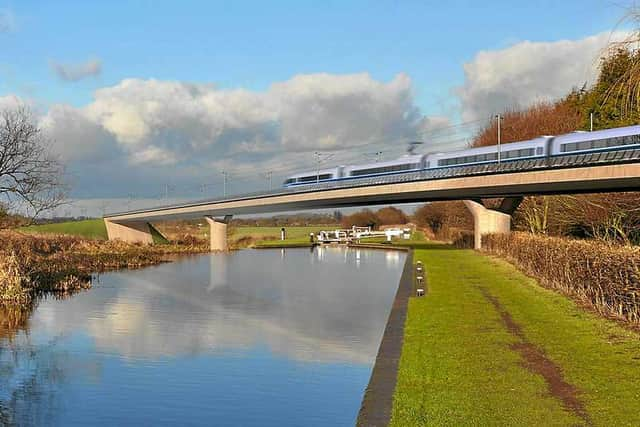

At the outset, HS2 was estimated to deliver £2.40 of benefit for each pound of public money spent this is the so called ‘benefit–cost ratio’ (BCR) representing the value of economic, social and environmental benefits delivered on any publicly funded project.
According to Adonins, involving over 330 miles of track, with an estimated budget of £37.5 billion (£37,500,000,000), we were told we could expect to see trains capable of a maximum speed of 360 km/h (225 mph), and with a routine operating speed of 330 km/h (205 mph) –making it the fastest high-speed railway in Europe – operating on the first phase between London and Curzon Street in Birmingham this year.
We’re not going to see high speed trains arriving and departing from Curzon Street anytime soon.
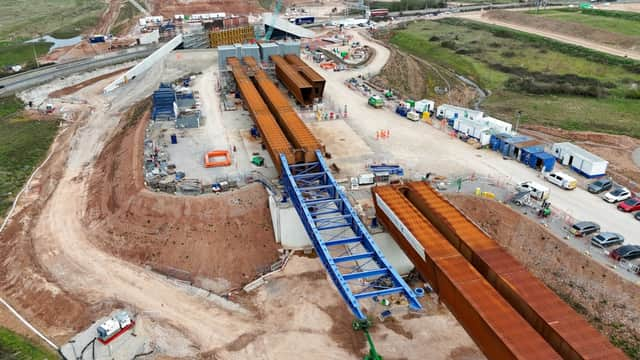
The original scheme for HS2 having been pared back to now consist only of the line between Birmingham and London, some 140 miles of line, with an eventual cost widely expected to exceed £100 billion, trains are not anticipated to be operational until after the current deadline of 2033.
And it’s highly likely that it will be the 2040s before HS2 from Birmingham terminates in Euston rather than Old Oak Common.
So far so bad.
Unsurprisingly, given that well under half of the original high-speed line will be built at an eventual cost that’s fast approaching three times the estimated budget set out by Lord Adonis, there have been many who ask whether we can afford this infrastructure project?
At the very least, one thing that those in direct control of HS2 should do, many argue, is to ensure that the overall cost of the project is achieved so as to minimise the impact on the public purse.
However, I wonder if public concern with respect to HS2 will be assuaged when they learn Mark Wild, who took over as the project’s chief executive in December 2024, earns at least £660,000- 665,000 according to the Cabinet Office.
The fact that this is four times the salary of the Prime Minister, whose range of responsibility is far wider than building a high-speed line, would seem peculiar to some, though, undoubtedly, there is a market for those capable of running infrastructure projects as complex and as contentious as HS2.
To be fair to Wild, whose background included being CEO of Crossrail for four years between 2018 and 2022 as well as being managing director of London Underground and other transport systems as well as utility distribution, if he can ensure the completion of HS2 if expedited and the eventual cost stops rising, this may seem like money well spent.
However, the most immediate challenge he and his team – for reference, HS2 employs around 1500 people and currently creates jobs for over 29,000 others – will be in dealing with the issue of the way the trains have been designed, which, irony of ironies, may be too fast!
Given the original specification was to be capable of running at a maximum speed of 225 miles an hour, it’s suddenly become obvious that, until the high-speed track between Birmingham and London is completed sometime after 2033, they can’t be tested in this country.
Waiting in this way would mean that testing, an understandably exhaustive process, would delay operational use of HS2 by potentially years.
The option of sending the trains to China would, as well as being embarrassing, be hugely expensive.
Accordingly, one option is to reduce the speed of the trains to run at 186 mph, which is the same as those which operate in the Channel Tunnel (HS1) and therefore could be tested there.
Significantly, this information was contained in a press release, ‘HS2 6-monthly report to Parliament: March 2026’, from the Department for Transport, High Speed Two (HS2) Limited and Secretary of State for Transport Heidi Alexander MP to Parliament recently.
This claimed it would 'save in the low billions and bring the railway into service sooner, by reducing risk in the delivery of the programme and its testing'”.
Whether this happens remains to be seen.
Pointedly, the press release states that “When HS2 Ltd achieves sufficient capability to consistently deliver to the new baseline, the Department will be able to transition to a more permissive and flexible sponsorship model."
What seems abundantly clear, especially in reading the press release in full, is that whilst £43.6 billion has been spent so far on HS2 (to February 2026), a great deal more money will be needed before we ever see HS2 operational and will be able to board trains in Curzon Street to travel at a speed that’s been standard in the Far East for years.
I’d guess that once the line is running, and assuming the cost of using HS2 is not prohibitively expensive, the never-ending agony of rapidly increasing cost increases as well as the forever-shifting deadlines will be forgotten.
Public memory is notoriously short-term.
However, the here and now is that we’re in the middle of a crisis created by the US and Israeli attack on Iran which has resulted in an immediate spike in the cost of oil and will certainly have profound consequences for the expenditure of all households in terms of energy after the current price cap ends in July, food costs and general inflation which will mean interest rates remain at the same level of 3.75% (and may be raised).
People are highly likely to feel they’re becoming poorer, especially if, as is being suggested, taxes will need to rise once again to maintain fiscal rules established by the current chancellor, Rachel Reeves.
The argument that spending, at current predictions, almost another £60 billion in the next decade to ensure passengers can travel in trains that, whilst being faster than currently available, are slower than promised when announced by Adonic 17 years ago is unlikely to be received with delight by most.
Quite the contrary.
Returning to the benefit–cost ratio (BCR), it should probably come as no surprise that this ratio has markedly declined.
For what remains of the HS2 project, the original phase one line between Birmingham and London, the BCR is now calculated at just above one.
This means HS2 may just about will produce a slightly higher returns in terms of economic, social and environmental benefit than has been spent.
However, some analysts suggest the BCR for HS2 is likely to be below one meaning it will cost more than any collective benefits experienced.
Such benefits would, of course, have a major impact in favour of Birmingham and the West Midlands.
What most people will wholeheartedly concur with is the view that we need financing of transport schemes to enable commuters to get to their jobs within the West Midlands and for infrastructure to be radically improved and updated to ensure entrepreneurial investment.
This would result in jobs being created and, critically, assist in providing greater self-sufficiency against the sort of economic shock that’s been caused by the latest crisis in the Middle East.
We can only hope that the ongoing efforts to radically improve transport infrastructure here in the West Midlands continues apace and will continue to be a priority regardless of demands for funding from Westminster.
In the meantime, we passively observe the construction of one 140 mile (high-speed) line that will have taken as long to complete as the over 6,000 miles network covering the entire country with railways in nineteenth century Victorian Britain.
For the vast majority of people, HS2 is an ongoing farce and worthy of inclusion in any future edition of ‘Heroic Failures’ books published.
Perhaps someone should go the whole hog and write a comedy opera based on HS2, which would at least keep audiences entertained and divert their attention from the spiralling cost of this increasingly ludicrously expensive project.
Trouble is, given it’s the opera it wouldn’t be cheap, only available in London and probably run so late you’d miss the last train home!
Dr Steve McCabe
Steve is Professor and Pro Vice Chancellor, DoctorateHub.
Previously, having worked for Birmingham City Council, he spent the last 35 years as an academic at Birmingham City University teaching and researching economics, management and business. Additionally, he has written extensively for edited texts examining economics and politics.
He regularly writes and comments regularly in the national and international media on politics and the economy and has published texts on quality management, benchmarking, ‘Brexit’ and its economic and social impact, the green economy and manufacturing, house prices and India’s progress since independence.
Comment Guidelines
Iconic Media encourages reader discussion on our stories. User feedback, insights and back-and-forth exchanges add a rich layer of context to reporting. Please review our Community Guidelines before commenting.