
Shropshire police share crash image as they warn drivers over dangerous road conditions
Officers have issued guidance for drivers confronting muddy roads
Police have used a shocking picture from a crash where a van overturned to warn county drivers about dangerous road conditions.
The van crashed near Cockshutt on Wednesday afternoon - November 25 - with officers revealing that no one had been injured.
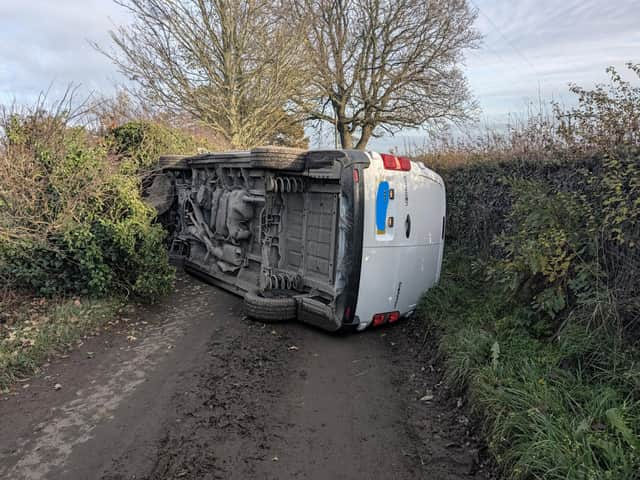

The Ellesmere Safer Neighbourhood Team, which was called out to the crash, said: “This incident highlighted the fact that during this time of year, we see an increase in road traffic accidents due to weather and road conditions, and so we wanted to provide some information on being safe when driving in these circumstances, as we can always count on rain keeping our roads and countryside nice and muddy - and living within a rural community the likelihood of having to drive along soggy lanes and muddy farm tracks is high, especially through the autumn and winter.
“While getting your car muddy isn’t ideal, the biggest risk are the roads themselves and the sometimes - hidden dangers they carry.
The post warns over the risks of mud on the road, saying: “Mud doesn’t always appear to be as obviously slippery as ice, but it can prevent your tyres gripping the road as they should, patches of wet mud on the road can make your wheels spin, be hiding hidden dips and potholes and will increase your stopping distance.”
In preparation for potentially muddy conditions officers advise drivers to check their tyres: Make sure your tyre tread depth is at least the UK legal minimum of 1.6mm - but for winter and wet driving, more tread is better; Inspect for cuts, bulges, or abnormalities; Keep tyres inflated to the correct pressure.
It also urged drivers to keep lights and number plates clean, adding: “Muddy spray quickly coats headlights and number plates, reducing visibility and making you harder to spot. A quick wipe before setting off can make all the difference.”
Addressing how to drive on muddy roads the post advises “steady wins the race”.
It added: “Avoid harsh braking or sudden acceleration as both can cause your wheels to spin and lose grip.
“Watch your speed - The majority of country roads are national speed limit, road conditions may mean it’s safer to drive much slower, just because you can go faster doesn’t mean you should. Ensure you take bends gently, and expect grip to suddenly change, always be aware.
“Keep your distance - As stopping distances increase on muddy and wet roads, ensure you leave extra space between you and the vehicle ahead to allow for safe braking.
“Choose your line - If the road surface appears to be covered in mud, look for the firmest ground, this is often where vehicles have already passed. Try your best to avoid driving too close to the verge, where mud is likely to be deepest.
“Always expect farm traffic - Tractors often leave mud trails across the road. Be cautious when approaching muddy patches especially after a junction or field entrance.
“Anticipate blind corners: Narrow lanes can mean oncoming traffic appears suddenly. Drive at a speed that allows you to stop safely if you do meet oncoming vehicles on a muddy stretch.
“Utilise passing places carefully as some may be more mud than tarmac. Approach slowly and avoid pulling over too far onto verges where your wheels may sink.
“And finally, clean up after muddy journeys. It is important that you remove mud from your vehicle, not only does it affect the way your vehicle drives, but it can also damage it over time, and it is a legal requirement to have visible number plates as well as a clear windscreen and headlights.”
Comment Guidelines
Iconic Media encourages reader discussion on our stories. User feedback, insights and back-and-forth exchanges add a rich layer of context to reporting. Please review our Community Guidelines before commenting.