
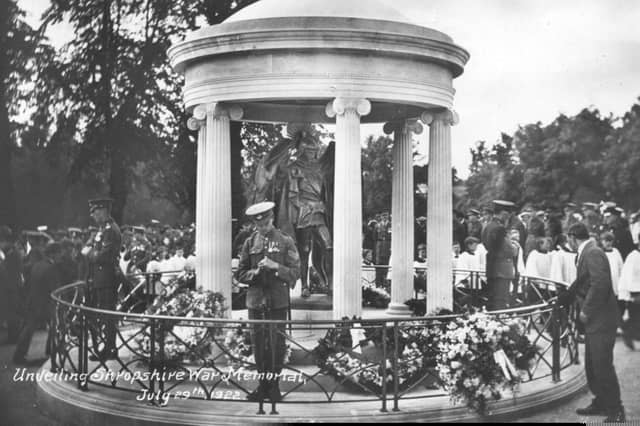

Across the county ceremonies will be held at war memorials to give thanks to those who made the ultimate sacrifice.
Typically those memorials take the form of an obelisk or stone cross on a plinth, with an inscription bearing the names of the dead. But unlike the individual graves of the fallen, in which a standard and familiar form was adopted so all were equal in death, communities were free to choose how to honour and remember their heroes.
They did it in various and imaginative ways. Some were pieces of art, with magnificent and poignant statues, while some communities chose a more functional path, such as through building a new public hall.
We’ve chosen just 10 to feature, spanning the rich heritage of remembrance. And of course it does not really matter what form the memorial takes - what matters is that we continue to express our gratitude to those who gave everything.
- You can enjoy this and more with our weekly FREE Nostalgia Newsletter - with scores of archive pictures and exclusive features on the history of Shropshire and Mid Wales - all sent to your inbox every week. Sign up here
- For anyone curious about where their own family story leads, MyHeritage DNA kits are currently £19.90, excluding shipping. The test can help explore genetic origins and identify DNA matches who may share branches of your family tree.
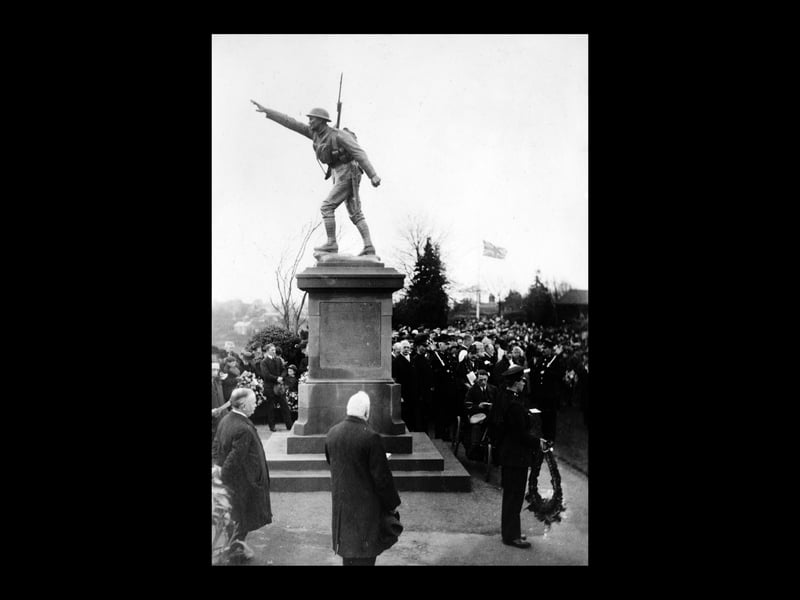
9. What exactly is Bridgnorth's soldier figure doing?
Bridgnorth's war memorial is the figure of a soldier, his hand outstretched. But what exactly is he doing? The answer may surprise you. It was unveiled on March 9, 1922, after considerable delay "due to labour and other trouble," according to the contemporary Bridgnorth Journal. It was the work of a distinguished Shropshire sculptor, Captain Adrian Jones, whose works include the Quadriga on the Constitution Hill Arch in Hyde Park. Jones is standing immediately to the right of the plinth. The memorial, with a bronze 7ft 6in soldier figure, was erected on the highest point in the Bridgnorth Castle grounds, on a spot occupied for many years by an old ash tree which had blown down. It was not Jones' preferred location - he had strongly recommended the crossroads in the High Street. The unveiling was performed by Private Eli Jones, of Bridgnorth, who had served in the Coldstream Guards. He had lost both his legs and, seated in his wheelchair, he pulled the cord to let fall the Union Jack which covered the memorial. As to what the soldier figure is doing, the paper said that in his design Jones had "endeavoured to show the stupendous moral and military effort put forth by the Empire, and surely a more fitting symbol than that chosen, a realistic soldier whose posture and extended right hand demonstrate the fact that he has just hurled a bomb with all his energy and strength - thereby 'doing his bit' - it would be difficult to find. The sculptor is anxious that the public should understand this, and that the choice was not arrived at in any haphazard manner." In other words, he is depicted hurling a grenade. | Unknown
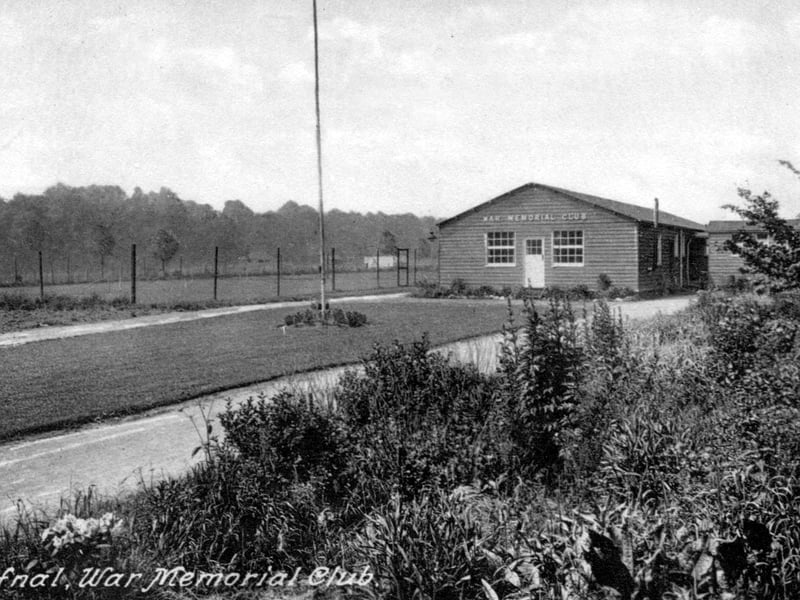
10. Before the fire
Shifnal War Memorial Club was put up in memory of the local men who died during World War One and was opened on August 4, 1921, by Colonel J Reid Walker, of Ruckley Grange. This original building was made of wood and for many years it was a distinctive sight just off the Priorslee road by the Five Ways junction in Shifnal. That all changed on Sunday, August 8, 1982, when the building caught fire and was severely damaged, leaving a bill put at over £100,000. A new club went up on the site, this time of brick. | Ray Farlow Photo: Ray Farlow
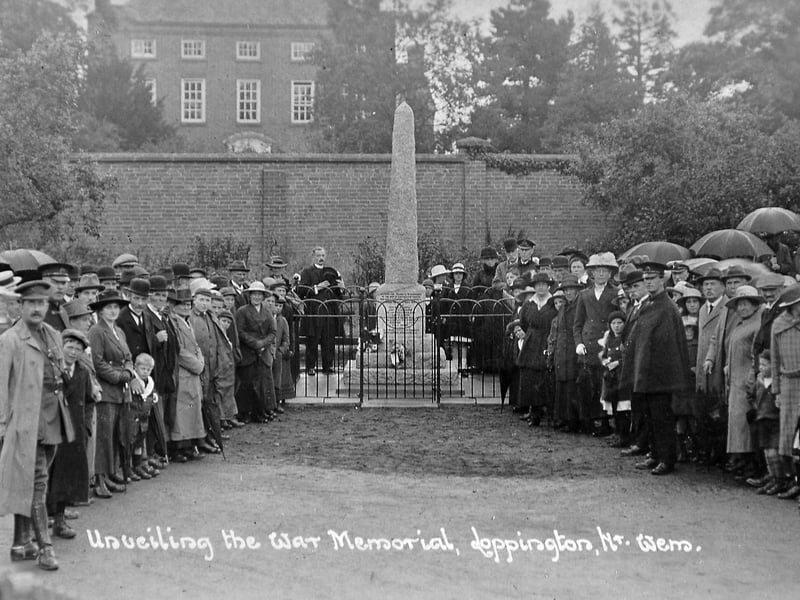
11. Paying their respects in the rain
Clearly they were not lucky with the weather when Loppington war memorial was unveiled, in the form of a Cornish grey granite obelisk on a three-stepped base with a square plinth, surrounded by wrought iron railings. The date was September 19, 1920. | Ray Farlow