
Across the county ceremonies will be held at war memorials to give thanks to those who made the ultimate sacrifice.
Typically those memorials take the form of an obelisk or stone cross on a plinth, with an inscription bearing the names of the dead. But unlike the individual graves of the fallen, in which a standard and familiar form was adopted so all were equal in death, communities were free to choose how to honour and remember their heroes.
They did it in various and imaginative ways. Some were pieces of art, with magnificent and poignant statues, while some communities chose a more functional path, such as through building a new public hall.
We’ve chosen just 10 to feature, spanning the rich heritage of remembrance. And of course it does not really matter what form the memorial takes - what matters is that we continue to express our gratitude to those who gave everything.
- You can enjoy this and more with our weekly FREE Nostalgia Newsletter - with scores of archive pictures and exclusive features on the history of Shropshire and Mid Wales - all sent to your inbox every week. Sign up here
- For anyone curious about where their own family story leads, MyHeritage DNA kits are currently £19.90, excluding shipping. The test can help explore genetic origins and identify DNA matches who may share branches of your family tree.
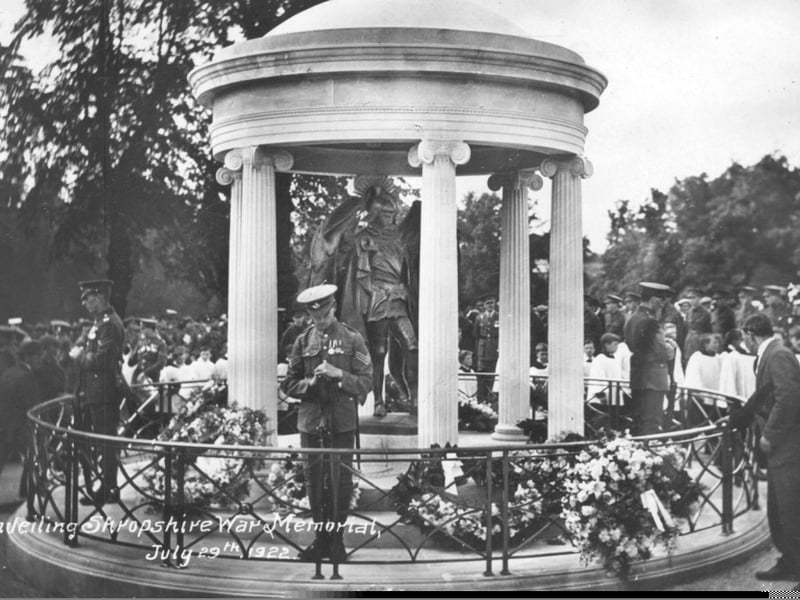
1. Shropshire's memorial took both "visible" and "invisible" forms
The unveiling of Shropshire War Memorial, Shrewsbury, on July 29, 1922. Built at the top of the main avenue of the Quarry, it was designed in the form of a classic temple, with inside a life-size bronze figure of St Michael, holding his lance in his left hand, with the right extended in the act of blessing. The memorial was complemented by a bound Roll of Honour, containing 5,581 names. The unveiling was by Lord Powis, the Lord Lieutenant of Shropshire, and hundreds of relatives and friends of the fallen were there. It was the "visible" memorial, as there was another war memorial - supporting local hospitals. At the time of the unveiling £9,000 had already been given by the war memorial fund to the Royal Salop Infirmary and a like amount to Shropshire Orthopaedic Hospital. Incidentally, an idea had been floated of creating a memorial on The Wrekin, perhaps in the form of a large cross. Views across the county were canvassed, but there was not much support, although Wellington and Much Wenlock were in favour. | Ray Farlow Photo: Ray Farlow
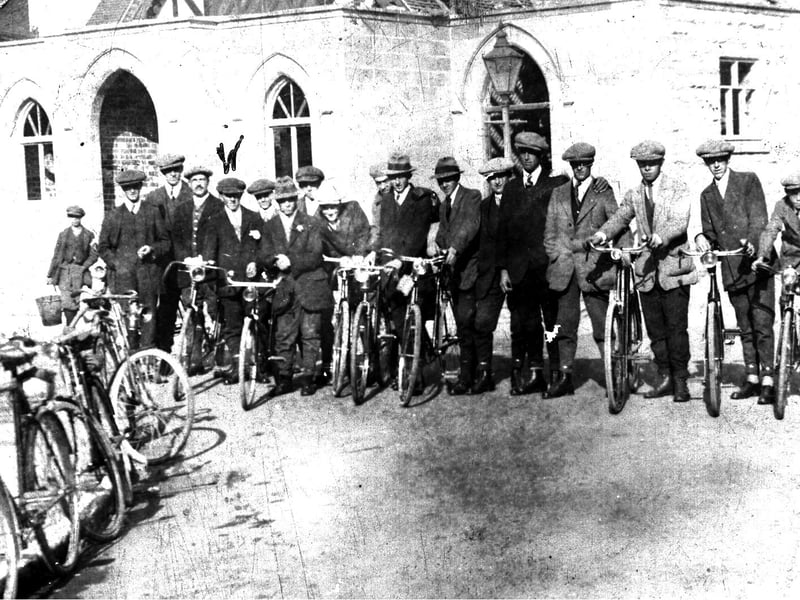
2. Much Wenlock's war memorial hall
Much Wenlock Cycling Club members assembled outside the town's War Memorial Hall in about 1922. Some of these cyclists will have been Great War veterans. For instance, the man pointed out by an arrow was Hubert Minton who served for four years as a field artillery driver, starting at the age of 16 in 1914. The public hall had been opened by Lord Forester on December 12, 1921, and included a concert room which could take 450 people. Separately, a tablet had been unveiled in the church bearing the names of the fallen. From January 1935 the hall would be used as the town's cinema. It is now Much Wenlock Museum. | Tony Minton
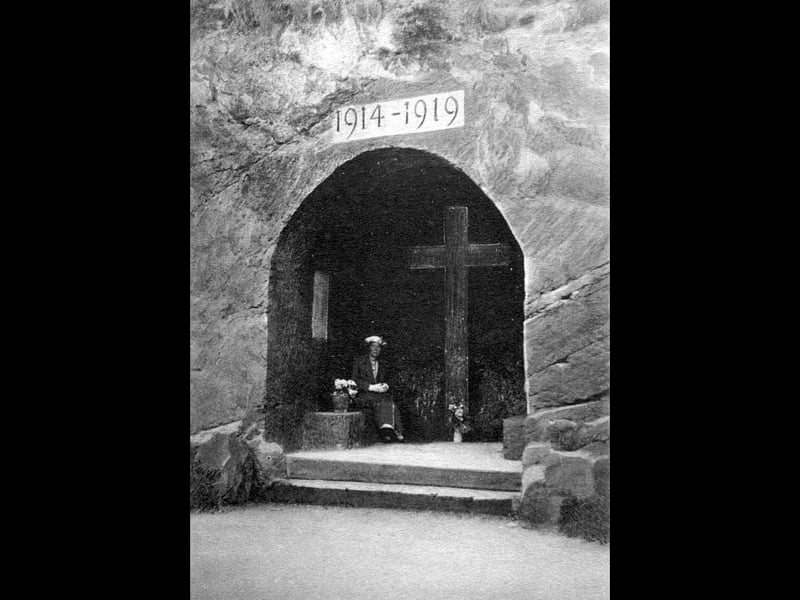
3. Ruyton-XI-Towns' (almost) unique memorial
The Ruyton memorial, carved out of a sandstone cliff, is one of only two of its type in Britain, and was unveiled on October 10, 1920. The original plan was for there to be a hole cut so that a shaft of light could shine on the cross, but this was abandoned. It has in modern times been given Grade II listed status as being of historical or architectural importance. The 1919 date, incidentally, is because it was not until 1919 that the peace treaty was signed which formally ended the Great War. | Unknown
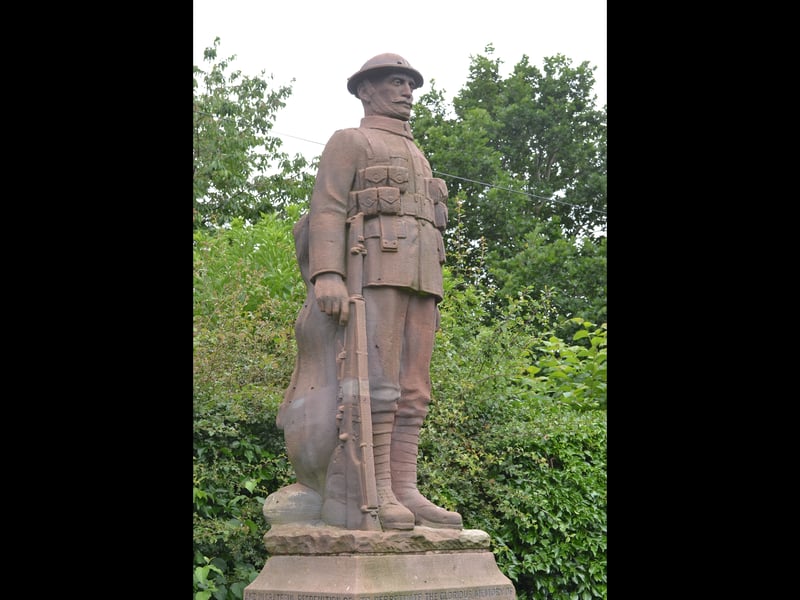
4. Old Bill stands proud
Stokesay war memorial is nicknamed "Old Bill" by locals because of the supposed similarity of the soldier figure to the Great War cartoon character created by Bruce Bairnsfather. Depicting a soldier in marching order, it stands in the churchyard at Stokesay Church, but in common with a number of war memorials, has moved from its original location. It was unveiled on July 29, 1921, on the corner of Station Road and Corvedale Road, Craven Arms. An unusual feature is that at the back of the soldier is a dolphin. According to the Wellington Journal's report of the unveiling it is "emblematic of the sea and reminding the onlooker of the part played by the Navy." | Shropshire Star