
Government explains its position on controversial pension funds
Protests have been held
Any divestment by the Shropshire County Pension Fund from companies allegedly linked to the Gaza conflict in the Middle East should only be decided by central government, it has been confirmed.
The fund administers the Local Government Pension Scheme (LGPS) for local authorities and other participating employers within Shropshire, including the borough of Telford and Wrekin.
It collects contributions, calculates and pays pension benefits to members and their dependants, and invests the fund’s assets to ensure “long-term financial security” for its members and employers.
However, data uncovered by the Palestine Solidarity Campaign (PSC) showed that £142,458,890 has been invested in companies believed to have been complicit in Israel’s military actions in Gaza, which have been described by a United Nations special committee and other international organisations as a genocide.
The companies include Northrop Grumman, which reportedly supplies the Israeli Air Force with missile delivery systems for its fighter jets and helicopters; and Honeywell, which allegedly supplies components for bombs, missiles, and drones used against Palestinian civilians including children.
Last September, the PSC issued a letter to all councils in England and Wales overseeing an LGPS fund that they “must take steps to divest from companies enabling and profiting from Israel’s genocide, military occupation and apartheid against Palestinians” and outlined the potential legal risks of not doing so.
The issue has been raised in various meetings held by the county’s pensions committee, with protests taking place outside Shropshire Council’s meeting place, the Guildhall in Shrewsbury.
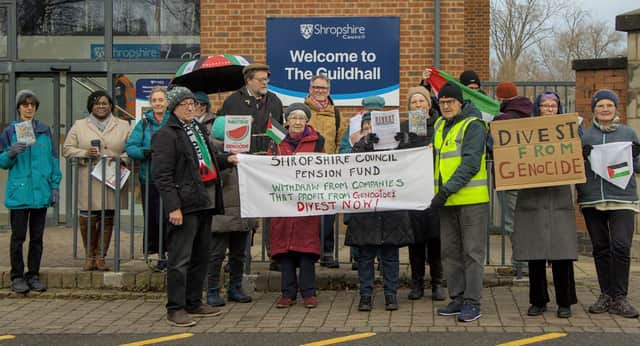

Peter Chadderton, pensions investment and responsible investment manager, said it is something that “the fund has wrestled with” since the conflict began.
He added that legal advice was sought through the Scheme Advisory Board (SAB), which confirmed that, provided the fund was “engaging with and taking account of the UN practices”, it was its duty to ensure it protected the benefits of the fund.
And now the Government has clarified its position.
In a letter to the LGPS advisory board, Alison McGovern, Minister of State for Local Government and Homelessness, said that decisions on boycotts, divestment and sanctions are matters of UK foreign policy and are for central government, not local authorities, to make.
"It is therefore not appropriate for local authorities to adopt investment policies that go beyond or differ from UK Government sanctions or foreign policy positions," said Mrs McGovern.
"This does not prevent authorities from setting or changing investment strategies for other reasons, particularly where required to meet their fiduciary duties to scheme members.
"Authorities must continue to act in line with the law and relevant guidance.
"The Government will continue to keep the situation under review and will consider whether further guidance is needed as circumstances evolve."
Speaking at a pensions committee meeting on Friday (June 19), Mr Chadderton said the Government's position supports the approach members have taken to date and everything that is set out in its policy.
Comment Guidelines
Iconic Media encourages reader discussion on our stories. User feedback, insights and back-and-forth exchanges add a rich layer of context to reporting. Please review our Community Guidelines before commenting.