
Author's new book on Darwin
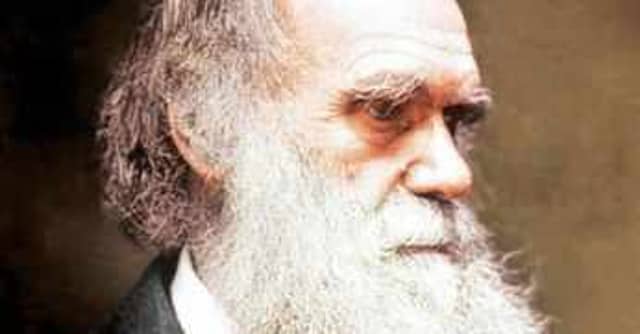

Sarah O'Meara talks to the author of a book on Darwin's theory of evolution, and learns that even today some dismiss the great Shrewsbury-born naturalist's ideas.
SARAH O'MEARA talks to the author of a book on Darwin's theory of evolution, and learns that even today some dismiss the great Shrewsbury-born naturalist's ideas.
"Why do foetuses become covered in hair after six months in the womb?" Jerry Coyne likes to ask his students.
The gleeful answer the ecology and evolution professor usually hears is 'Evolution'.
"Students love the hairy foetus story because it so clearly shows our link with the past," explains the author of new book, Why Evolution Is True. "The hair growth is a leftover genetic quirk from our ape-like ancestors. But, unlike in apes, our foetal hair is shed before birth."

It is 200 years this week since the birth of Shropshire visionary Charles Darwin, and 150 years since the publication of On The Origin Of Species, the book that caused a social storm by suggesting that evolution and natural selection, not God, were responsible for the natural world.
Darwin's work is still the source of controversy. An Ipsos Mori poll estimates that less than half the UK population fully accept the theory of evolution. Scientists having yet to convince the world that Darwin's explanation for how living organisms change over time, is true.
"Despite the fact that there is tons of evidence for evolution, which goes far beyond just fossils, we still haven't all been convinced," says Coyne. "Scientists have not done a good enough job over the years, reaching out to the public, and educating them about evolution. I teach this stuff, and I couldn't find any popular work of science that summarised all the evidence in an accessible way."
As a result, Coyne has spent the last three years researching and writing his own book. A small effort compared to Darwin's 30 years of research, perhaps. But his conclusion will be the same.
"Darwin's theory that 'every production of nature has had a long, history' has been supported by a rapidly growing body of evidence over the last century and a half. Take the discovery of DNA. From that, we have worked out that humans share nearly all of their genetic code with chimpanzees."
Before making his ideas public in 1859, Darwin admitted to a friend that revealing his theories about evolution would be 'like confessing a murder'.
"Except for one cryptic sentence, Darwin deliberately avoided mentioning humans in On The Origin Of Species," says Coyne.
"But it was an obvious leap to make. Readers of the book realised if animals and plants hadn't been created by God, then maybe humans weren't either. Darwin knew that people would make that leap. His work debunked the whole idea of mankind being the product of a creationist-based, celestial design. In his later books he was far more explicit about human evolution."
Coyne says that for many, Darwin's theories 'gnaw at their sense of self'.
As he explains in his book: "If humans are just one of many outcomes of natural selection, then maybe we're not so special after all. You can see why this doesn't sit well with people."
Coyne says academics are still forced to defend Shrewsbury-born Darwin's ideas, despite overwhelming evidence.
"Some people just can't be convinced. I once gave a lecture to a bunch of businessmen about why scientists accept evolution as true. And at the end one of them came up to me and said, 'You know, I found your evidence very convincing. But I'm still not convinced'. No amount of evidence would ever convince him; that's the nature of faith."
Coyne points out that anti-evolutionism, often thought to be a peculiarly American problem, is now spreading to other countries.
"Belief in creationism seems to be strong in the UK, especially in the Muslim community which is growing very quickly. And some schools in the UK do present intelligent design as an alternative to evolution.
"The problem is that opponents of evolution like to portray it as controversial, but the controversy about it is not scientific, but socio-political," Coyne explains.
"Asking for teachers to present evidence both for and against evolution is as bogus as asking to teach students about astrology versus psychology, or to ask medical students to learn shamanism. But people don't seem to realise that, or if they do, they don't care."nextpage
The life and times of Charles Darwin

Failed medical student, brilliant naturalist, dedicated family man – there was much more to Charles Darwin than just the results of his years of research. We take a look at the man behind the legend.
- Born in Shrewsbury on February 12, 1809.
- In 1825, Darwin begins studying medicine at the University of Edinburgh but doesnt feel suited to it. He enrols at Cambridge University to study theology in 1828, but enjoys collecting beetles more.
- Darwin joins the exploratory voyage of the HMS Beagle around South America, Australia, New Zealand and the South Pacific in 1831. During the five-year trip he sends home 1,529 species preserved in spirit and 3,907 labelled skins, bones and other dried specimens.
- He returns to Cambridge in 1836, and spends the next two years working on material gathered during the Beagle voyage.
- On January 29, 1839, Charles marries his first cousin Emma Wedgwood, the granddaughter of pottery manufacturer Josiah Wedgwood.
- The couple move from London to Down House, Kent, in September 1842. They had 10 children, three of whom died before reaching adulthood. Their deaths prompted Darwin to fret that inbreeding - marrying his first cousin - was to blame.
- The family kept horses, cows, pigs and poultry - and Darwin studied domestic pigeons to provide evidence for his theory of evolution by natural selection, building a pigeon house in his garden in 1885.
- In 1858 Darwin and Alfred Russel Wallace, who had reached similar conclusions about evolution, present their ideas to the Linnean Society, to muted response.
- On The Origin of Species is published in 1859, amid massive controversy.
- Darwin begins growing his famous beard in 1862, following a period of poor health.
- The Descent of Man is published in 1871, shocking Darwins opponents.
- Darwin dies on April 19, 1882 and is given a state funeral. He is buried in Westminster Abbey.
- Darwin beat off stiff competition from author Charles Dickens to become the face of the new £10 note in 2000.