
First Drive: Can the Polestar 5 come out as an EV champion?
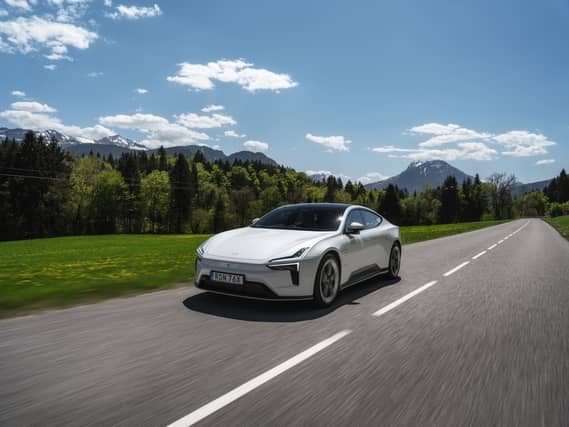

Polestar has gone big – literally – with its latest car, a rival to the Porsche Taycan. But what’s it like to drive? Jon Reay finds out
What is it?
Think of it as a rival for the Mercedes EQS in terms of interior space and luxury, and a Porsche Taycan in terms of handling and pace.
What’s new?
It’s also a new segment for Polestar altogether. Aside from the original, limited-run Polestar 1 coupe, this is the first time the brand has dreamed big enough to sell a car for more than £100,000 – albeit only the top-end Performance version.
What’s under the bonnet?
Both get the same 112kWh battery, giving a range of 421 miles for the dual motor, or 347 for the performance. Like the Taycan, its 800-volt architecture means it’ll (potentially) charge at 350kW speeds on a rapid charger.
What’s it like to drive?
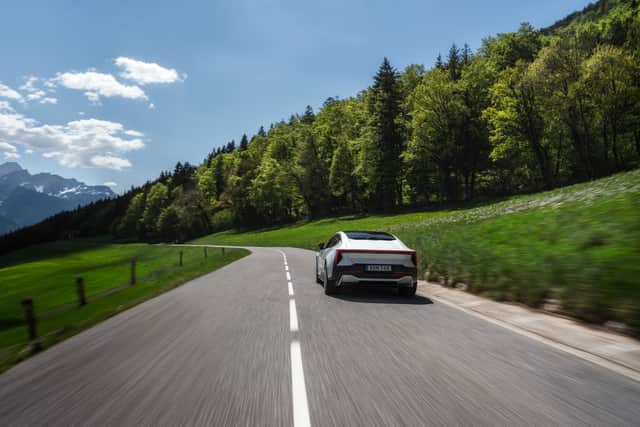
What’s more impressive is how free of drama the whole experience is. Plant your right foot and the 5 simply takes off – no feeling of tyres scrabbling for grip, no agitation or torque steer, nothing. Even in wet conditions, you’d have to try extremely hard to unsettle the 5 – it’s a car that hides its size and weight very well indeed.
When you’re done mashing your right foot into the 100% recycled material carpet, you’ll find the Polestar a very civilised thing to drive at normal speeds, too. It’s quiet, as you’d expect, and reasonably comfortable in terms of ride too – though we’d like to try it in the UK before forming a proper verdict there.
Controls are nicely weighted, and the brakes sensibly modulated too – none of the lumpy regen-then-discs feel you get in a lot of EVs. There’s very little to fault it on, in short.
From where we’re sitting, the cheaper Dual motor car is the sweeter to drive – which is handy, given the savings you’ll make on the list price. On the roads we drove, there’s little between the two in terms of ride quality and handling: an impressive feat given the entry-level car does without the Performance’s clever adaptive dampers.
The only thing you can really criticise is the noise – or rather, lack thereof. Polestar doesn’t like injecting any form of ‘fake’ sound effects into the cabin, but in a car this focussed on performance, it feels like a missed opportunity. As with a lot of EVs without any aural feedback, things can feel a bit clinical.
How does it look?
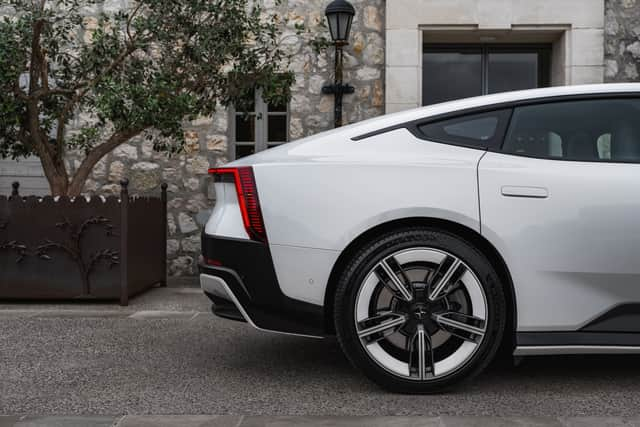
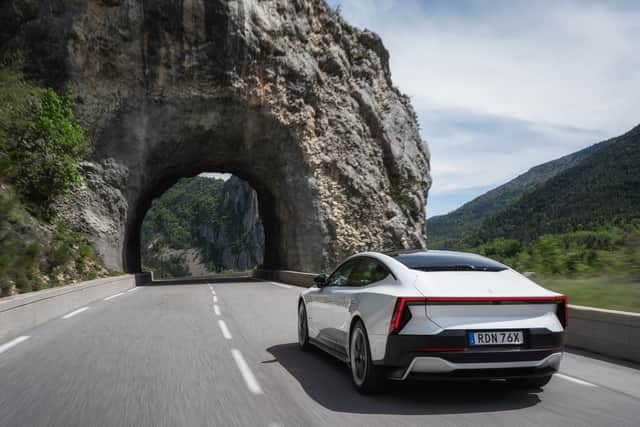
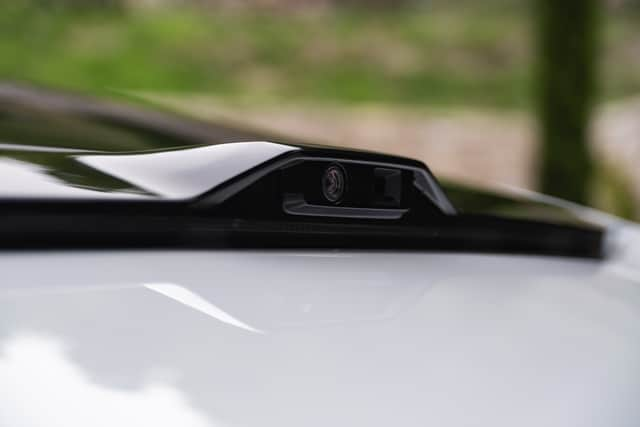
The rear, meanwhile, is practically concept car-like in its execution. There’s no rear window – more on that in a minute – and an extremely squared-off light bar halfway up the boot lid.
Following another 5 down the road is like staring at an angry Stormtrooper, or a car from a film set 50 years from now. Strangely, it all works rather well.
For fans of enormous alloys, though, it’s worth bearing in mind that only Performance models get the fantastic 21- and 22-inch square cloverleaf-like designs you’ll see in most of the imagery. Dual motor versions get some smaller, rather more aerodynamic options instead.
What’s it like inside?
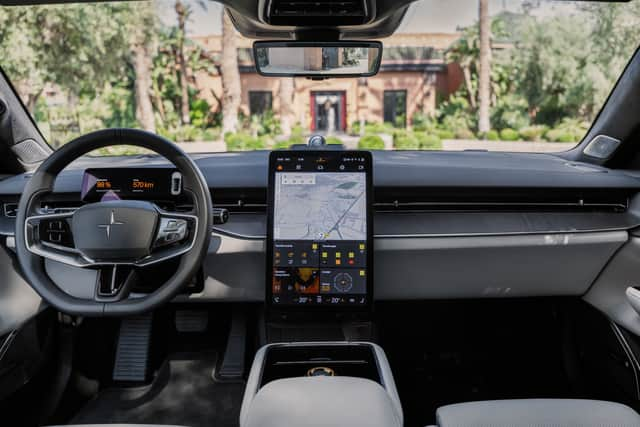
Up front, things are similar to other Polestars: a familiar steering wheel, digital speedo, and a big portrait Google-based infotainment system. As with the 3, there’s barely a hint of plastic to be found (provided you ignore the gloss black on the centre console). Doors are smothered in leather and fabric all the way up to the window line, and everything has a solid, reassuring feel.
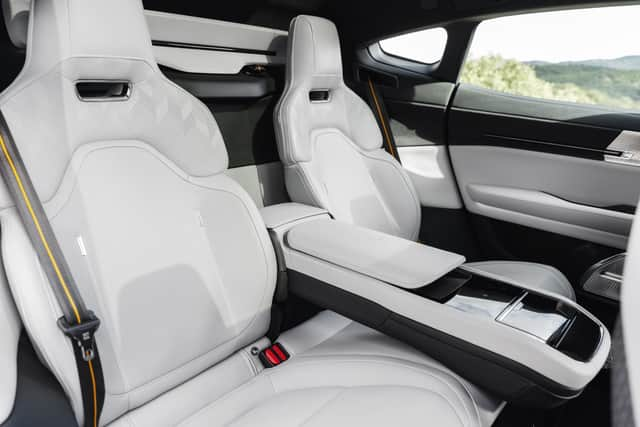
A pair of Recaro bucket seats means it’s easy to get comfortable up front, and the driving position is faultless. As for rear passengers, they get the limo treatment – with similarly sporty-looking seats that recline electrically, and depending on the spec, provide a pretty decent massage too.
Space is excellent too: even six-footers and above won’t feel short-changed for head or leg room, and Polestar has gone as far as repositioning a section of the battery so that the rear floor isn’t uncomfortably high.
What’s the spec like?
You’ll need to splash some more cash for extra niceties though: an excellent Bowers & Wilkins stereo adds £4,000, and extra comfort in the form of cooled and massaging seats is only bundled in with the £5,300 Bridge of Weir leather options.
Launch edition cars – i.e, the ones you can currently order – do get some extra freebies, including a head-up display, ‘pilot pack’ with self-driving tech, and a heated steering wheel.
Polestar has kept things relatively sensible though, so there’s not the same level of customisation you’d find in a Mercedes, BMW or Porsche. Unlike in an EQS or Taycan, there’s no option for TV screens in the back, either – leaving rear occupants to entertain themselves.
Verdict
The 5 is a hugely impressive car, whichever way you look at it. Beautifully designed and built, extremely capable in terms of ride and handling, and a bit of a looker too.
Some rivals – like the Mercedes EQS or BMW i7 – have it beat for luxury, and others – like the Porsche Taycan – still outperform it on paper. But as an overall package to live with every day, the 5 feels like it could be a winner.
Facts at a glance