
Pope lands in Argentina and tells Milei that people, not the economy, come first
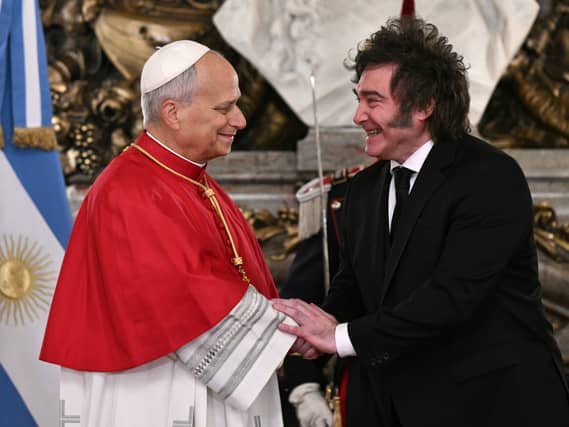

The Catholic Church has sharply criticised the austerity programme of libertarian President Javier Milei.
Pope Leo delivered a diplomatic but subtly strong critique of Argentine President Javier Milei’s austerity measures and libertarian agenda as he arrived in Argentina on Sunday, insisting that political leaders must put people, not the economy, first.
Leo used his first public speech in Argentina to lay out a vision of governance, democracy and society sharply at odds with Mr Milei’s, exposing differences over spending cuts, social justice and artificial intelligence that the government had sought to play down ahead of the visit.
“The economy must serve the person, not the person the economy,” Leo told officials, diplomats and civic leaders upon his arrival in Buenos Aires from Uruguay.
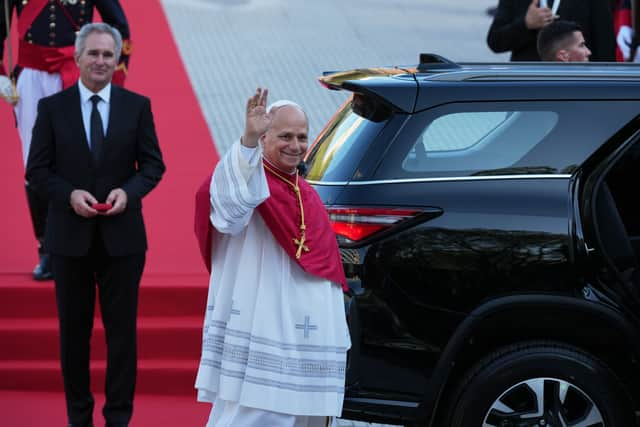
Leo’s visit to Argentina is by far the most politically delicate of his three-nation South American tour, and a place where Leo will also confront the complicated legacy of Argentine Pope Francis, who never returned home during his 12-year pontificate.
Mr Milei, a self-described anarcho-capitalist, has staked his presidency on slashing public spending to tame inflation, while describing the notion of social justice as “a horror”, a “moral aberration” and “theft” in recent speeches.
Much like its allies in the Trump administration, Mr Milei’s government has portrayed the cuts as part of a necessary reform process to remake Argentina’s troubled economy and eliminate fraud and waste in the federal bureaucracy.
Ahead of Leo’s arrival in Argentina, the first by a pope in nearly 40 years, Mr Milei’s officials had dismissed the prospect of a political clash.
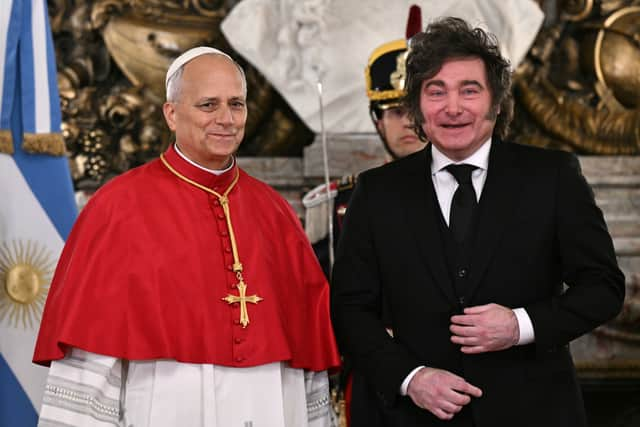
“There’s no way the pope is coming here to comment on local politics,” human capital minister Sandra Pettovello said in an interview with a Buenos Aires radio station last week.
In a message welcoming Leo, Mr Milei said he hoped the trip would “strengthen the faith, renew hope and bring a message of peace to all Argentines”.
Leo took up that message of peace, opening with a call for gentler politics in deeply polarised Argentina.
Democracy depends on “careful use of words” and “the ability to see those who think differently as fellow citizens with whom we share a common future”, he said.
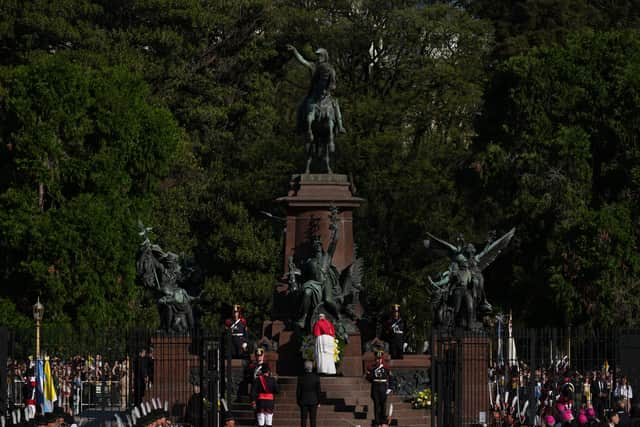
Mr Milei’s style is far more combative, costing him allies in congress and public support. He posts dozens of times a day on social media, branding critics “traitors” and “human trash” and tagging posts #NOLSALP, a Spanish acronym for “We don’t hate journalists enough”.
Mr Milei, who once called Francis the “representative of evil on Earth”, paid homage to the late pope in welcoming Leo on Sunday.
Interrupted by applause, he called Francis an “exceptional figure” and “undoubtedly the most important Argentine in history” whose teachings continue to resonate.
He also struck a rare conciliatory tone in welcoming politicians, diplomats and civil society representatives from across Argentina’s ideological spectrum to Leo’s ceremony.
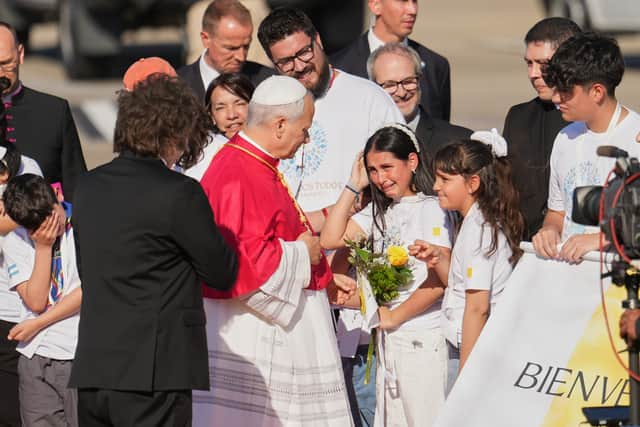
“There are causes and occasions that transcend our differences,” he said.
On the economy, Leo nodded to Mr Milei’s free-market instincts, urging Argentina to encourage “whatever creates opportunities” and “stimulates private initiative”.
But growth must also benefit “those who are disadvantaged”, he said, including the unemployed, retirees and “all those who, despite hard work, nonetheless struggle to meet their household’s needs”.
Mr Milei’s austerity drive has produced a rare budget surplus and slashed annual inflation from 200% to about 32%. But real wages remain below where they were when he took office in late 2023, and roughly 300,000 formal jobs have vanished.