
Why has inflation risen and what does it mean for me?
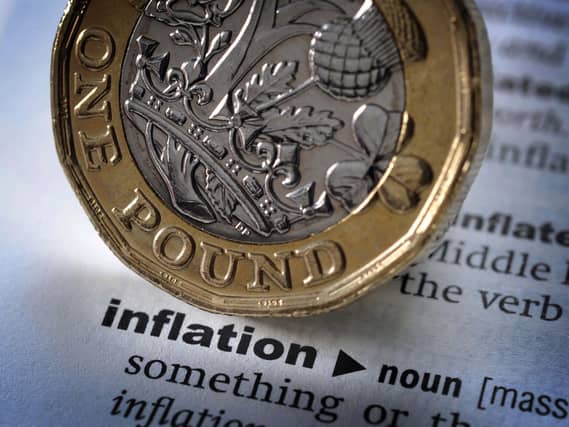

The rate of Consumer Prices Index inflation rose to 3.6% in October from 3.5% in September.
Inflation has accelerated to its highest rate in a year after fuel prices continued to push higher due to the conflict in the Middle East.
The rate of Consumer Prices Index inflation rose to 3.6% in October from 3.5% in September, the Office for National Statistics said.
The cost of living has been rising since the summer and economists think it could increase further in the months ahead as household energy bills increase.
Here, the Press Association looks at what was behind the latest increase and what households can expect in the coming months:
– What is inflation?
Inflation is the term used to describe the rising price of goods and services.
The inflation rate refers to how quickly prices are going up.
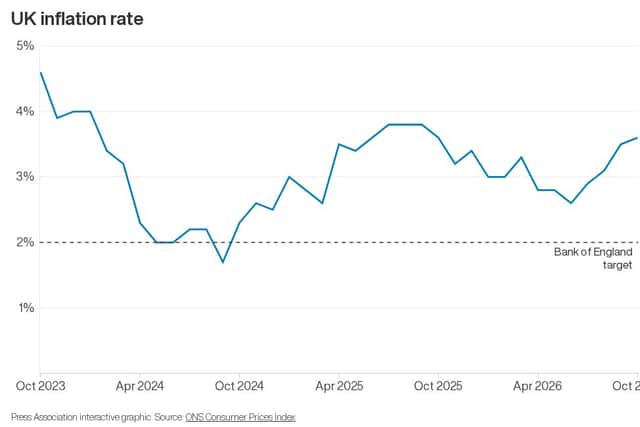
October’s inflation rate of 3.6% means if an item cost £100 a year ago, it would now cost £103.60.
It is a higher rate than September 3.5%, meaning prices are increasing at a faster pace than they were before.
– What caused inflation to rise last month?
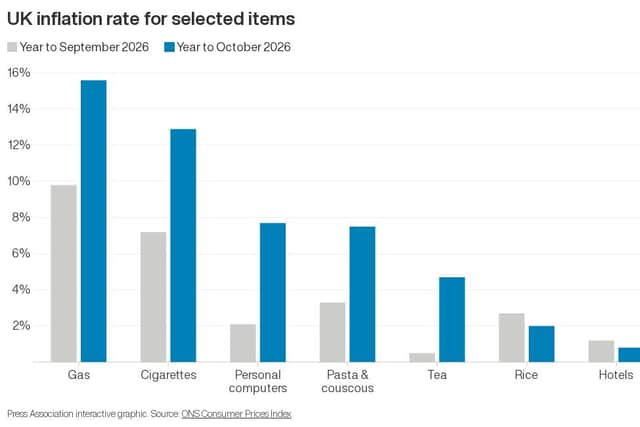
The ONS said the biggest contributor to higher inflation last month came from transport, particularly prices at the pump.
The latest figures showed the average price of petrol rose by 5.2p per litre between September and October, as tensions in the Middle East continued to push oil prices higher.
Diesel prices rose by 7p per litre in October to an average price of 199.5p – the highest since ONS records began in 1996.
Nevertheless, petrol and diesel prices both eased back in November as oil prices moved lower following the US midterm elections.
More expensive tobacco was also a contributing factor after new duty rates kicked in at the start of the month.
Tobacco prices rose 5.2% for the month and were 12.4% higher year-on-year as a result, marking the highest inflation rate for almost two years.
– Did all price rises accelerate in October?
No, inflation for some products remained steady or even decreased over the month.
One key area which saw a drop in inflation was food and non-alcoholic drinks, which eased to 0.8% from 1.2% the previous month, taking it to the lowest level since September 2021.
Food price inflation eased to 0.2% for the month amid intense price competition from UK supermarkets.

This included decreases in the price of some products, such as chocolate, which fell by 2.9% compared with the same month a year earlier.
Meanwhile, clothing and footwear prices were also 0.5% lower year-on-year, the lowest rate since March.
– Where will inflation go from here?
Inflation is widely expected to continue accelerating in the coming months.
The Bank of England said earlier this month that it expects the rate to keep shifting further from its 2% target rate, indicating it could peak at around 5%.
The central bank indicated higher energy costs are likely to feed further through supply chains and into the economy.
Inflation is likely to particularly accelerate from January next year, when household energy bills are predicted to surge.
Experts at Cornwall Insight have predicted Ofgem’s energy price cap will rise by 26% to £2,166 a year on January 1, up £443 on the level between October and December, to hit the highest since 2023.
Investec economist Ellie Henderson said: “October’s rate of inflation is the highest in a year and far above the Bank of England’s 2% target.
“The direction of travel is not encouraging either: on our forecasts, today’s data will not be the peak.”
She added that she expects inflation to “head north of 4%” during the first quarter of next year.
However, she is among a number economists to have suggested CPI will peak below the 5% level flagged by the Bank of England, particularly after a dip in wholesale energy costs over the past two weeks.
– What does the latest hike in inflation mean for interest rates?
Earlier this month, the Bank of England’s monetary policy committee (MPC) voted to increase the UK’s base interest rate from 3.75% to 4%.
Policy makers also suggested they could increase rates further in order to bring inflation back down to 2% target rate.
Last week, Clare Lombardelli, a deputy governor at the Bank, said rates could be hiked again in the near future if soaring inflation does not ease back.
The UK’s financial markets are currently predicting that interest rates will be increased to between 4.75% and 5% by the end of next year.
Some economists have suggested the Bank is likely to increase rates again at their next meeting in December.
Suren Thiru, ICAEW chief economist, said: “These figures make a December rate hike look difficult to avoid by doing little to dampen the hawkish sentiment among rate-setters and reinforcing the view that higher borrowing costs are still needed to contain mounting inflation.”
However, analysts at Nomura suggested the Bank may wait until February to next increase interest rates.