
Andrew received £750,000 ‘bribe’ to help Turkish woman, High Court told
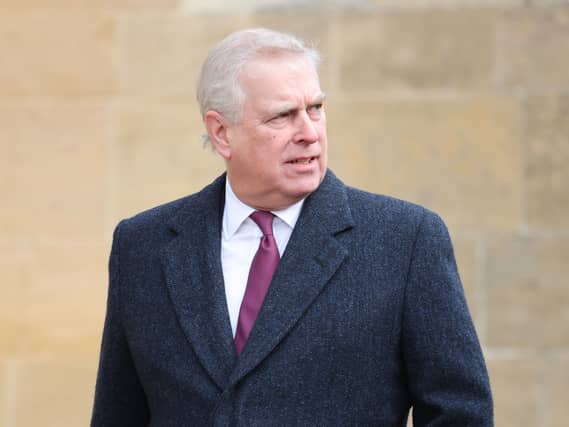

The former Duke of York is due to give evidence in the trial of Nebahat Isbilen’s legal claim against Selman Turk.
Andrew Mountbatten-Windsor was paid a £750,000 “bribe” to help a Turkish woman with her passport, the High Court has been told.
Nebahat Isbilen is suing her former adviser, businessman Selman Turk, alleging he misappropriated tens of millions of pounds of her funds and did not explain where the money went.
She also claims Mr Turk misled her about a £750,000 payment made to the former Duke of York in 2019, which was later paid back, dishonestly claiming the money was needed as a “gift” for Andrew’s help with her Turkish passport.
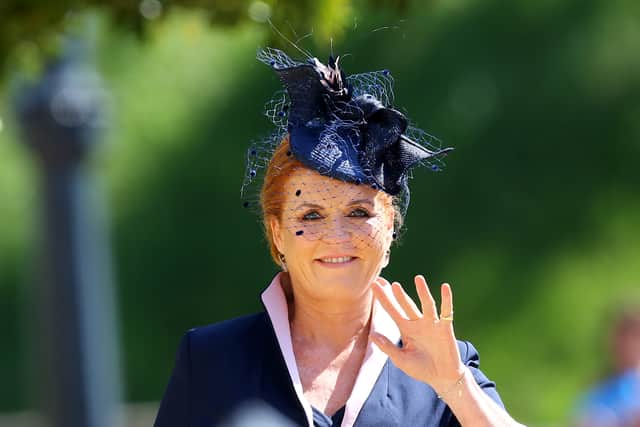
Her lawyers told a trial on Monday that Mr Turk also instructed separate payments to Sarah, the former Duchess of York, including a £15,000 payment purportedly for her 60th birthday party in 2019, as well as an unquantified “wedding gift” for Princess Beatrice.
Mr Turk denies dishonesty and is defending the claim, arguing that Mrs Isbilen knew the money was being paid in the hope that Andrew could help her husband, who is in prison in Turkey.
His lawyers told the court in London: “Her own case is that she understood that the payment to the Duke of York was a bribe, either for assistance with her passport or her UK residency.”
They also said that Mrs Isbilen understood and directed the management of her own affairs.
Andrew, who is not accused of any wrongdoing, is due to give evidence on December 14, after a judge allowed Mr Turk to issue him with a witness summons, earlier this year, compelling him to appear at the trial.
Simon Colton KC, for Mrs Isbilen, said in written submissions that the 81-year-old is part of the Evyap family, which owns a major soap and cosmetics firm in Turkey.
He continued that her husband, a former member of the Turkish parliament, had been imprisoned in the country since 2015 on “politically motivated” terrorism charges and, in 2017, she was facing “political persecution”.
She met Mr Turk in January that year and gave him control of most of her financial assets, but Mr Colton said that Mr Turk “persuaded Mrs Isbilen that her assets were at risk and that he was able to transfer them to a safe place”.
The barrister continued that Mr Turk “deliberately and systematically abused” Mrs Isbilen’s trust and transferred the money to companies he owned or controlled, for his own benefit, leaving her the victim of a “major, cynical fraud”.
He claimed that Mr Turk “induced” Mrs Isbilen to sign financial documents which were “crude inventions” and “bore no relation to what Mr Turk told Mrs Isbilen was happening to her money”.
Mrs Isbilen left Turkey for Greece in 2017, and moved to London in 2018.
Mr Colton said that documents obtained by Mrs Isbilen during the proceedings showed that Mr Turk had sent about £2 million to a company called Alphabet Capital, some of which was transferred to Andrew.
He continued that Mrs Isbilen approved the £750,000 payment to Andrew, but that Mr Turk “lied to her” about its purpose, which was “a further example of his dishonesty”.
One payment was made by a bank on Mr Turk’s instruction to Alphabet Capital of about 275,000 US dollars (£210,000), Mr Colton said, most of which was then paid to Sarah.
The High Court was told in 2023 that Mrs Isbilen reached a “settlement” with the former duke and duchess.
Joshua Hitchens, for Mr Turk, said in written submissions that Mrs Isbilen’s claim was “a mess” and should be dismissed as her allegations “cannot withstand scrutiny”.
He continued that she knew the true purpose of the payment to Andrew, adding: “Paying public figures for preferential treatment was well within the claimant’s modus operandi.”
Mr Hitchens also said that in December 2019, Mrs Isbilen “dined for some five or six hours at Mr Turk’s flat with the Duke and Duchess of York and Mr Turk’s family, seated next to the duchess, having asked for the dinner to be held in private rather than in public, and discussed her husband’s case with the Duke”.
He said: “In circumstances where the claimant dined with the duke and duchess and discussed her husband with them, she cannot have believed that the £750,000 was a disguised fee for help with a passport, or with a visa.
“The payment was what Mr Turk told the bank it was: a gift, made in the hope of Mr Mountbatten-Windsor taking steps to assist her husband.”
The barrister also told the court that it should not find that Mr Turk owed Ms Isbilen a fiduciary duty and that she “directly authorised all transactions affecting her relations with third parties”, with a bank seeking her “personal authorisation” for the payment to Andrew.
The trial before Mr Justice Adam Johnson is due to conclude in March, with a written judgment at a later date.