
Defusing the PSR 'bomb': The inside story of Aston Villa's transfer window
The night of Tuesday, May 14 was a joyous one for Villa.


Tottenham’s home defeat to Manchester City secured Champions League qualification and in what happened to be perfect timing, Unai Emery, his players, staff and several hundred supporters were together to celebrate the moment at the club’s end-of-season awards dinner.
Yet amid the cheers and popping champagne corks, two men inside the room exchanged concerned glances.
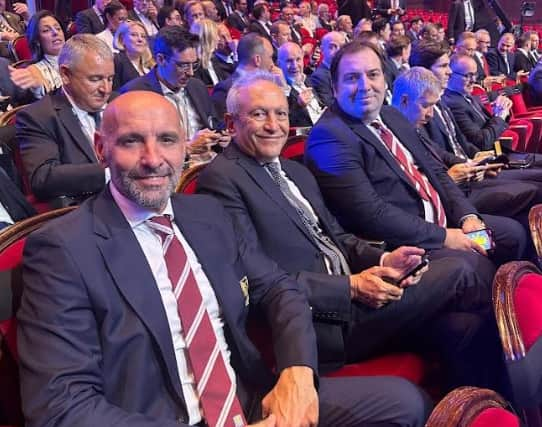
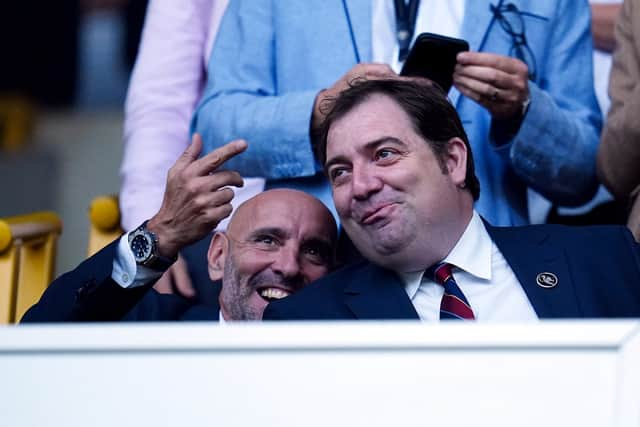
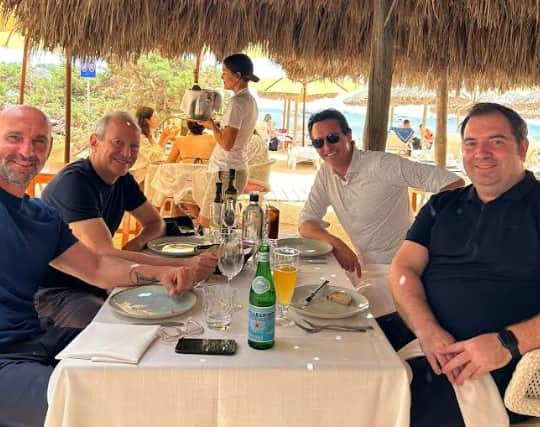
Monchi, Villa’s president of football operations and Damian Vidagany, head of football ops, both knew how critical the next few weeks would be if the glory of the 2023-24 season was not to be quickly followed by the ignominy of a points deduction for breaching the Premier League’s profit and sustainability rules (PSR).
“Monchi and I were at the party, thinking how to not spoil this beautiful year by having a points deduction,” explains Vidagany.
Pretty much everyone in football knew Villa, who had reported losses of £119m for the 2022-23 campaign alone, were sailing close to the wind when it came to PSR limits, which permit losses of £105m over a three-season cycle.
Just how much trouble they were in is only clear now, following the closure of a transfer window both Monchi and Vidagany, two highly- experienced operators, would describe as the toughest of their careers.
In short, Villa needed to raise tens of millions in player sales by the end of June, or face a points deduction this season of between 10 and 12 points.
“There was a bomb with the countdown, and we were there to cut the cable,” says Vidagany.
The solution was not so simple as just selling players. Much as Villa knew their PSR problems weakened their negotiating position, they were determined to do as much business on their own terms as possible. It is why selling Emi Martinez or Jacob Ramsey, both of whom were the subject of bids, was never considered. Neither was any thought given to putting Ollie Watkins on the market.
“We had four objectives this summer,” explained Monchi. “First, to find a solution for the PSR. That’s the most important.
“Second, was to have a younger squad. Three to have a deeper squad. Why? Because we need to play more competitions. And the fourth is to be aligned with what Unai wants.”
With the window now closed, they believe they largely succeeded in hitting all four targets, albeit the restrictions they faced with regard to both PSR and Uefa’s cost control measures meant it was never going to be perfect.
The opening weeks of the summer were fraught and just as in the action movies, the bomb of which Vidagany speaks was only finally defused in the final scene, the crucial £42.3million sale of Douglas Luiz to Juventus finally going through on June 30, more than a month after Monchi and Vidagany had travelled to Italy and agreed the blueprint of the deal with the Italian club.
Luiz, a key player for Emery’s Villa last season nearing the end of his contract, had been identified as a valuable asset who could probably be replaced more easily than other members of the squad.
Yet Villa were not in a position where they could wait for the market to develop. The onus was on them to find a buyer and in Juventus they sourced a suitor who were keen on Luiz yet not in a position to pay the Brazil international’s full market value.
That meant Villa agreeing to buy players from Juventus in return. Several are thought to have been discussed before midfielder Enzo Barrenechea and winger Samuel Iling-Junior were identified as two young talents Villa believe have the potential to be assets in the future.
Getting all three deals, involving three different players and three different sets of agents, over the line was never going to be easy. Luiz’s involvement in Brazil’s Copa America campaign added further complication, with his Juventus medical and contract signing taking place while away with his national team in the USA.
“It was a rollercoaster,” says Vidagany. “There was one sleepless night. Brazil played in Vegas then after the game they were supposed to go to a hotel, where he was supposed to sign the contract.
“But the national team of Brazil stopped them going to Vegas as they were scared about partying.”
He continued: “This was the worst market in history because we were so pressured by time, by the weakness you are showing, and because there are many actors in the deals.
“If one of the domino pieces jump out of the line, you won’t complete it. That’s why it was very difficult.”
While the Luiz sale rumbled on, Villa knew they needed to be working on other deals as, in the words of Vidagany: “We had a parachute but didn’t know if it would open.”
Tim Iroegbunam was sold to Everton for £9m, while another youngster, Omari Kellyman, went to Chelsea for £19m.
The latter sale in particular stung Villa and is cause for one of the club’s chief complaints about PSR, that it incentivises the sale of academy players, whose fees can be banked as pure profit.
“It has a big failure and that’s pushing the clubs to do deals which are sometimes not natural,” says Vidagany. “For me, always, to sell and academy player you raise in whom you have invested a lot of human capital, a lot of years, to sell this guy is not natural.”
It was not only the PSR equation of which Villa had to be mindful. They also had to make sure they remained within Uefa’s cost control regulations, which this season allows clubs to spend a maximum 80 per cent of their revenues on transfer fees, wages and agents’ fees, down from 90 per cent last year.
Selling former record signing Moussa Diaby for £51m helped on that score but the way in which the Premier League and Uefa rules essentially rub against each other is further reason for frustration.
“They are two different parcels in two different hands,” says Vidagany. “SCR of Uefa forces you to sell expensive players.
“For instance, to decrease our ratio of cost, we have a great deal that was Diaby.
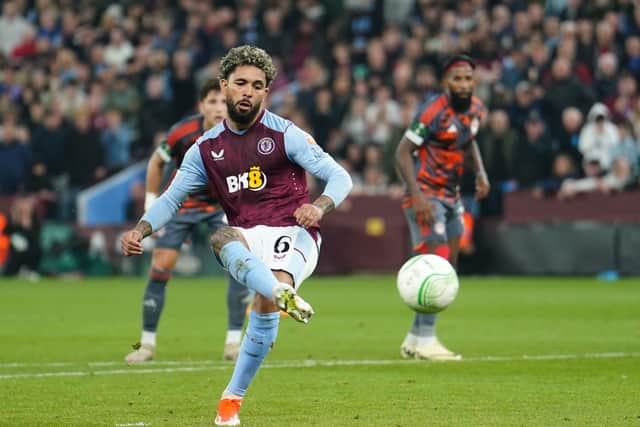
“Even though he cost a lot, the fact we sold him for big money – means we don’t have a big profit – the gaps aren’t very big but the cost was high on the squad and we wanted to reduce the ratio.
“So we have to sell expensive players. But if you want to stick to PSR you have to sell cheaper players and academy players. It’s almost impossible to match both.”
Villa’s overriding feeling is the current rules work against clubs who experience the kind of “miracle” (Vidagany’s description) Emery has performed in the past 20 months.
Under the Spaniard, Villa have been transformed from a team battling relegation to Champions League qualifiers but it has happened too quickly for their revenues to keep up and it puts them at a major disadvantage when trying to compete with the established elite.
As Vidagany sees it, there are two different realities.
“The Premier League classification, we were fourth, a Champions League club,” he says. “Nobody can complain about that. But then there’s the PSR classification. There, we are the 10th or ninth.”
He continues: “We have no debt. Many clubs borrow money. We don’t have this problem, but we still can’t spend money.
“The system at the end of the day is perversion because it doesn’t matter how committed your owners are, how wealthy they are or how good your accounts are. You are disallowed to grow because you don’t have more revenues.
“To get revenue, what do you need? To win. What do you need to win? To spend. But you cannot spend. So if you don’t spend, you don’t win, you don’t get revenue and you stay in the same cycle always.”
What has helped Villa break the cycle, at least for now, is Emery. The manager, who signed a five-year contract at the start of the summer, was kept briefed on business at every step of the way, with meetings during his holiday sometimes lasting between four and five hours.
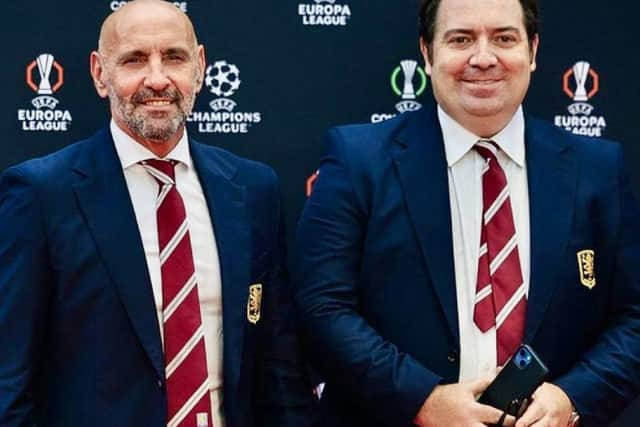
“We have to make sure that all this food we are cooking is liked by Unai,” says Vidagany. “He has to be happy at the end of it. He was, of course, aware of all the transfer situations we had.”
Not all of those situations were outgoings, even in the early weeks of the window. Villa still negotiated the £37.5m purchase of Ian Maatsen from Chelsea and agreed to buy Ross Barkley, a player who impressed Emery last season, from Luton for £5m.
Once June had turned to July and the PSR bomb defused, the full focus was on additions and there was one area in particular Emery was keen to strengthen.
Monchi describes how bringing in a new No.6 became a “priority” with the loss of Boubacar Kamara to long-term injury having made Villa much weaker defensively over the closing months of last season.
Amadou Onana was eventually signed from Everton for a club record £50m, though the Merseyside club’s initial demand is thought to have been much higher, the Belgium international rejecting a late approach from an unnamed club before signing the deal.
“Onana wanted to come to Villa,” explains Vidagany. “We had an impression when Onana was understanding what Unai wanted from him, he was rejecting even one of the top, top clubs in this country. The manager of that club met Onana and Onana says, I want to go to Aston Villa. For us, it was a sign of commitment. It was the priority.”
Winger Jaden Philogene became Villa’s final signing of the window when he joined from Hull, a year after leaving for the Championship club.
Villa would ideally liked to bring in at least one more player but were unable to make a deal work. Having overcome one PSR crisis, neither Monchi or Vidagany were ready to create another further down the line.
Next summer’s equation is as yet unknown and will depend on many variables, including just how far Emery’s team progress in the Champions League.
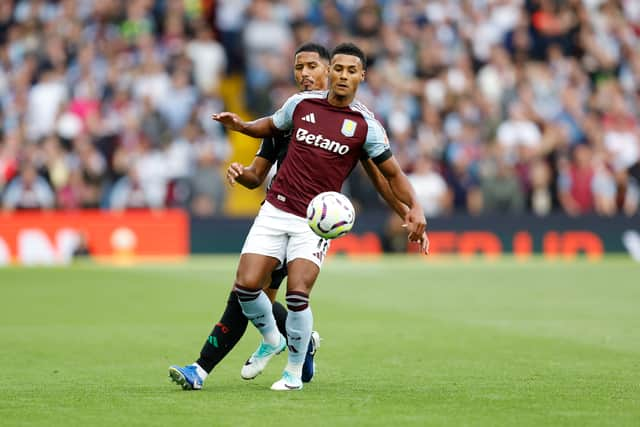
“We are happy with the squad,” says Monchi. “It is not the best squad possible because that is impossible. But I think we have a good squad to play in different competitions.”
Needing to sell players is not Villa’s chief PSR complaint. As Monchi is quick to point out, selling players for big money which can then be reinvested is a big part of their strategy.
“In my opinion we need to sell players because (Manchester) City sell players, Arsenal sell players, Real Madrid and Barcelona sell players,” he says. “We are not afraid to sell players. The most important thing in my opinion is not selling players – the most important thing is to buy good.”
The frustration for Villa lies in how much the rules and threat of a points deduction dictated their business and effectively forced them to sell a star player like Luiz for less than his true value.
“If there was no PSR, the window would have been absolutely different,” says Vidagany. “An absolutely different market for us in terms of the timings.
“I don’t think there would be a big difference in the players we would bring in or the profile of players we bring in.
“Perhaps we’d bring in one more because we could do it, but there wouldn’t be a big difference.
“However, we could sell better, without the pressure of the PSR. We could have sold Luiz for more and with no rush. When I was at Valencia, we had some losses but we kept players and sold them the following year because we didn’t have points deductions. You can take a risk for one year.”
For Monchi in Sevilla, they were close to Real Madrid in one year in January and they chose to invest to try and win the league.
“You cannot do that here because of points deduction. The points deduction is like a weapon on the head of the clubs with ambition.”
Comment Guidelines
Iconic Media encourages reader discussion on our stories. User feedback, insights and back-and-forth exchanges add a rich layer of context to reporting. Please review our Community Guidelines before commenting.